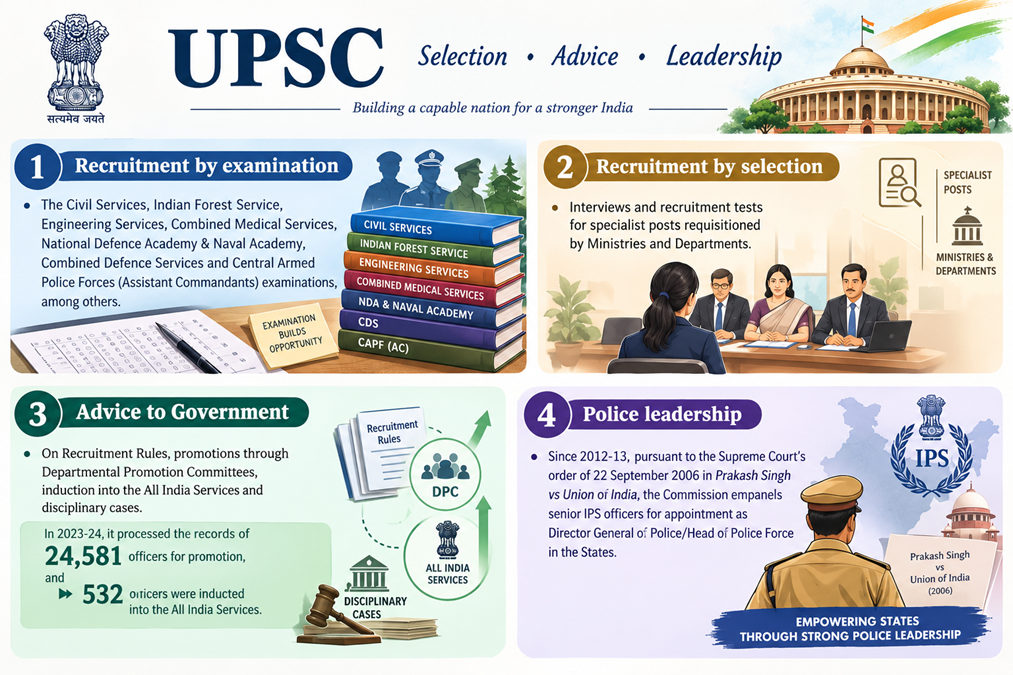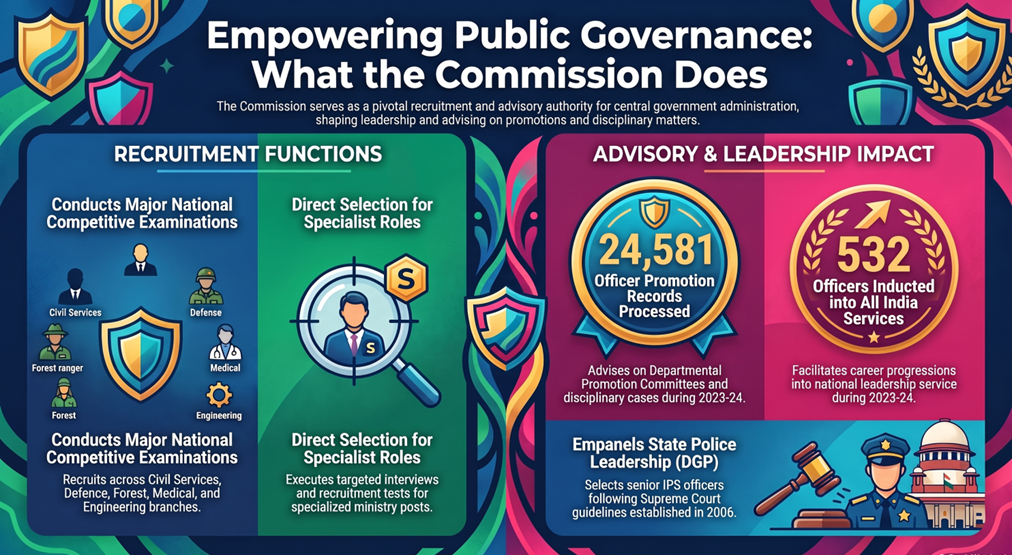
The article traces the 100-year institutional journey of the UPSC, from its establishment in 1926 to its present status as an independent constitutional body.
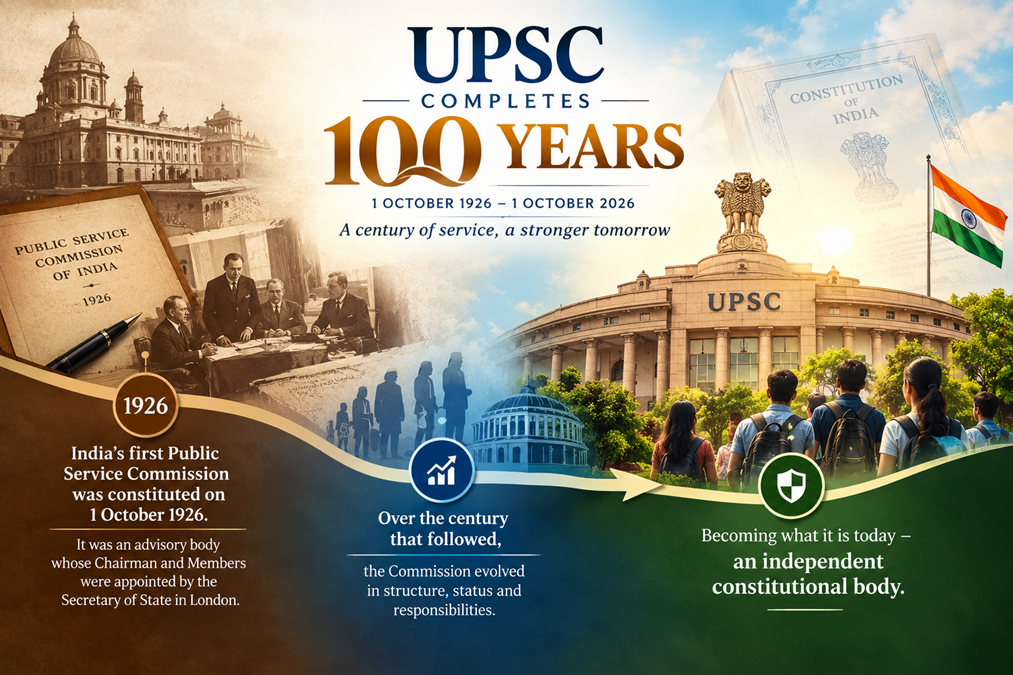
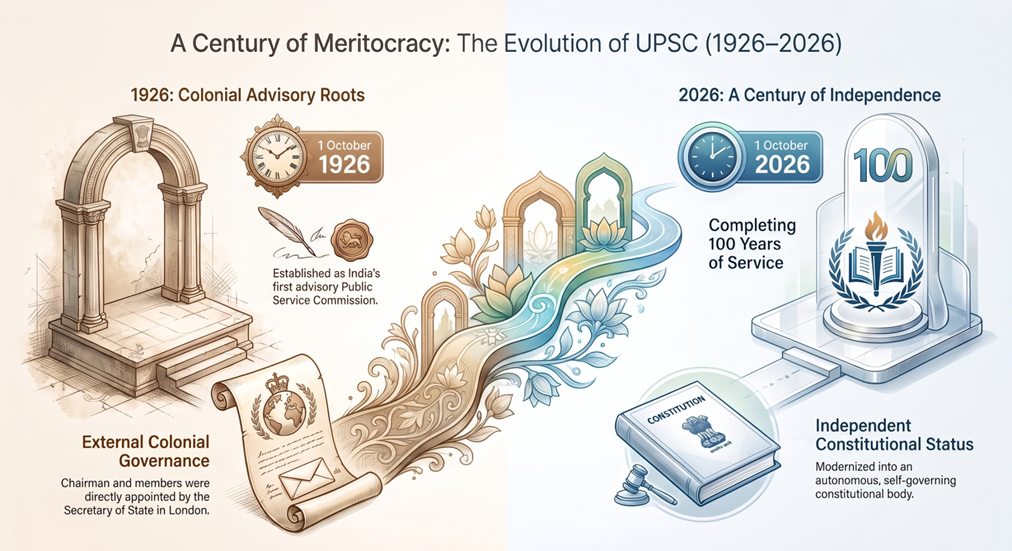
On 1 October 2026, the Union Public Service Commission (UPSC) completes one hundred years. Its institutional journey began on 1 October 1926, when India’s first Public Service Commission was constituted - an advisory body whose Chairman and Members were appointed by the Secretary of State in London. Over the century that followed, the Commission evolved in structure, status and responsibilities, becoming what it is today - an independent constitutional body.
The Road to 1926
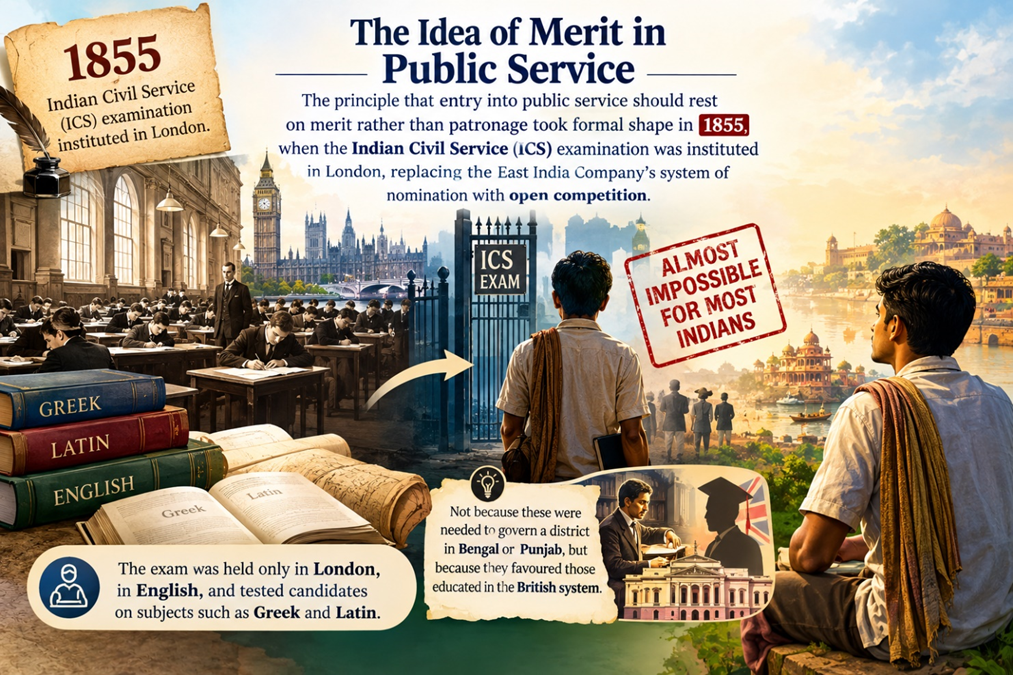
The principle that entry into public service should rest on merit rather than patronage took formal shape in 1855, when the Indian Civil Service (ICS) examination was instituted in London, replacing the East India Company’s system of nomination with open competition. For most Indians, however, the door remained nearly impossible to open. The examination was held only in London, in English, and tested candidates on subjects such as Greek and Latin - not because these were needed to govern a district in Bengal or Punjab, but because they favoured those educated in the British system.
In 1862, 21-year-old Satyendranath Tagore, elder brother of Rabindranath Tagore, sailed from Calcutta to England to sit an examination his own country would not let him take at home. He cleared it in 1863 and joined the service in 1864 - the first Indian in what the British called the “heaven-born service”. He served for over thirty years in the Bombay Presidency. Six years after his success, Surendranath Banerjee, Behari Lal Gupta and Romesh Chunder Dutt followed. The maximum age for the examination was, however, progressively reduced from 23 to 19, leaving Indian candidates little time to prepare. By 1919, only 78 of the 1,255 ICS officers were Indian.
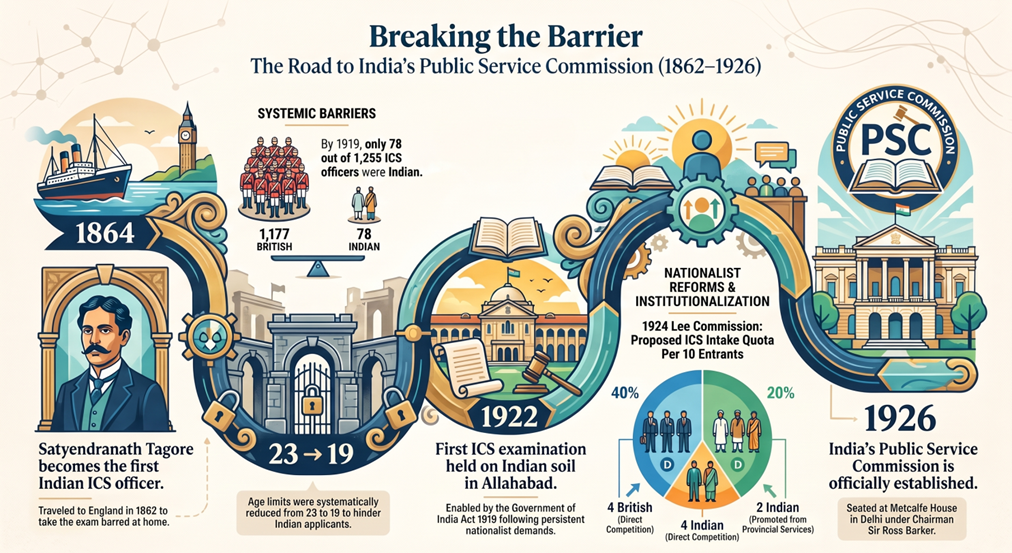
Sustained nationalist demands brought gradual change. The Government of India Act, 1919, enacted after the Montagu-Chelmsford Reforms, provided for a Public Service Commission. In 1922, the ICS examination was held in India for the first time, at Allahabad, alongside London. In 1928 the Indian centre moved to Delhi. In 1924, the Lee Commission, chaired by Arthur Hamilton Lee, recommended the immediate establishment of a statutory Public Service Commission. It also proposed that of every ten new entrants, four would be British, four Indian and two Indians promoted from the provincial services - on paper a path to parity, in practice a guaranteed 40 per cent of every intake for the British, by birth rather than by competition.
The Commission was established under the Public Service Commission (Functions) Rules, 1926, framed under Sections 96B and 96C of the 1919 Act. Sir Ross Barker, a member of the Home Civil Service of the United Kingdom, was its first Chairman, assisted by four Members, and the Commission was housed at Metcalfe House, Delhi. Its limited powers drew sustained criticism from leaders of the freedom movement. Yet a permanent recruiting body now existed in India, seated and staffed in India - which is why the Commission dates its history from 1926.
The Constitutional Mandate
On 22 August 1949, Dr. B.R. Ambedkar, Chairman of the Drafting Committee, moved the draft articles on the Union and State Public Service Commissions in the Constituent Assembly. They became Part XIV (Articles 315–323) of the Constitution. In his valedictory address on 26 November 1949, Dr. Rajendra Prasad emphasised that the independence of the Public Service Commissions was essential to ensure impartiality in public appointments and to guard against jobbery, nepotism and favouritism.
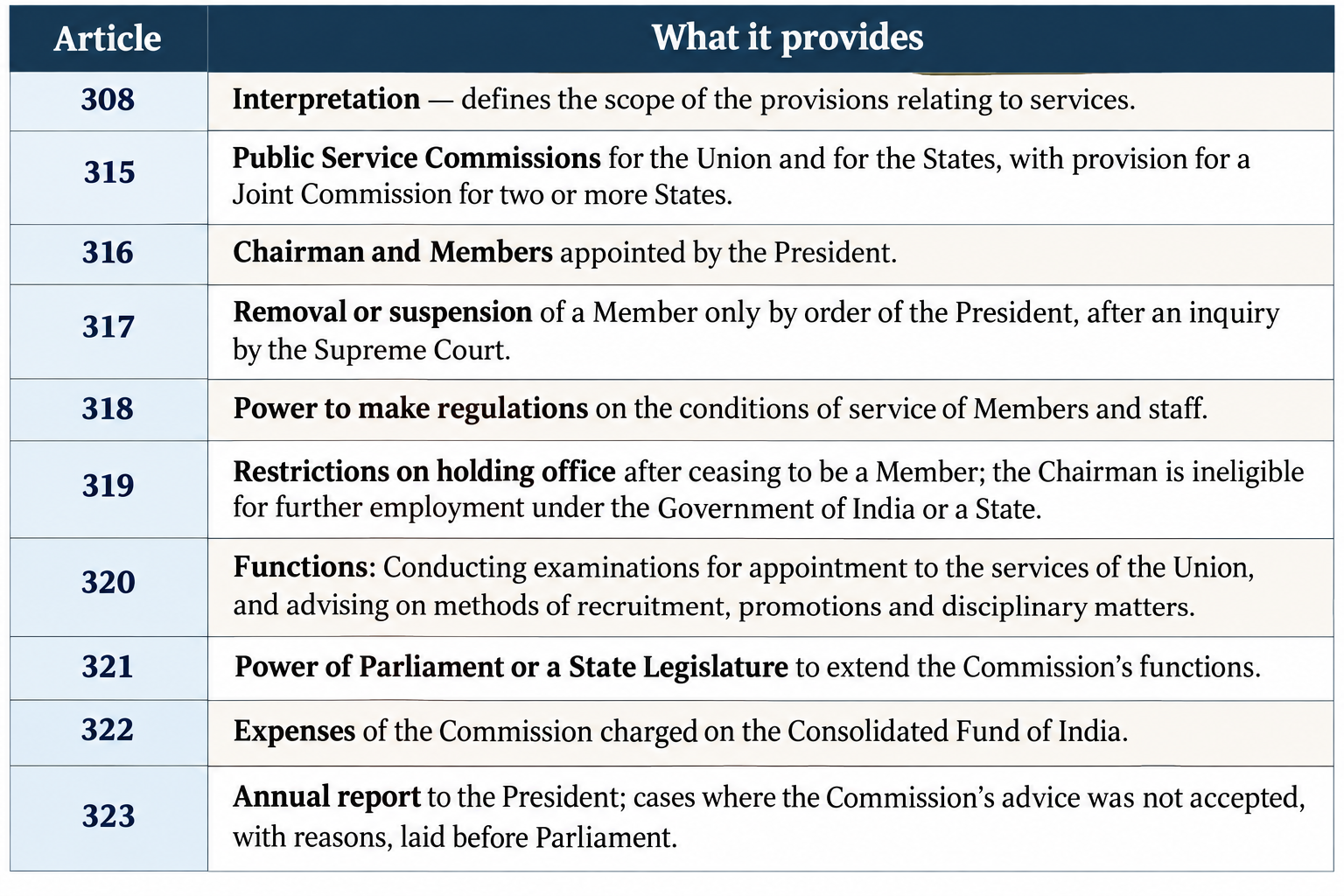
What the Commission does