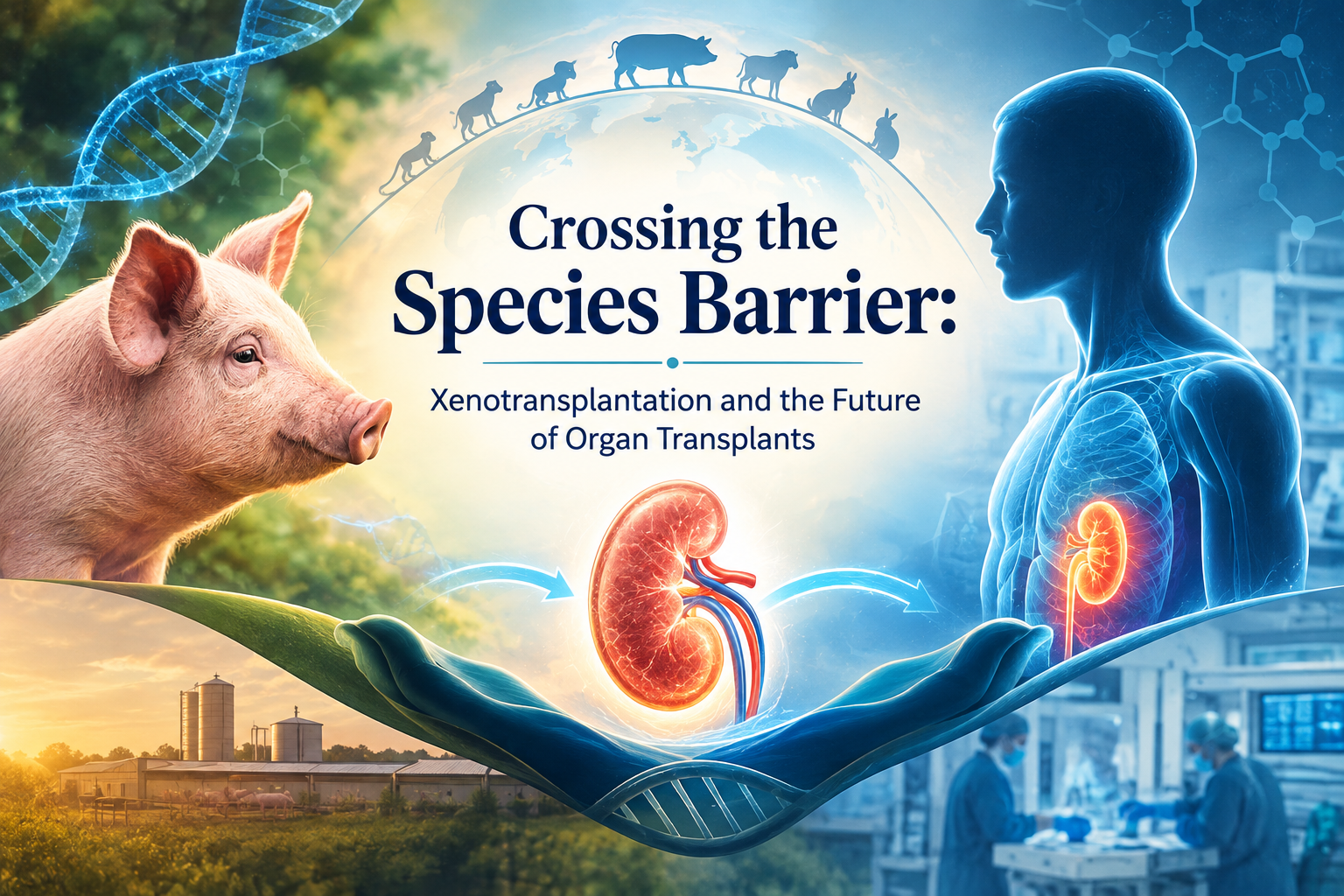
Xenotransplantation explores the transplantation of animal organs into humans as a potential solution to the global shortage of donor organs.
Syllabus areas:
GS Paper III – Science & Technology: Biotechnology
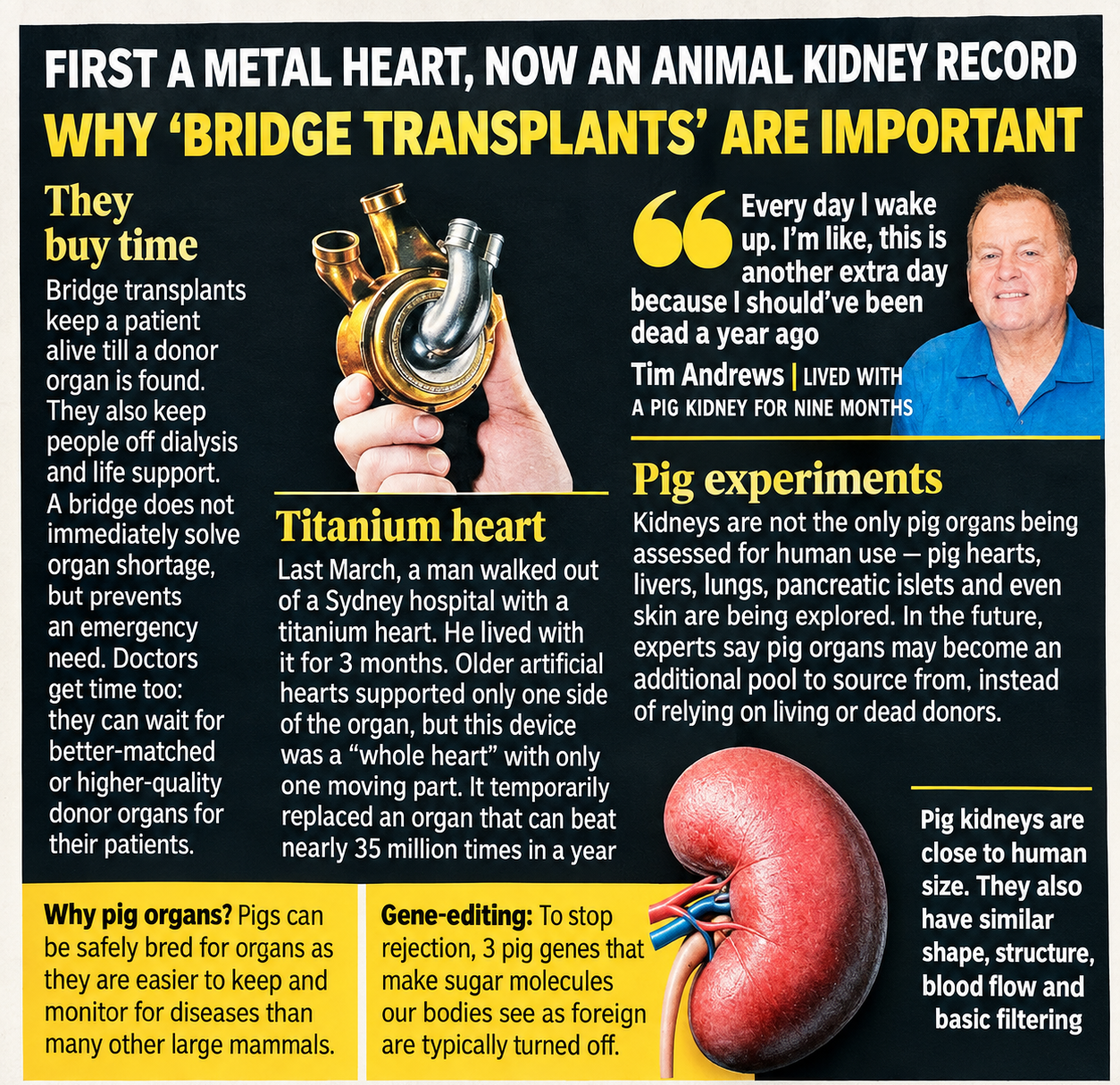
A genetically engineered pig kidney kept a 66-year-old man off dialysis for a record 271 days before he successfully received a donor organ, marking a major advancement towards using animal organs to "bridge" the widening gap between organ demand and availability which described him as the first human patient to receive a human donor kidney after a pig kidney transplant.
Xenotransplantation (animal to human) had moved closer to its promise of closing the gap between end-stage kidney failure and donor transplantation, allowing a patient to forgo dialysis in the meantime.
The case is particularly relevant for India where every year, nearly 2 lakh new patients find themselves in need of a kidney, but only about 14,500 transplants are carried out.
After the approval, he was monitored for kidney function, rejection, antibody response and potential pig-to-human infection.
For roughly six months, the kidney worked well. The turning point came when Andrews developed a bacterial infection, which was not transmitted from the pig. Doctors then had to reduce the medicines suppressing the immune system. Soon afterwards, inflammation began damaging the lining of the pig kidney's blood vessels, leading to microscopic blood clots, a condition called thrombotic microangiopathy. The animal kidney progressively stopped working.
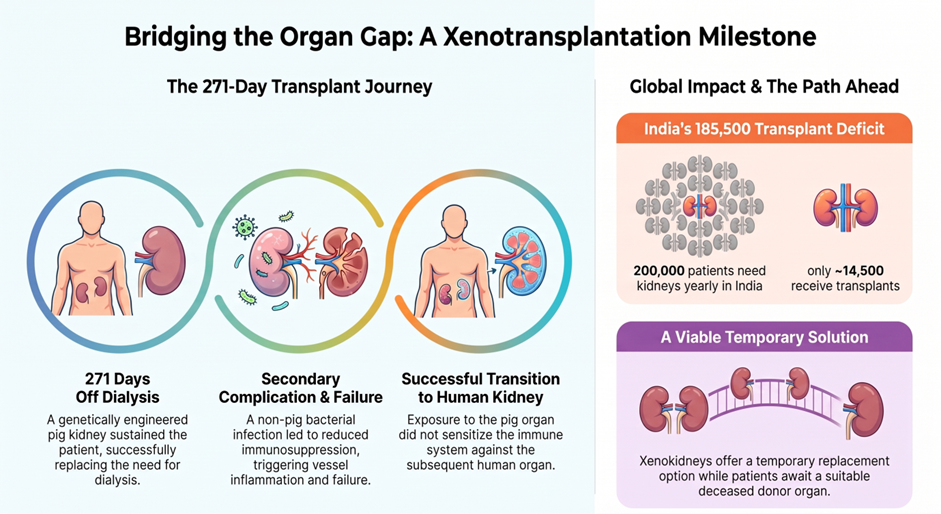
Andrews was then given a donor kidney from a deceased person, which began to work immediately after the transplant. This proved that exposure to the pig kidney had not trained or sensitised his immune system to attack a future human kidney. Andrew's levels of anti-HLA antibodies, the antibodies that can make matching and accepting a donor organ more difficult, had not increased.
In the last 30 years, experts have found ways to avoid early xenotransplant rejection, and are slowly understanding ways to avoid late rejection as well, resulting in increasingly longer survivals.
In India, for now, xenokidneys could offer a temporary renal replacement option for patients without a suitable living donor, while awaiting a deceased-donor kidney.
Also, before xenotransplants become a reality in India, there will have to be major amendments to the Human Organ Transplant Act.
Why only pig?
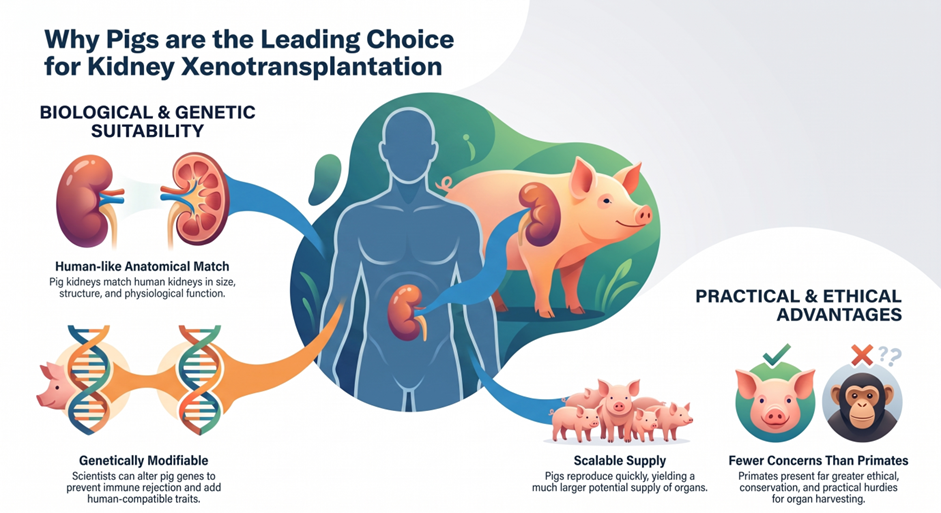
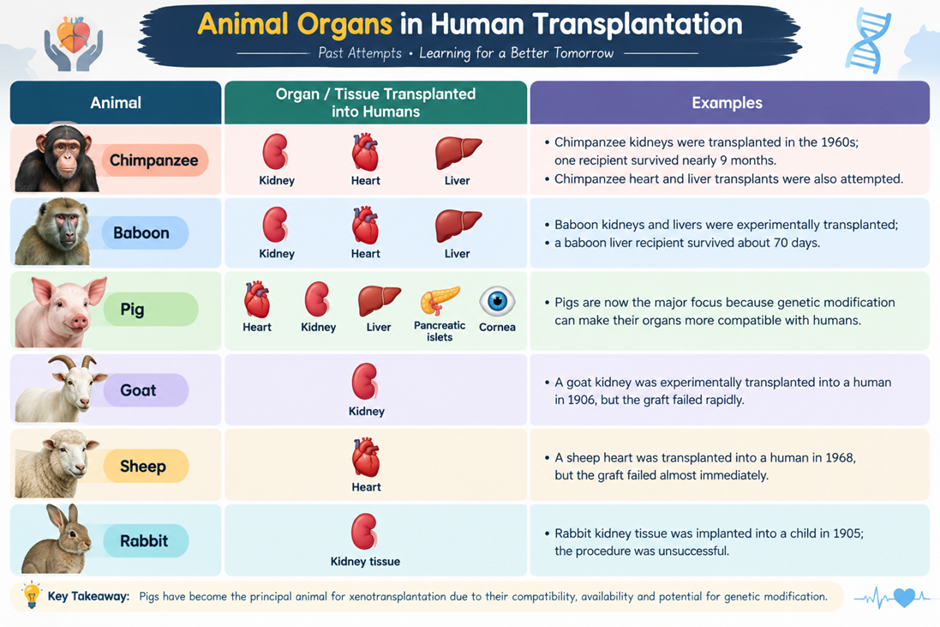
Pigs are preferred for kidney xenotransplantation because their kidneys are comparable to human kidneys in size, structure and physiological function. Their organs can potentially support human biological requirements while being available in larger numbers than organs from primates. Pigs also reproduce relatively quickly, making them a more scalable source of organs. Importantly, modern biotechnology allows scientists to genetically modify pigs by removing or altering genes responsible for immune rejection and introducing human-compatible genes. This can improve the chances of successful transplantation. In contrast, using primates raises greater ethical, conservation and practical concerns. Therefore, pigs are currently the leading animal source for experimental xenotransplantation.
Baby Fae Case (1984):
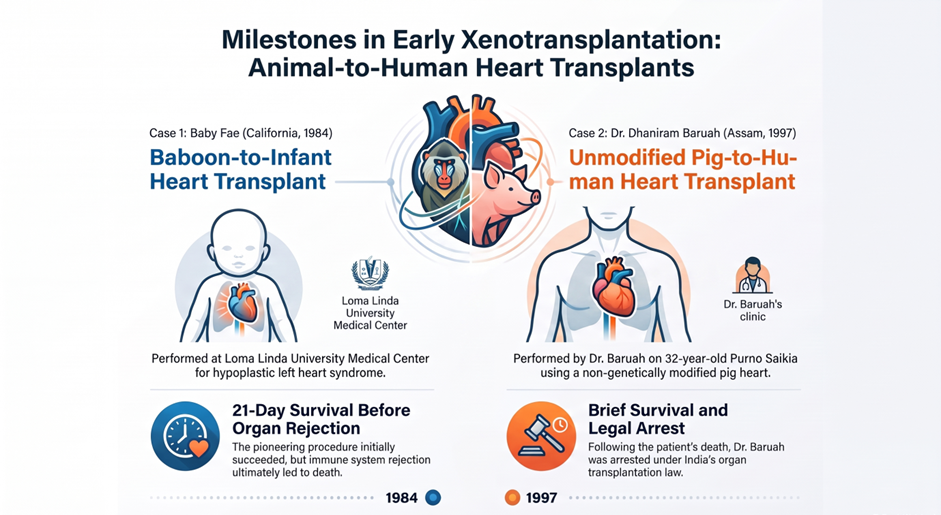
Baby Fae, an infant born with hypoplastic left heart syndrome, received a baboon heart transplant at Loma Linda University Medical Center in California. The pioneering xenotransplantation procedure initially succeeded, but the infant’s immune system eventually rejected the organ. She survived for 21 days after transplantation.
Dhaniram Baruah Case — Assam, 1997
In 1997, Dr. Dhaniram Baruah, a surgeon in Sonapur, Assam, performed an experimental pig-to-human heart xenotransplantation on Purno Saikia, a 32-year-old man. The pig was not genetically modified, unlike modern xenotransplantation experiments. The recipient survived only briefly and subsequently died. The procedure generated major ethical and legal controversy, and Baruah was arrested for violating India’s Transplantation of Human Organs and Tissues Act, 1994.
Terminology:
Xenotransplantation is the transplantation of living cells, tissues, or organs between different species, especially from genetically modified animals such as pigs to humans. It aims to address the shortage of human donor organs and reduce waiting times for transplantation.
Potential pig-to-human infection refers to the risk of pathogens, including viruses, bacteria, or other microorganisms present in pigs, being transmitted to humans during xenotransplantation, potentially causing infections that may be difficult to detect, treat, or prevent.
Xenokidneys:
Xenokidneys are kidneys obtained from genetically modified animals, particularly pigs, and transplanted into humans. They are being developed as an alternative to human donor kidneys, potentially helping address organ shortages and reduce prolonged waiting periods for transplantation.
Human Organ Transplant Act:
The Transplantation of Human Organs and Tissues Act, 1994 (THOTA) regulates organ and tissue transplantation in India. It establishes rules for donation and transplantation, prevents commercial organ trading, and provides safeguards against unethical or illegal practices.
Thrombotic Microangiopathy (TMA):
Thrombotic microangiopathy is a group of disorders involving damage to small blood vessels, causing tiny blood clots, reduced blood flow, and destruction of red blood cells. It can impair vital organs, particularly the kidneys and brain.
Listen Class on Heart Transplantation