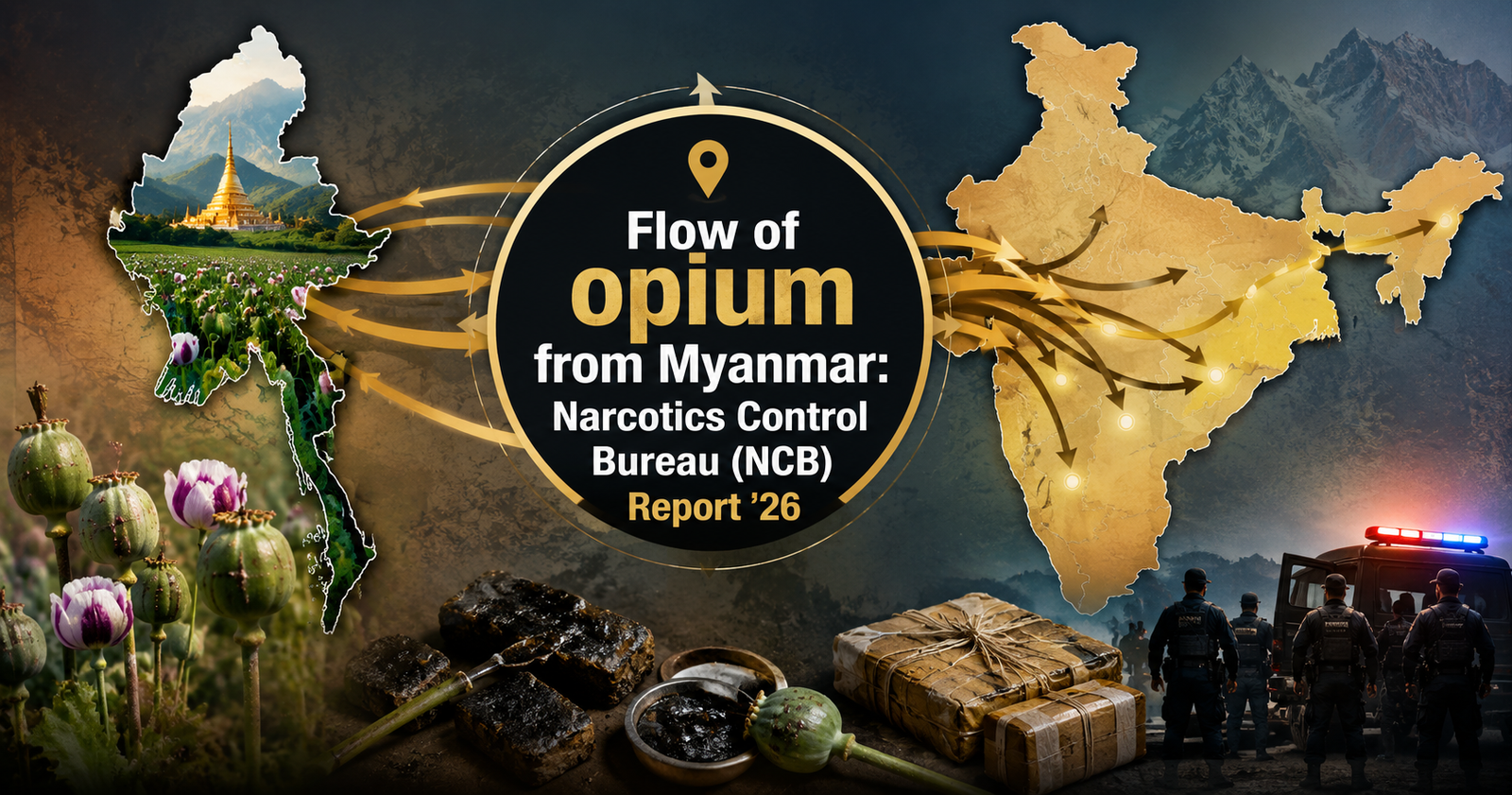
Explore how Myanmar expanding opium production and Golden Triangle trafficking networks threaten security of India through porous borders, the Manipur Corridor, and evolving narcotics routes.
Syllabus Areas:
GS III - Internal Security
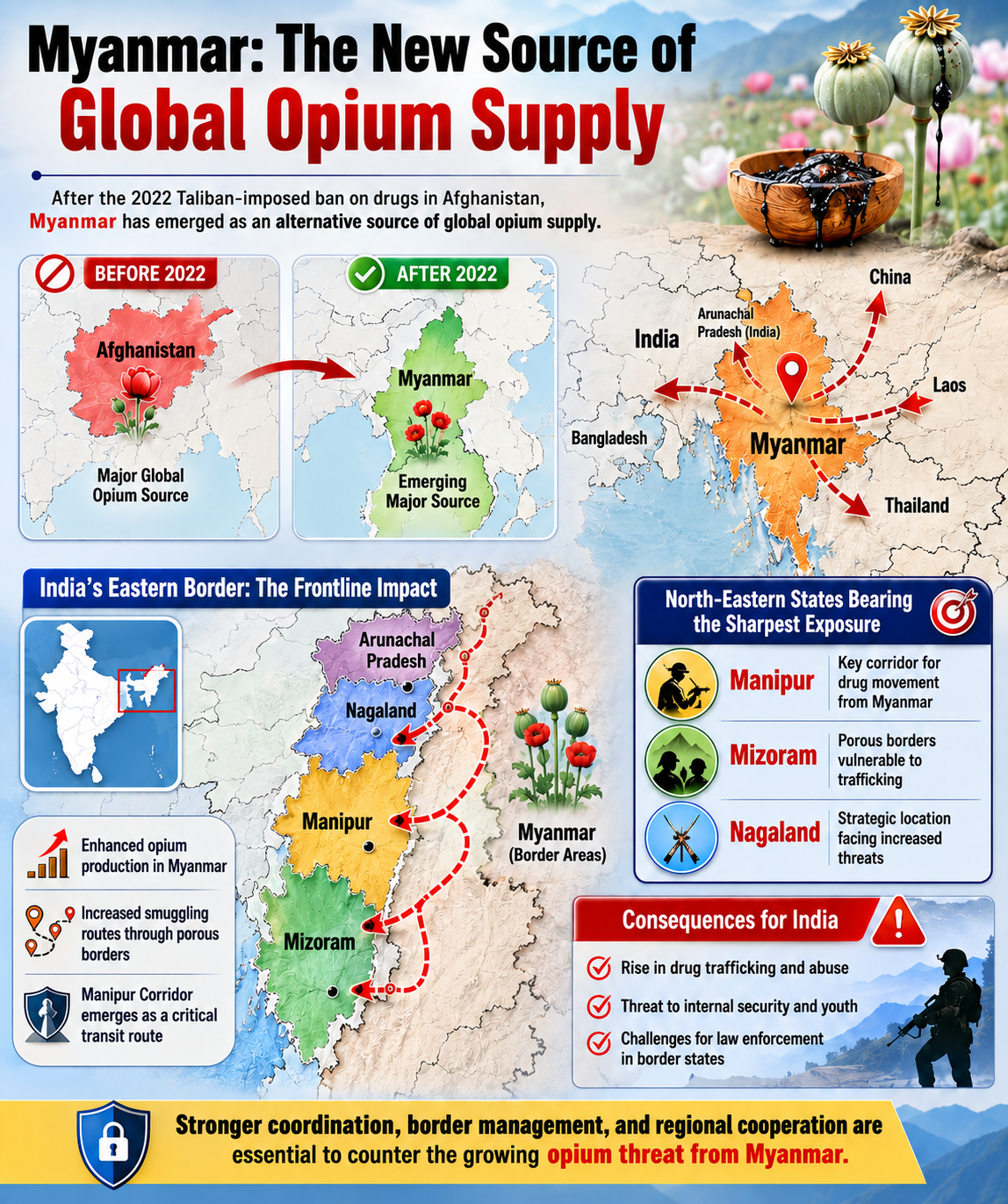
Following the 2022 Taliban-imposed ban on drugs in Afghanistan, Myanmar has emerged as an alternative source of global opium supply and the consequences are already visible along India's eastern borders through the Manipur Corridor.
North-Eastern states of Manipur, Mizoram, Nagaland are bearing the sharpest frontline exposure due to the enhanced production of drugs in Myanmar.
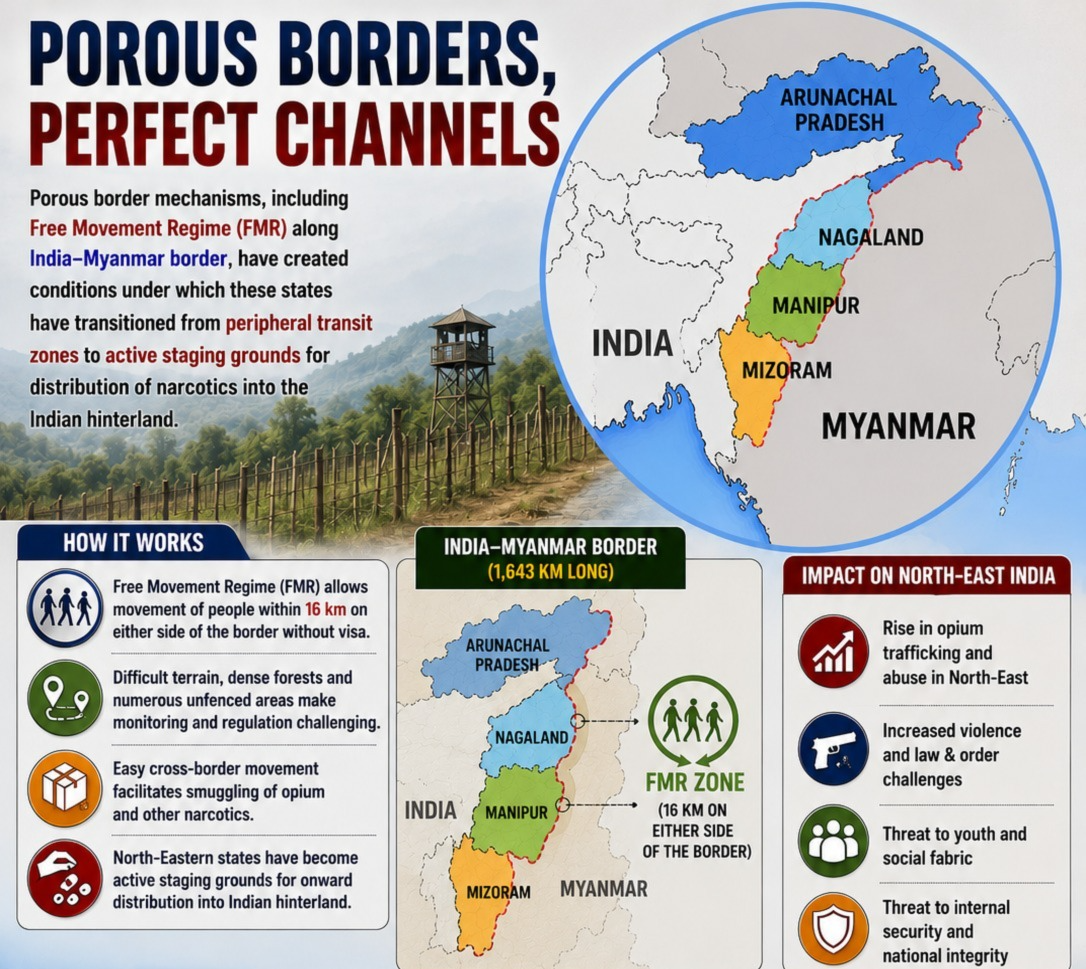
Porous border mechanisms, including Free Movement Regime (FMR) along India–Myanmar border, have created conditions under which these states have transitioned from peripheral transit zones to active staging grounds for distribution of narcotics into the Indian hinterland.
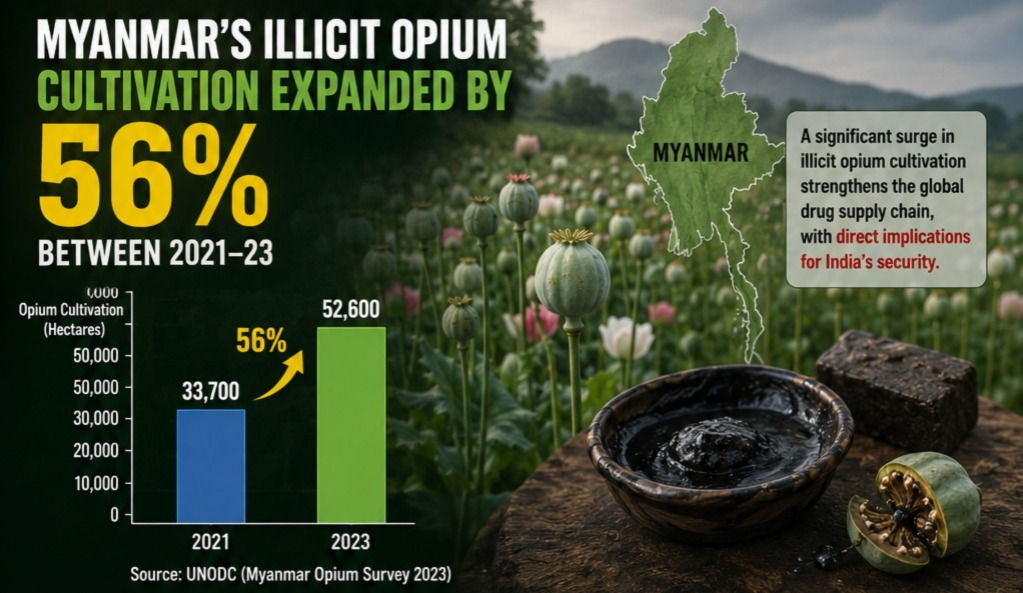
Myanmar's illicit opium cultivation expanded by 56% between 2021–23.
India's eastern borders through the Manipur Corridor are the most direct and porous entry point for this expanding production base.
Myanmar's Golden Triangle has expanded as both an opiate supplier and a dominant methamphetamine (Yaba tablets) hub. The convergence, primarily in areas controlled by ethnic armed groups in Shan State, has created a poly-drug production.
The Manipur Corridor, through which India's National Highway Number 102 passes, is the primary land entry point for both heroin and methamphetamine tablets.
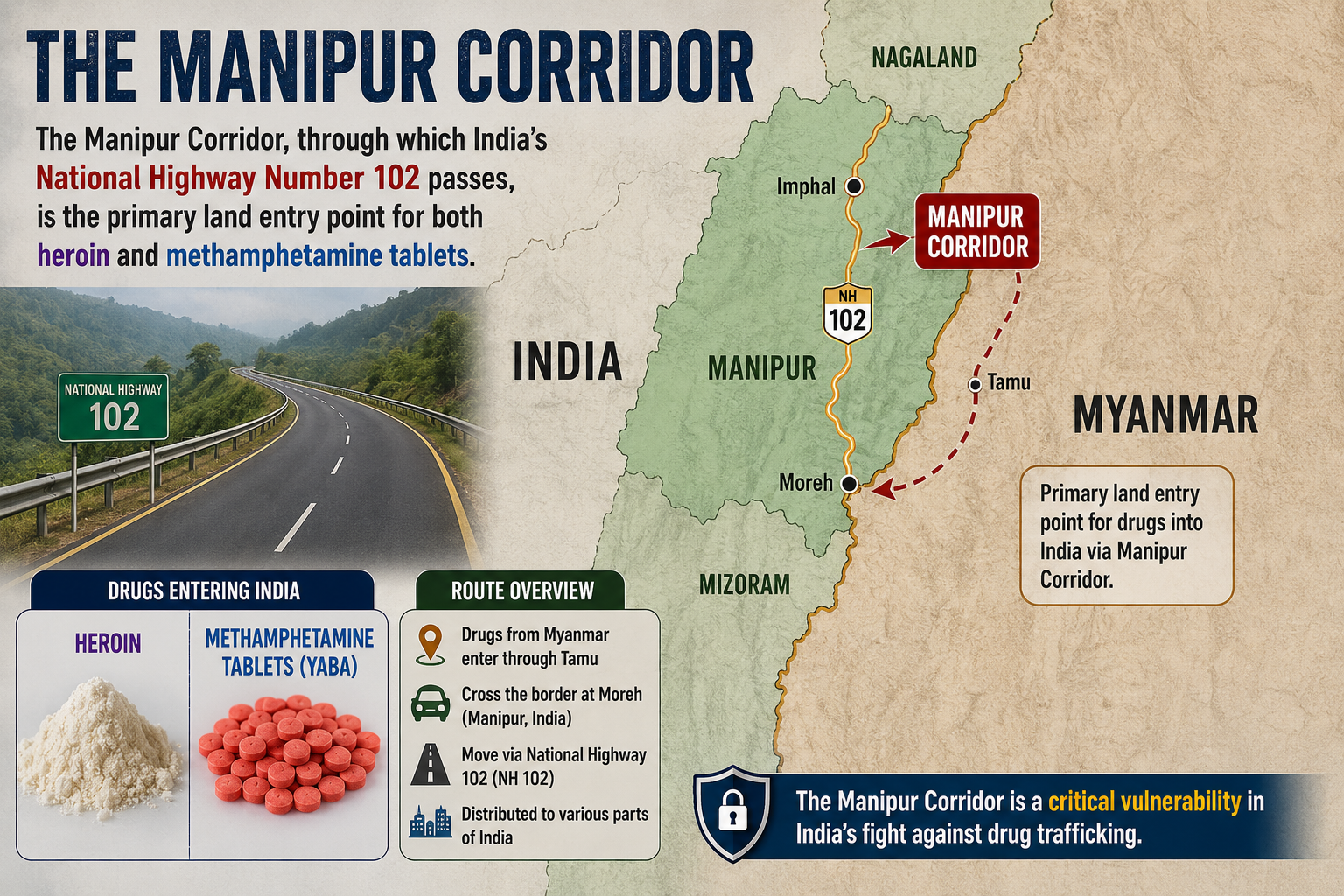
The second major trafficking corridor enters India through Champhai in Mizoram, which shares close proximity with Myanmar's Chin State.
Drugs are smuggled through unfenced and porous stretches of the border and routed towards Silchar in Assam's Barak Valley through Aizawl and adjoining road network.
The South Asian arm of the drug trade via Afghanistan flows through Pakistan into India via both the land frontier in Punjab and Rajasthan and the maritime frontier along the Gujarat and Maharashtra coastlines. The latter route is of increasing concern given its use of fishing vessels and coastal craft that operate below the detection threshold of standard maritime surveillance.
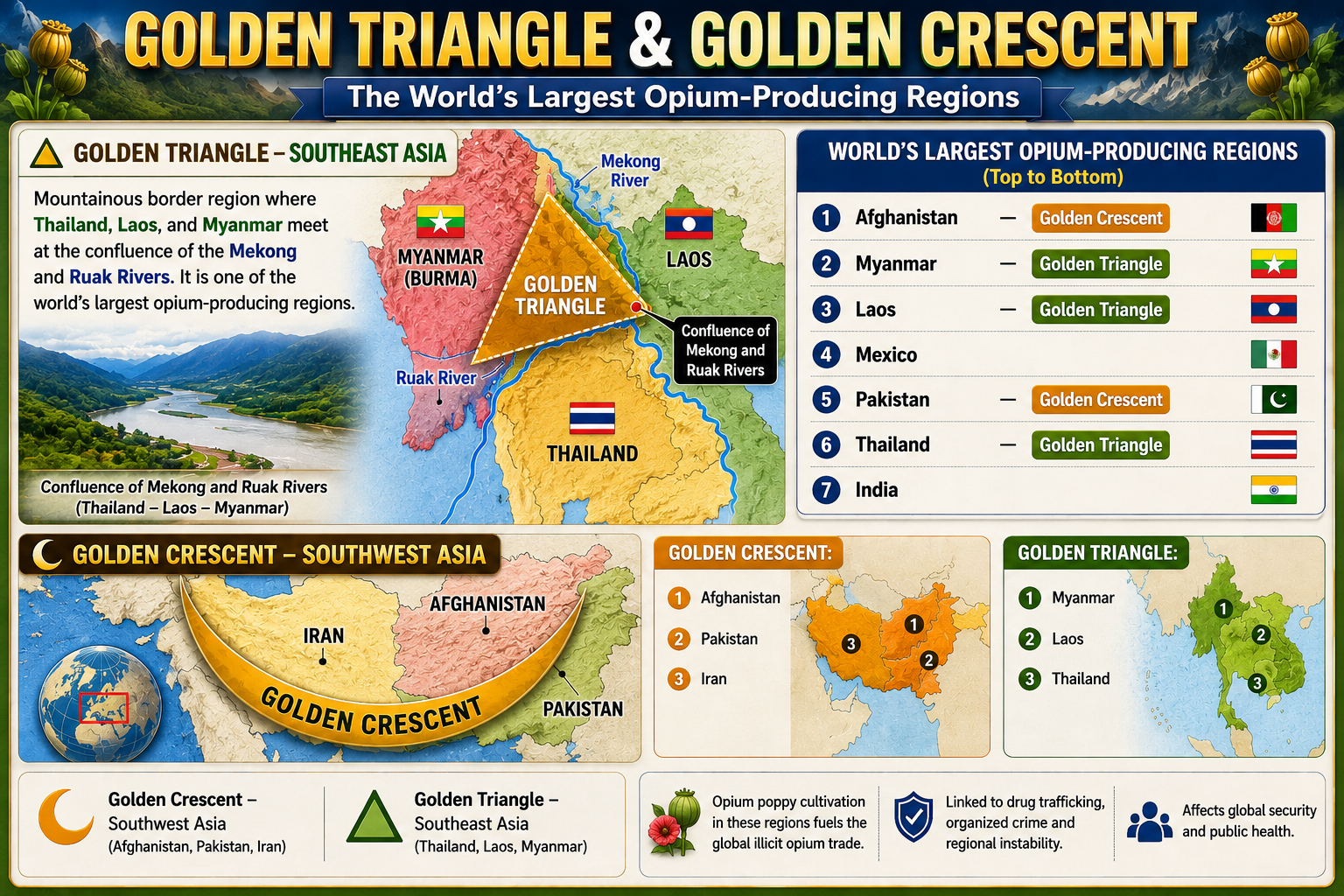
Golden Triangle
Mountainous border region where Thailand, Laos, and Myanmar meet at the confluence of the Mekong and Ruak Rivers. It is one of the world's largest opium-producing regions.
World's largest opium-producing regions (Top to Bottom):
-
Afghanistan — Golden Crescent
-
Myanmar — Golden Triangle
-
Laos — Golden Triangle
-
Mexico
-
Pakistan — Golden Crescent
-
Thailand — Golden Triangle
-
India
Golden Crescent:
-
Afghanistan
-
Pakistan
-
Iran
-
Golden Crescent – Southwest Asia
-
Golden Triangle – Southeast Asia