Explore the seven-year journey since the abrogation of Articles 370 and 35A, highlighting constitutional changes, Jammu & Kashmir's reorganisation, development, and Supreme Court validation.
Syllabus Areas:
GS II - Polity and Governance
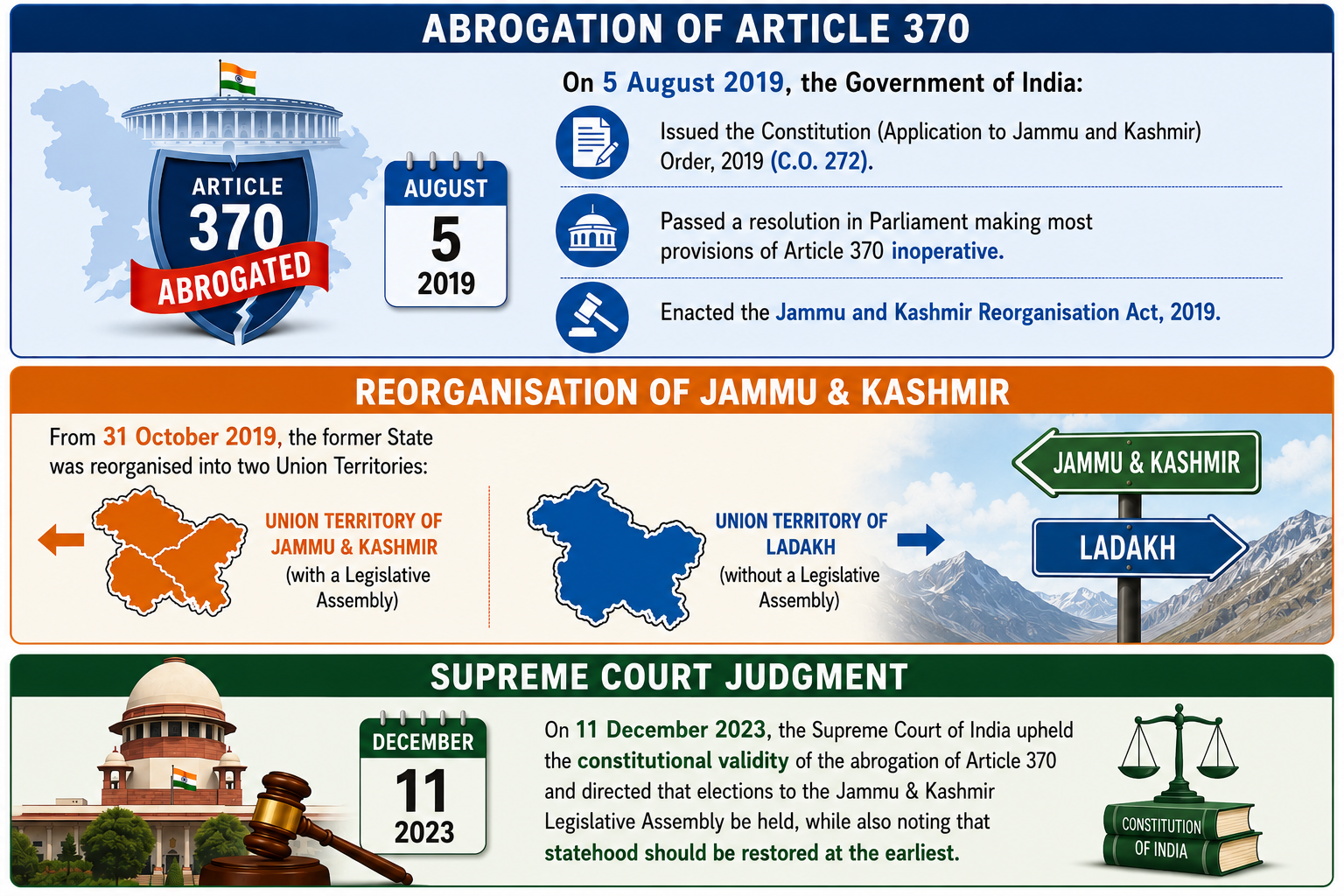
Seven years have passed since introduction of legislations in Parliament to implement its long-standing objective - stripping the special status accorded to the State of Jammu and Kashmir (J&K) by Article 370 of the Constitution. Through these legislations, the Union government not only abrogated the special status, but also took direct control of the State's administration by bifurcating it into two Union Territories – J&K and Ladakh.
Union Home Minister Amit Shah, who introduced the legislations in both Houses, projected them as a panacea for J&K's woes. Attributing the State's poor healthcare, poverty and slow economic growth to the special status, he argued that Article 370 prevented J&K's economic development while breeding terrorism.
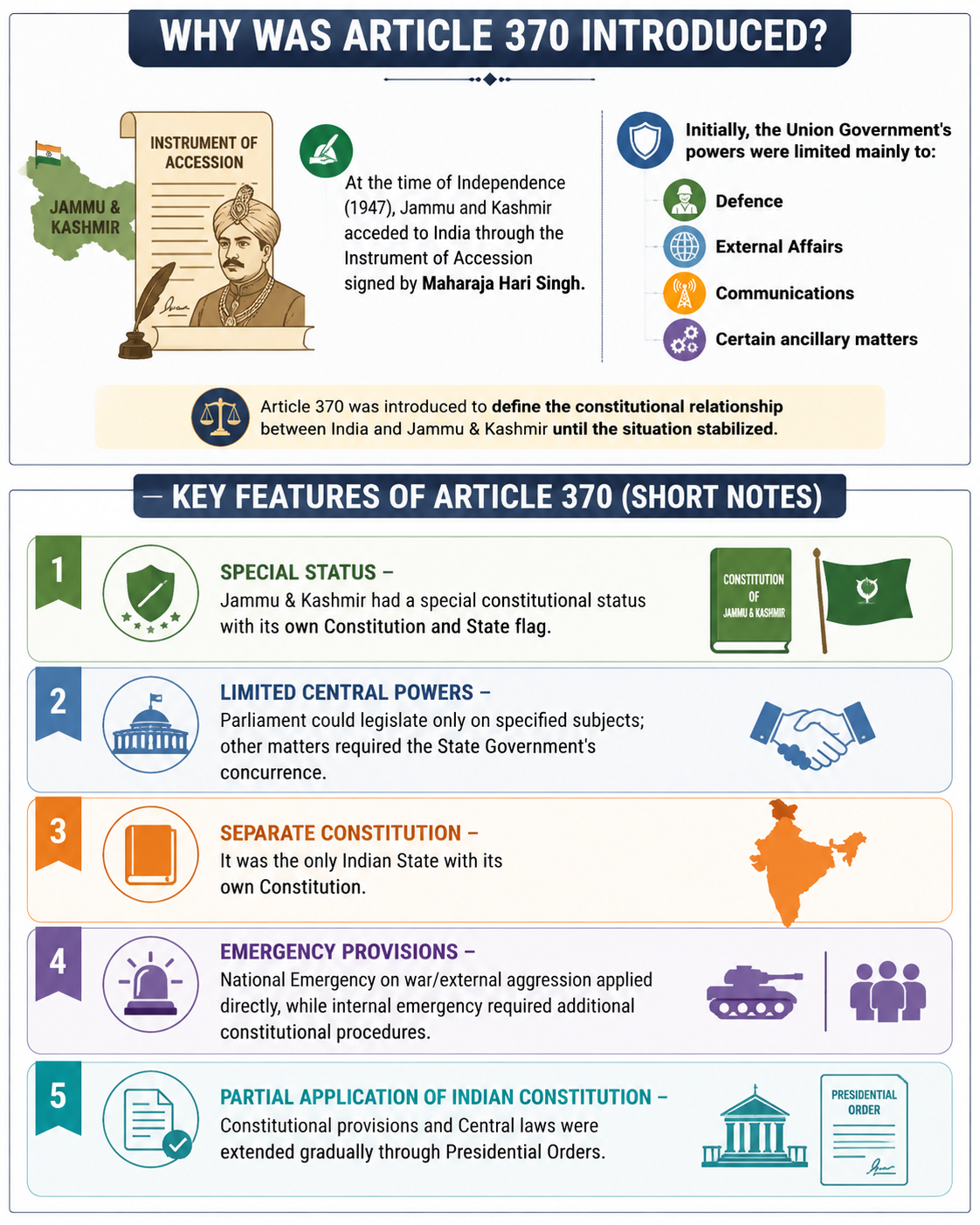
What is Article 370?
Article 370 was a temporary provision in the Constitution of India that granted special autonomous status to the former State of Jammu and Kashmir (J&K). It came into effect on 26 January 1950 and was included under Part XXI of the Constitution, titled Temporary, Transitional and Special Provisions.
Article 35A
Article 35A was introduced through the Constitution (Application to Jammu and Kashmir) Order, 1954.
It empowered the Jammu & Kashmir Legislature to define "Permanent Residents" and provide them with special rights regarding:
-
Ownership of immovable property
-
Government jobs
-
Scholarships
-
Settlement rights
-
Other welfare benefits
Empowerment Through Constitutional Rights
One of the major themes of the statement was the extension of constitutional rights:
-
Women and marginalized communities who had previously been deprived of certain constitutional protections were stated to have benefited from the full application of the Constitution of India.
-
The government described this as an important step towards social justice and equality.
J&K was in fact a relatively better-performing State before 2019 on indicators such as life expectancy, poverty, infant mortality, government doctors per capita, and human development index.
Data gaps after the bifurcation make meaningful comparison difficult on several socio-economic indicators. For instance, the annual finance audit reports of the Comptroller and Auditor General of India (CAG) note missing data in many sections.
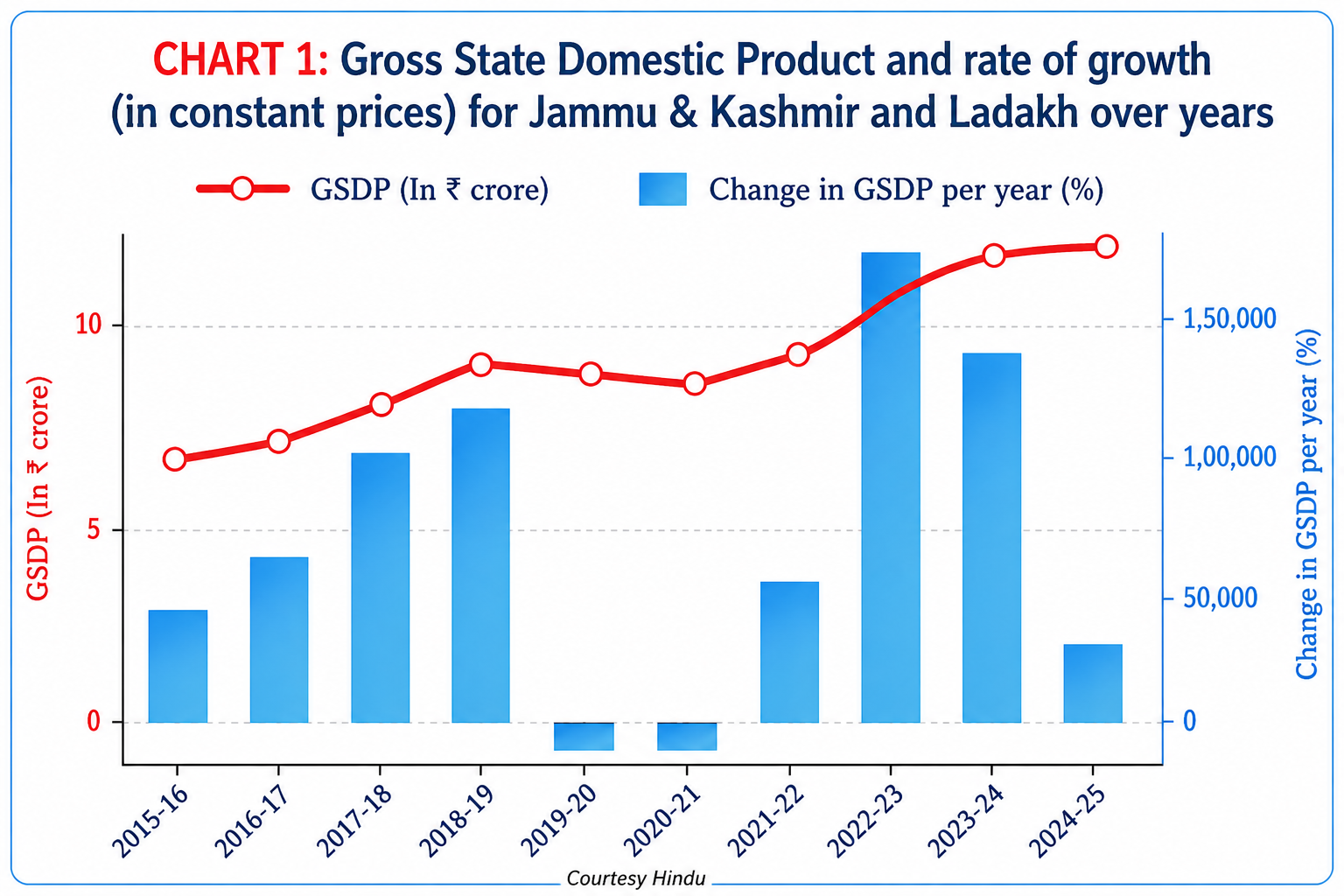
Data shows that J&K's economy contracted by 1% in real terms in 2019-20 and shrank further during the pandemic in 2020-21. It rebounded subsequently, partly on a low base, but growth dropped sharply in 2024-25
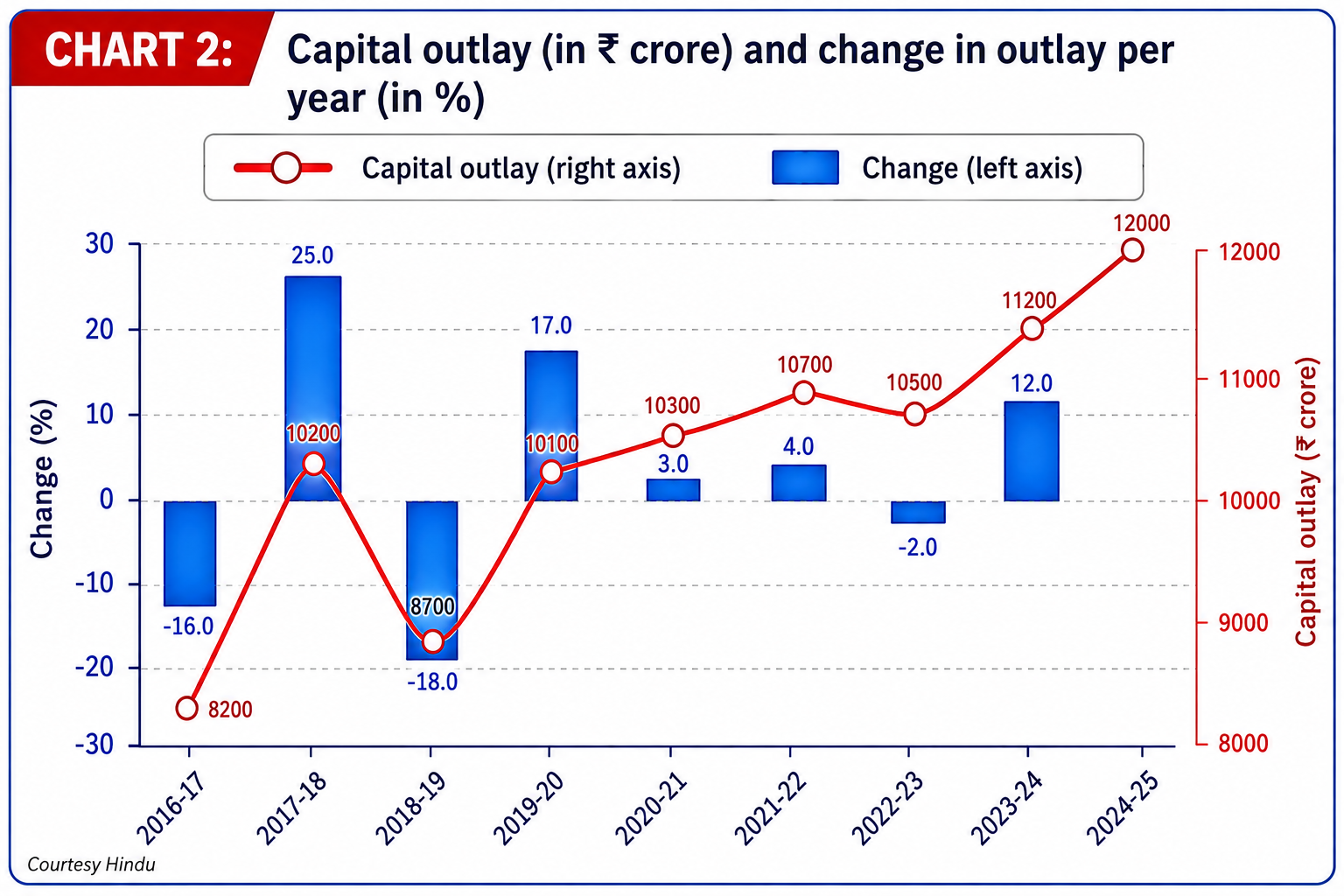
Capital outlay for J&K, according to the CAG's finance accounts reports, did not increase significantly and in fact contracted in the two years since 2019.
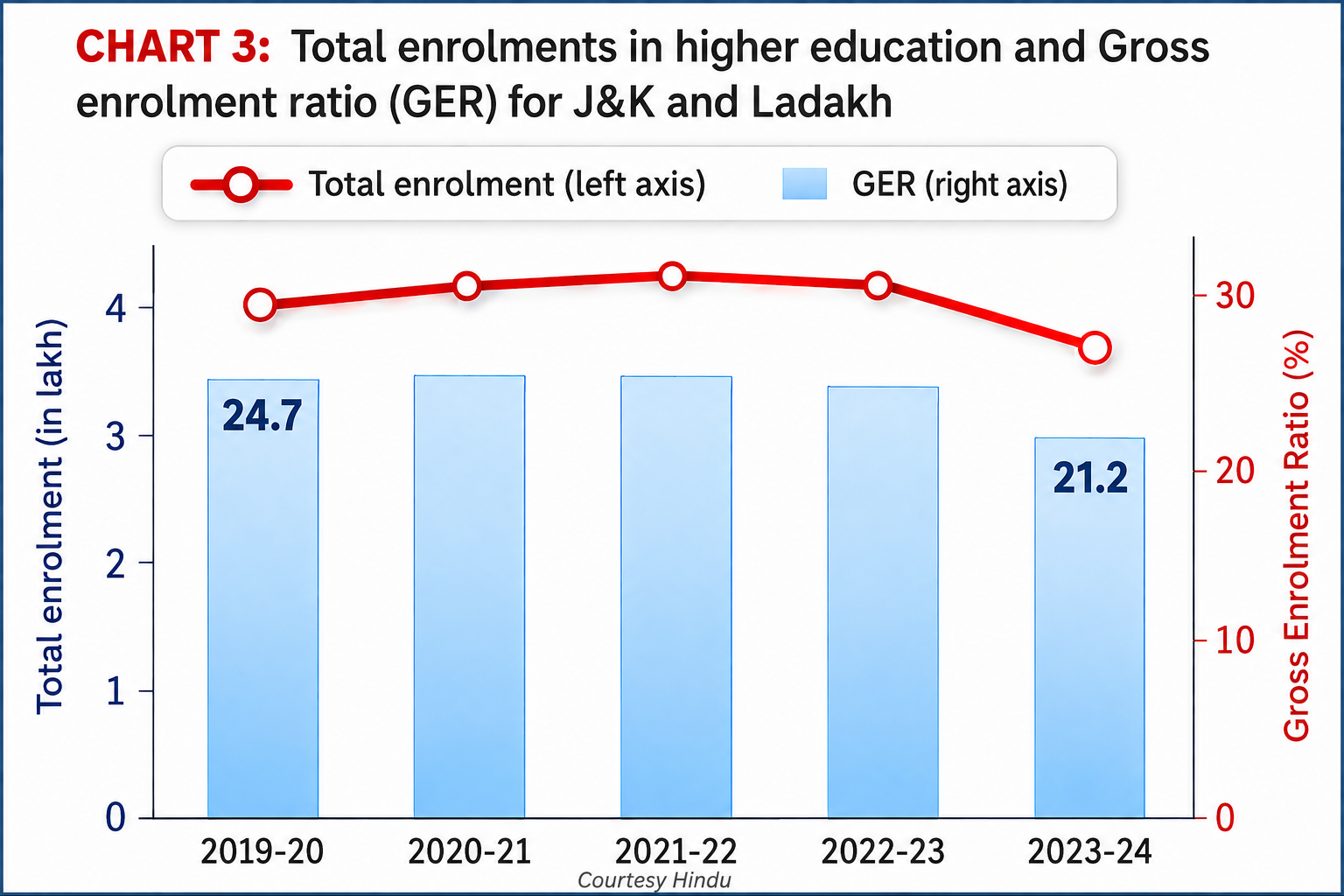
On the education front, higher education enrolment in J&K and its Gross Enrolment Ratio (GER) declined in 2022-23 and 2023-24 – the latest years for which All India Survey on Higher Education reports are available. The drop in enrolments was particularly sharp in 2023-24 (-11%).
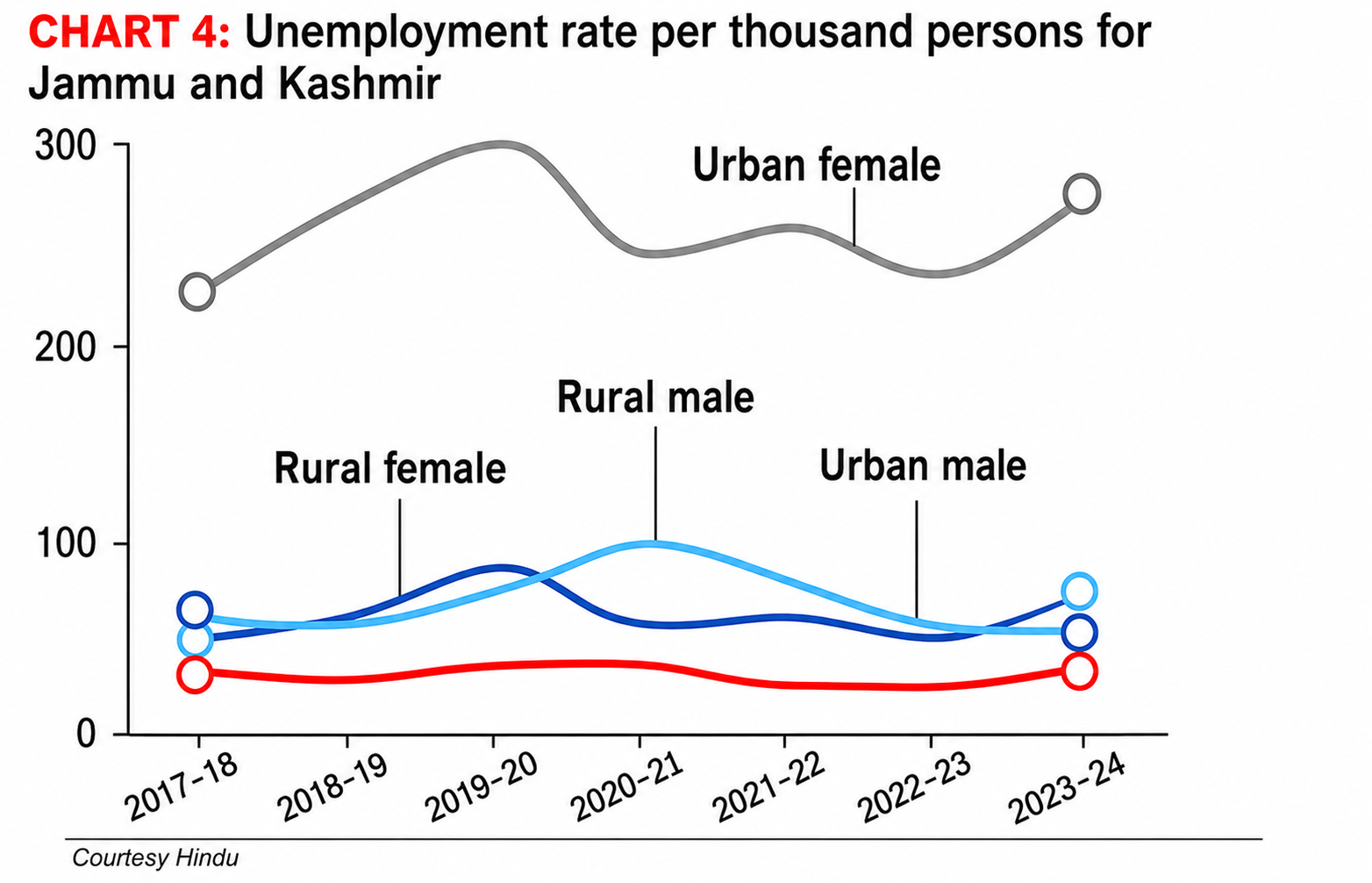
The Periodic Labour Force Survey reports show that while the unemployment rate did not improve noticeably for men, it rose for women, particularly in 2023-24.
RBI data shows that the number of factories in J&K dropped marginally between 2019-20 and 2023-24, though a Lok Sabha reply this week stated marginal improvements in the number of small companies and start-ups.
Though curbing terrorism was a key objective of the 2019 legislations, the number of incidents and deaths of civilians and soldiers have not dropped below 2012-2016 levels.
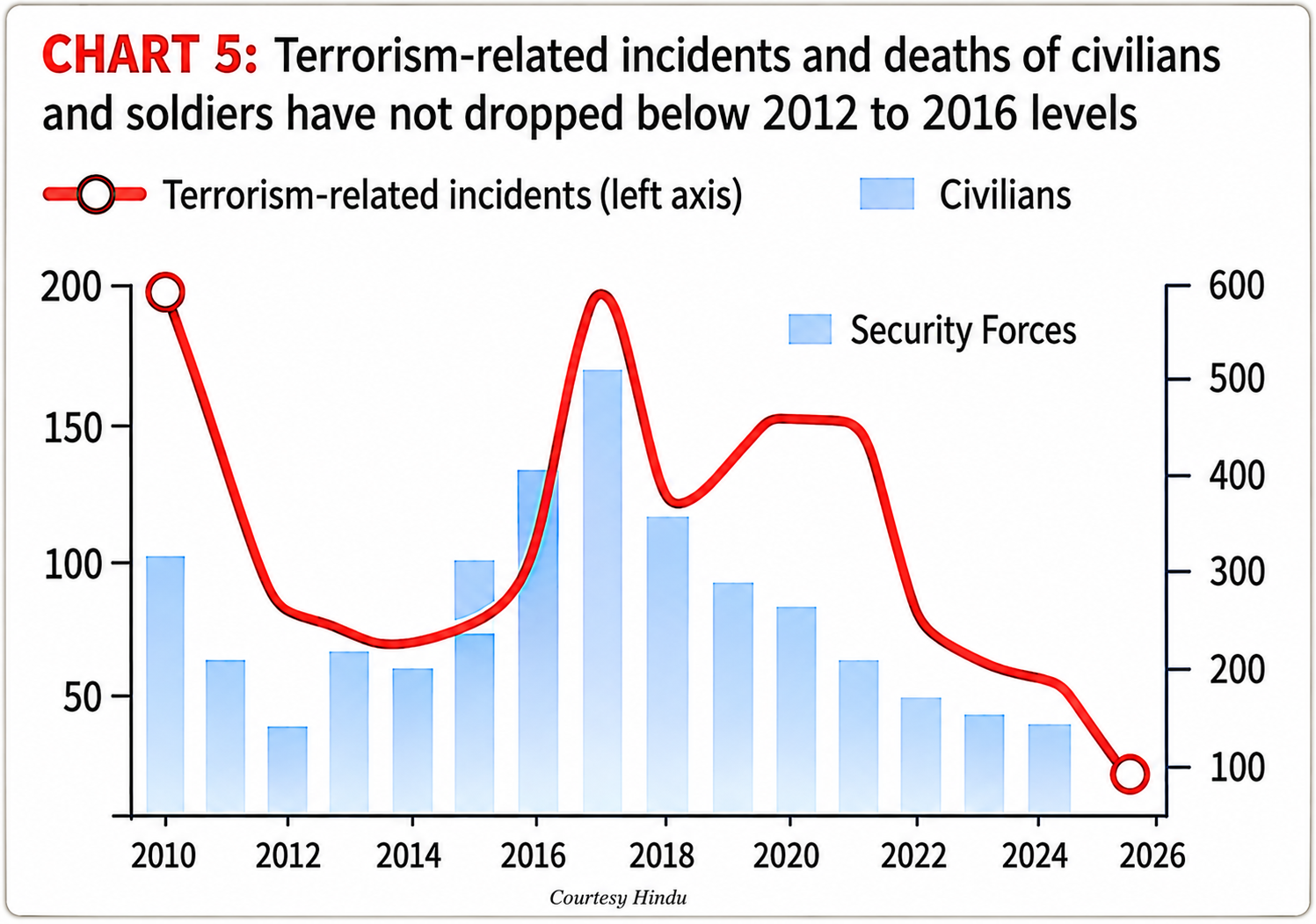
Meanwhile, cases registered under the draconian Unlawful Activities (Prevention) Act and the number of undertrials and detenues have increased sharply. J&K's Freedom House score for civil liberties and political rights has also declined since 2019.