The eMudhra certificate controversy highlights how weak cryptographic keys can undermine website security and confidence in digital services. The article examines the need for stronger technical audits, corporate accountability and reliable digital tru
UPSC syllabus linkage:
GS II: E-governance and regulatory accountability.
GS III: Cybersecurity, information technology and technological self-reliance.
GS IV: Corporate responsibility and accountability.
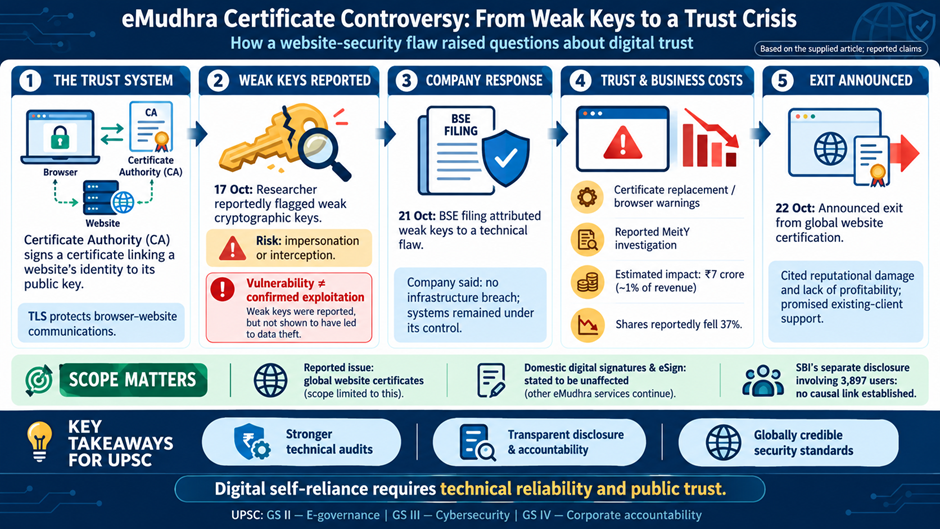
Concerns over weak cryptographic keys associated with eMudhra’s website certificates have brought digital trust infrastructure under scrutiny. Following the reported security lapse, the company announced on 22 October that it would exit the global website certification business.
The episode raises an important question: How can India ensure that the institutions supporting secure online services are technically reliable and accountable?
What Is eMudhra?
eMudhra Ltd is a Bengaluru-based company founded in 2008 by Venkatraman Srinivasan. It provides digital identity verification, cybersecurity and paperless workflow solutions.
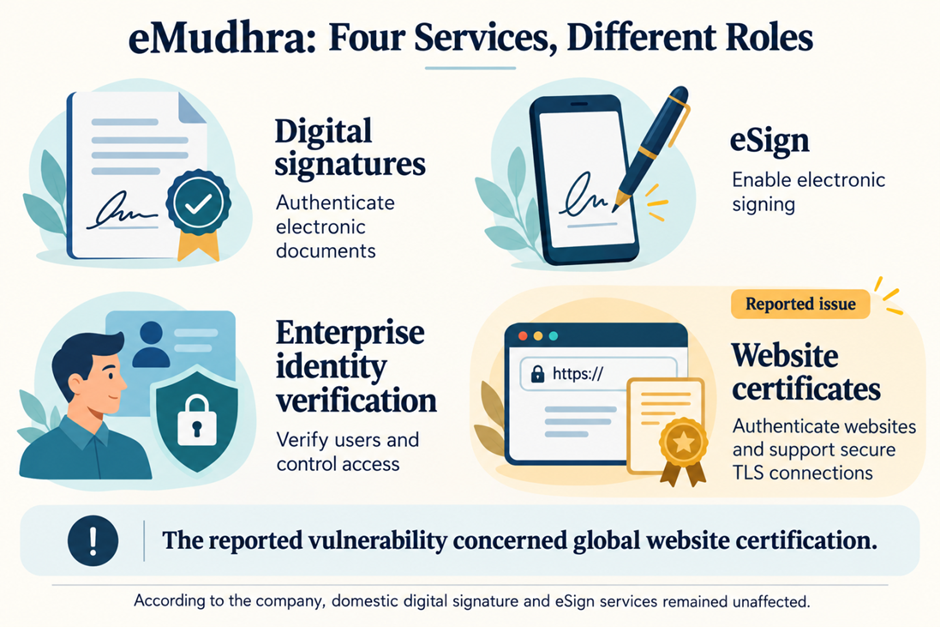
Its services include:
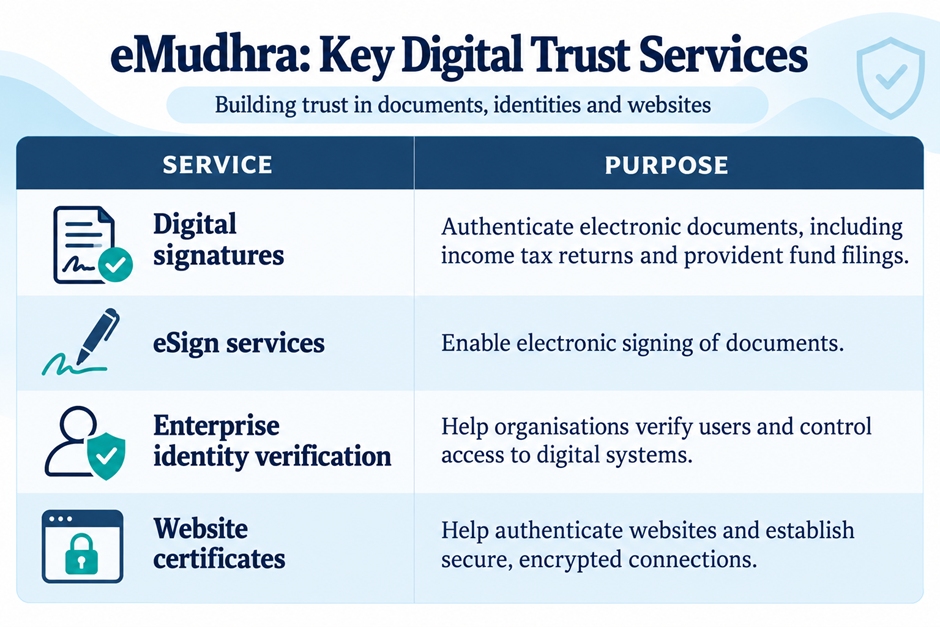
The reported vulnerability concerned its global website certification business; domestic digital signature and eSign services were stated to be unaffected.
Understanding Digital Certificates
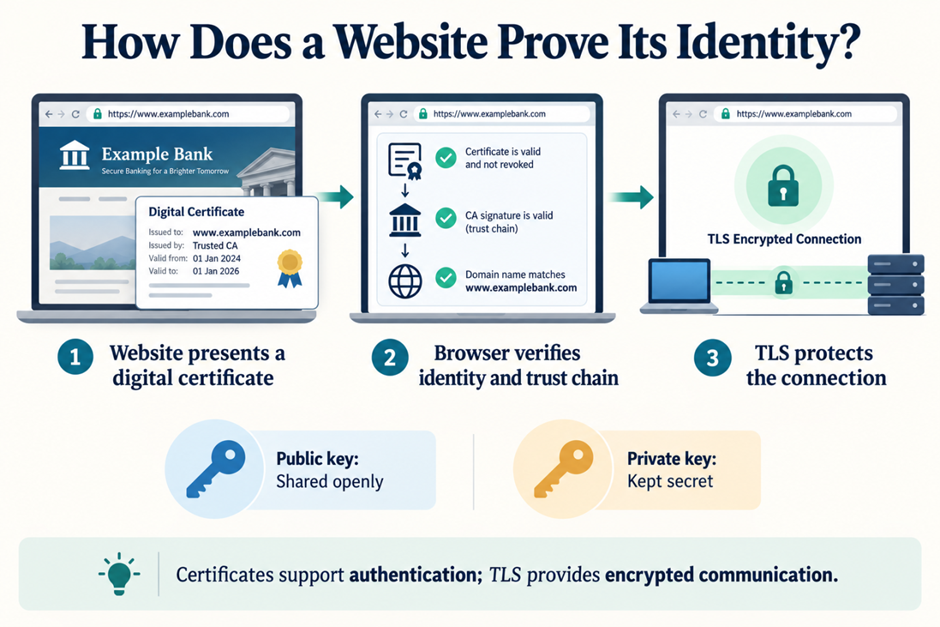
When a user visits a banking or government website, the browser needs to verify that it is communicating with the genuine website.
A digital certificate links a website’s identity to its public cryptographic key. A trusted Certificate Authority (CA) digitally signs the certificate, allowing browsers to verify that link.
Certificates support Transport Layer Security (TLS), which protects communications between users and websites.
|
Certificate revocation |
Withdrawal of a certificate’s validity before its scheduled expiry. |
A valid website certificate does not guarantee that a website’s content or business practices are trustworthy.
What Was the Security Concern?
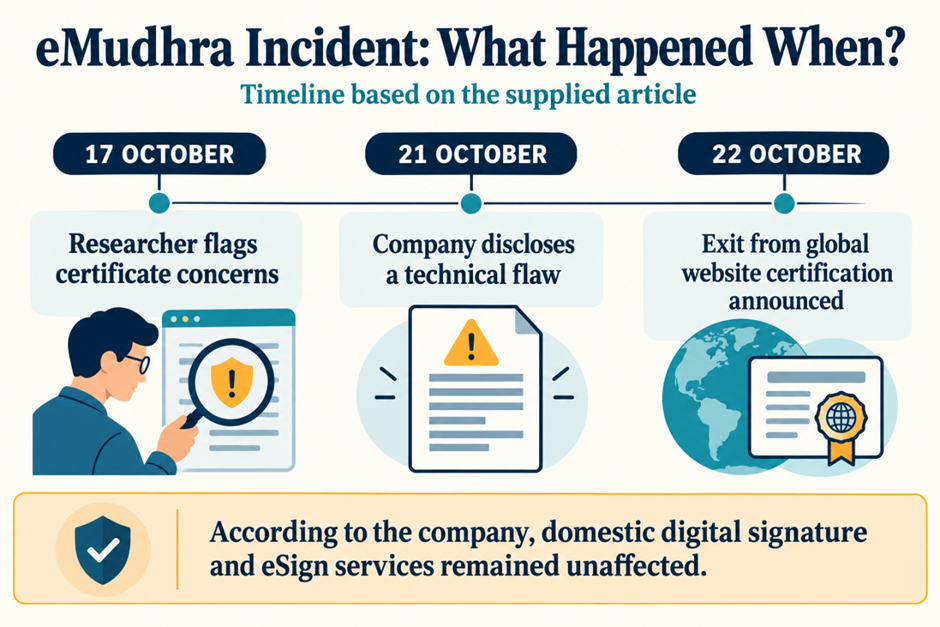
On 17 October, a cybersecurity researcher reportedly raised concerns on Mozilla’s incident tracker about weak cryptographic keys associated with eMudhra’s certificates.
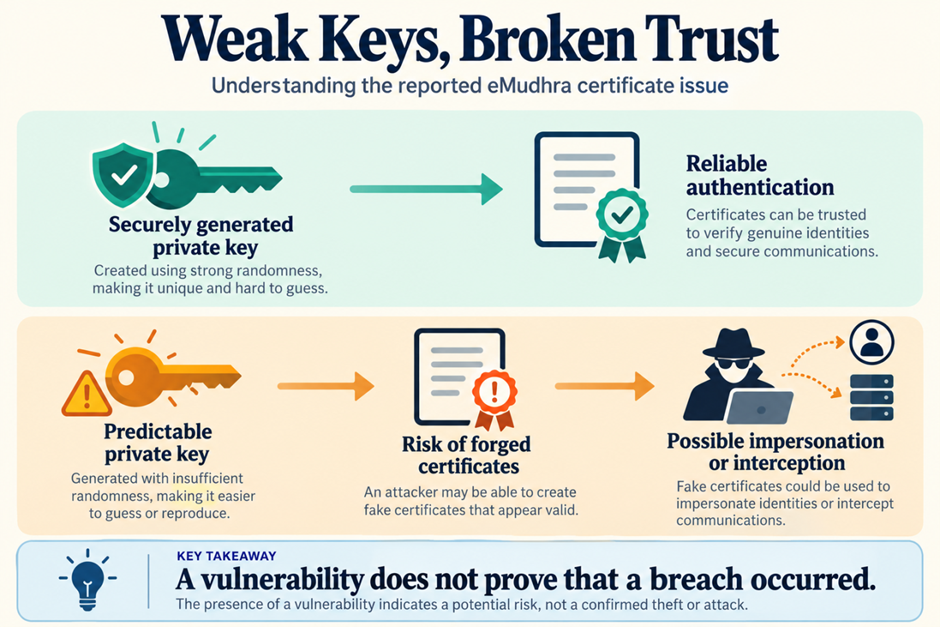
Cryptographic security depends on keys being generated securely and being computationally difficult to recover. Weak keys can undermine this protection and potentially enable:
-
Website impersonation
-
Interception of sensitive communications
-
Compromise of authentication and digital trust
However, identifying a vulnerability does not establish that it was successfully exploited. No breach directly linked to the reported certificate vulnerability had been confirmed in the information provided.
How Did the Company Respond?
In a 21 October BSE filing, eMudhra attributed the weak keys to a technical flaw and stated that it was investigating the cause.
The company maintained that:
-
No cyber breach of its infrastructure had occurred.
-
It retained control over its systems.
-
Domestic digital signature and eSign services remained unaffected.
It subsequently announced its withdrawal from the global website certification business, citing reputational damage and lack of profitability, while assuring support for existing clients.
What Were the Reported Consequences?
Service and Security Risks
Affected services could experience browser security warnings or disruptions as certificates lose trust or require replacement.
Regulatory Scrutiny
MeitY reportedly initiated an investigation, while stating that the affected global web-security division fell outside its regulatory audit scope. This raises questions about oversight of digital services operating across jurisdictions.
Financial and Reputational Costs
The company estimated the direct financial impact at around ₹7 crore, or 1% of revenue. Its shares reportedly fell 37% following the disclosure.
The wider concern is the loss of confidence in a business whose core function is to provide digital trust.
Why Does It Matter for India?
Dependence on Secure Digital Services
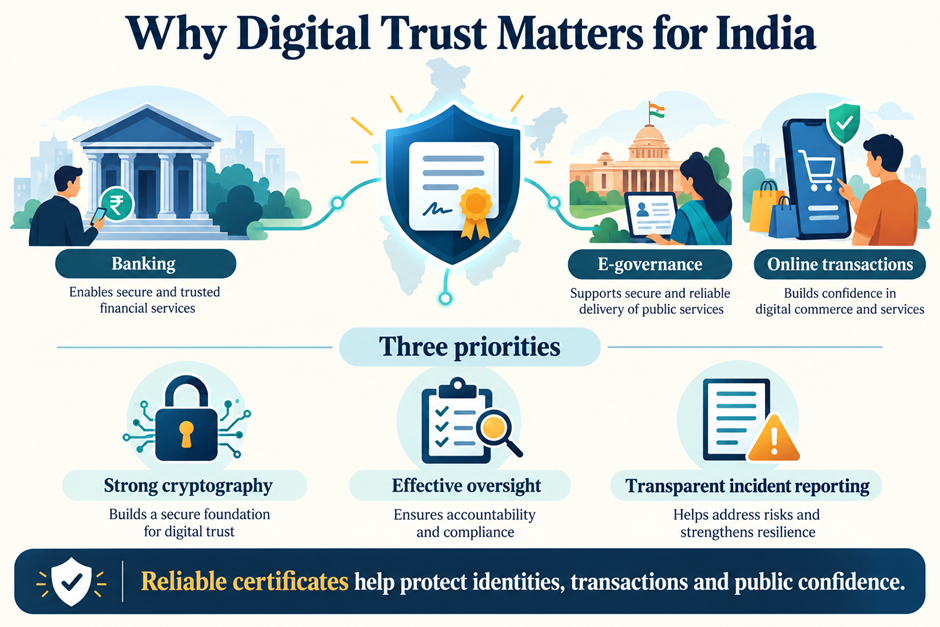
Banking, taxation, identity verification and e-governance depend on reliable authentication and secure communications. Weaknesses in supporting trust infrastructure can affect confidence in these services.
Accountability of Private Providers
Private firms perform important functions within the digital economy. Their role requires strong security practices, transparent disclosures and effective oversight.
Technological Self-Reliance
The exit of an Indian provider raises questions about domestic capability in globally trusted certification services. Self-reliance must be supported by technical competence and internationally credible security standards.
Distinguishing Correlation from Causation
SBI separately reported the exposure of personal information belonging to 3,897 users, including mobile numbers, addresses and loan details.
No causal link between that disclosure and eMudhra’s certificate vulnerability was established. The incidents should therefore be assessed separately.
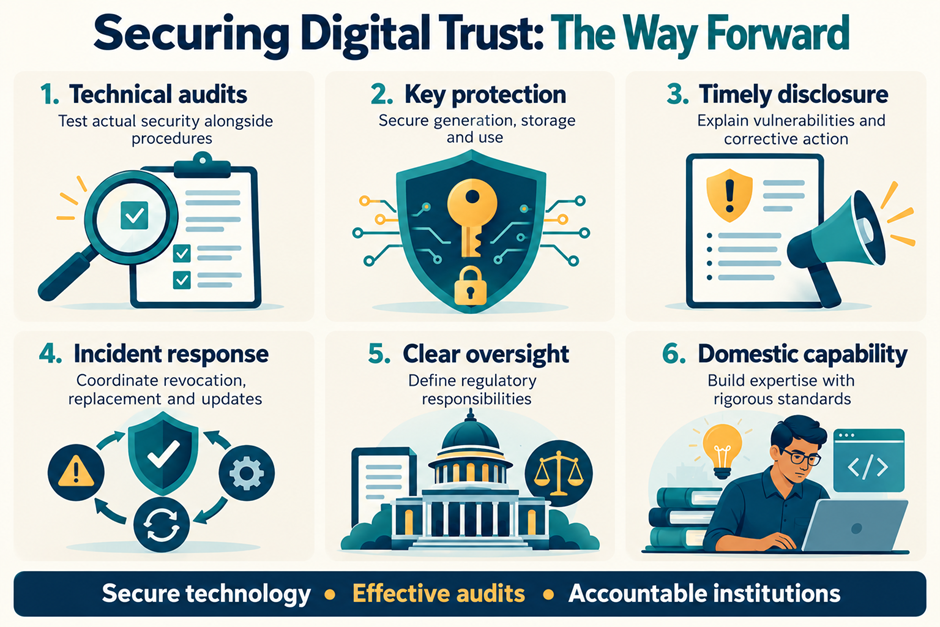
The eMudhra controversy illustrates how weaknesses in digital trust infrastructure can create consequences beyond a single company. India’s digital transformation requires secure technology, effective technical audits and accountable institutions to sustain public confidence.