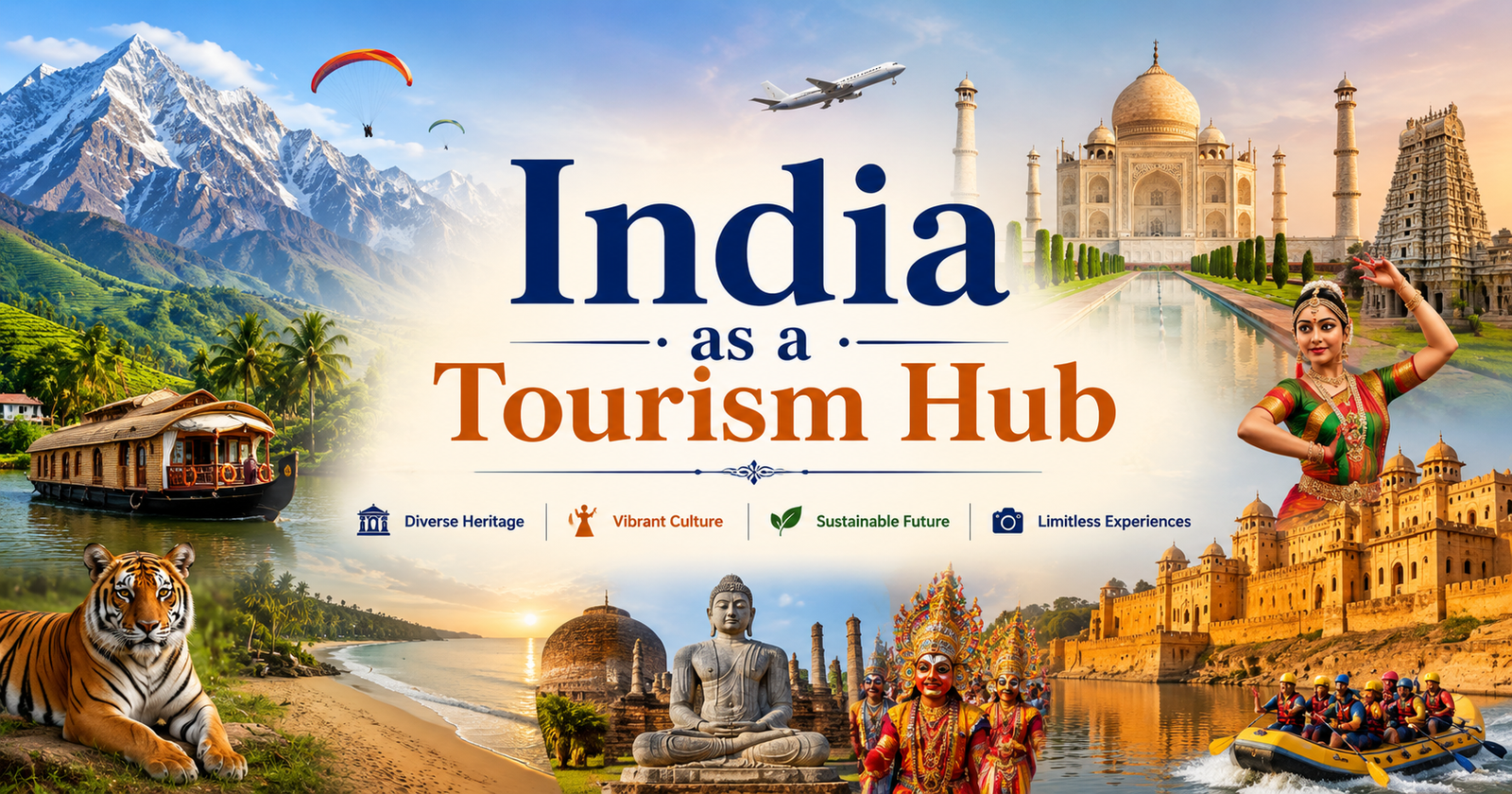
Explore how India is transforming into a global tourism hub through heritage, infrastructure, digital initiatives, sustainable tourism, government schemes, and inclusive economic growth.
Syllabus Areas:
GS I - Culture
GS II - Governance
GS III - Economy
India is rapidly emerging as a leading global tourism destination by leveraging its rich cultural heritage, natural diversity, spiritual traditions, wellness ecosystem, and improved tourism infrastructure. The Government is promoting tourism as an engine of economic growth, employment generation, community participation, and sustainable development.
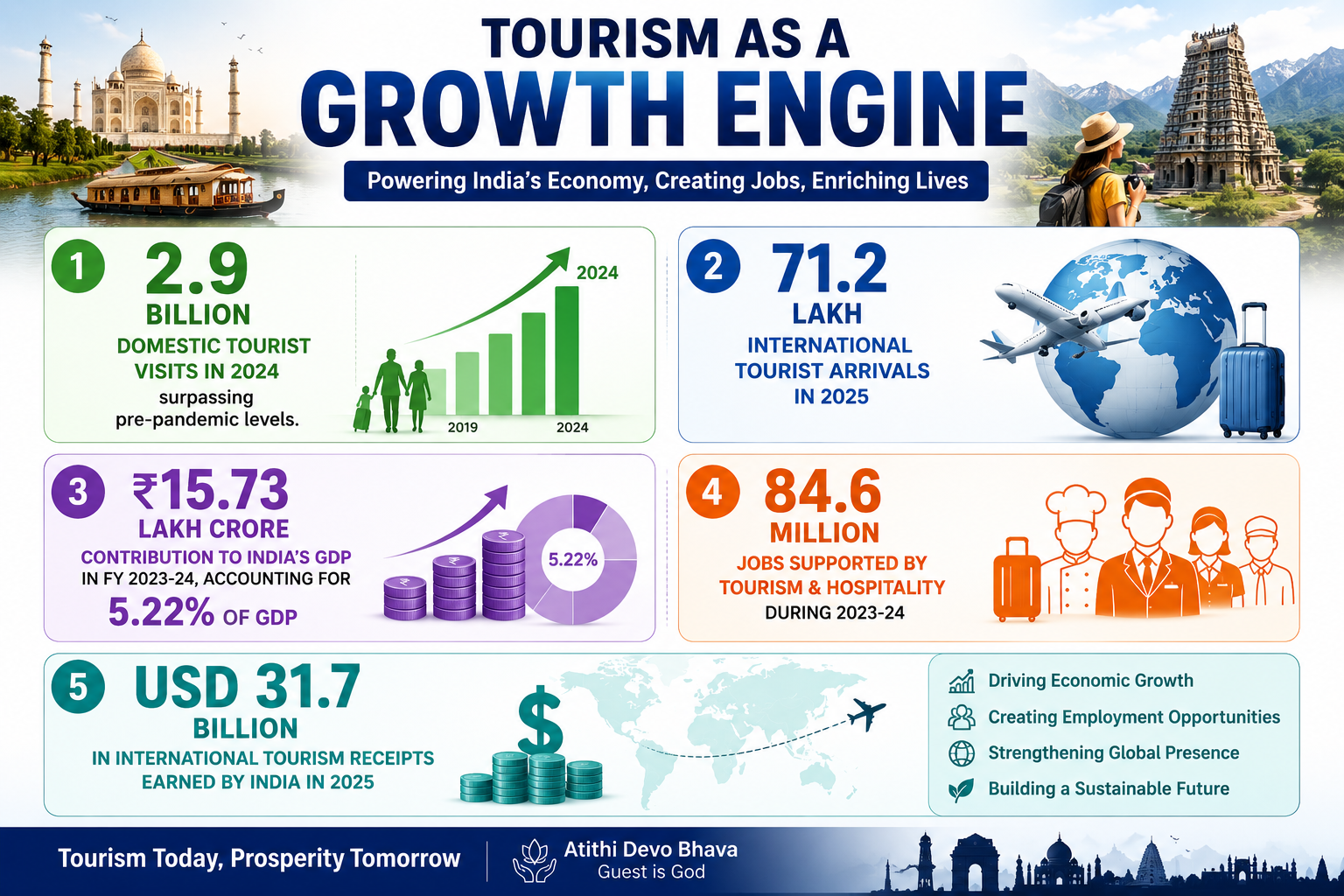
Tourism as a Growth Engine
Tourism has become one of India's fastest-growing economic sectors and contributes significantly to employment, regional development and livelihood generation.
Major Tourism Segments
1. Spiritual and Pilgrimage Tourism
India attracts millions of pilgrims every year through:
-
Kashi
-
Ayodhya
-
Tirupati
-
Amritsar
-
Puri
Improved connectivity and visitor facilities have strengthened India's position as a spiritual tourism destination.
2. Buddhist Circuit Tourism
The Buddhist Circuit connects important sites associated with Lord Buddha and attracts pilgrims from across Asia and the world, strengthening India's cultural diplomacy.
3. Heritage and Cultural Tourism
Major attractions include:
-
Forts
-
Palaces
-
Archaeological monuments
-
Museums
-
Heritage cities
-
Folk traditions
-
Regional festivals
-
Traditional cuisine
4. Wellness and Medical Tourism
India has become a preferred destination for:
-
Yoga
-
Ayurveda
-
Naturopathy
-
Traditional healing systems
-
Affordable and quality healthcare
The combination of ancient wellness traditions and modern medical facilities has enhanced India's global reputation.
5. Eco-tourism and Wildlife Tourism
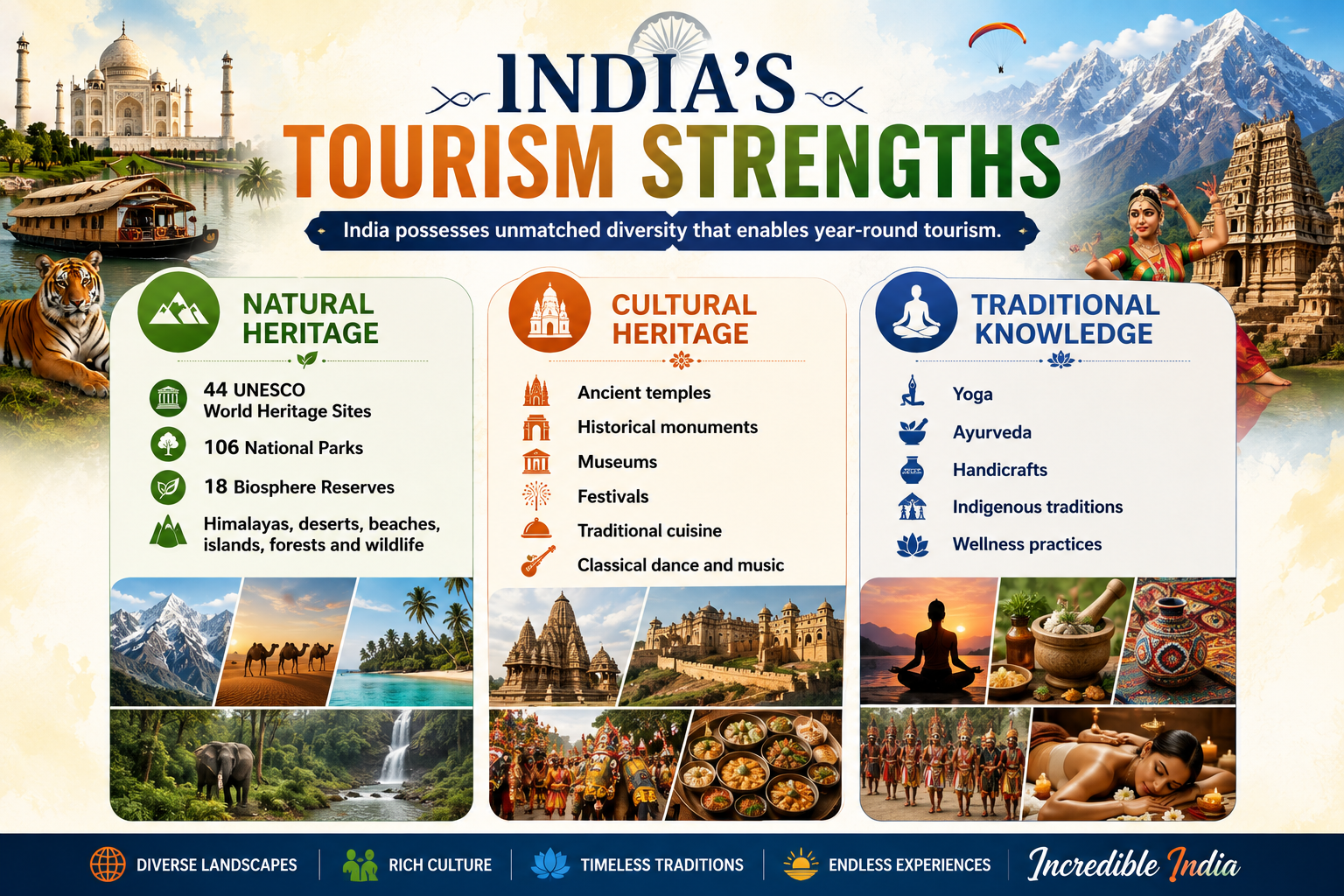
Eco-tourism promotes responsible travel to natural areas, conserving biodiversity, supporting local communities, encouraging sustainable livelihoods, protecting wildlife habitats, and fostering environmental awareness through nature-based experiences.
Major attractions include:
-
National Parks
-
Tiger Reserves
-
Mangroves
-
Himalayan landscapes
-
Bird watching
-
Wildlife safaris
-
Trekking
-
Turtle conservation
-
Nature interpretation centres
6. Rural and Homestay Tourism
Rural and homestay tourism offers authentic village experiences, promotes local culture and handicrafts, generates sustainable livelihoods, empowers communities, and preserves traditional lifestyles through responsible travel.
Famous Rural & Homestay Tourism Destinations in India
-
Khonoma, Nagaland – India's first green village, community-based tourism.
-
Mawlynnong, Meghalaya – Known as one of Asia's cleanest villages.
-
Spiti Valley, Himachal Pradesh – Traditional Himalayan homestays.
-
Kumarakom, Kerala – Village homestays with backwater experiences.
-
Ziro Valley, Arunachal Pradesh – Apatani tribal culture and eco-tourism.
-
Chettinad, Tamil Nadu – Heritage mansions converted into homestays.
-
Kutch, Gujarat – Rural handicrafts and mud-house stays (Bhungas).
-
Majuli, Assam – River island with Satras and Assamese village life.
-
Hodka Village, Gujarat – Traditional Kutchi culture and community tourism.
-
Pochampally, Telangana – Famous for Ikat weaving and rural craft tourism.
7. MICE Tourism
India is emerging as a major destination for:
-
Meetings
-
Incentives
-
Conferences
-
Exhibitions
Modern convention centres and improved connectivity are helping diversify tourism beyond leisure travel.
G20 and Tourism Promotion
India's G20 Presidency significantly enhanced its tourism visibility.
Achievements
-
Over 200 G20 meetings conducted across 60+ cities.
-
Showcased India's culture, cuisine, heritage and destinations.
-
Promoted lesser-known tourist locations.
-
Strengthened India's global tourism branding.
-
Enhanced MICE tourism potential.
Coastal, Cruise and Adventure Tourism
Coastal, Cruise and Adventure Tourism: Promotes beaches, islands, cruise travel, water sports, trekking, rafting, desert safaris and adventure experiences, boosting visitor engagement and regional economies.
Infrastructure-Led Destination Development
The Government is shifting from developing individual attractions to creating integrated tourism ecosystems.
Major Schemes
1. Swadesh Darshan: A flagship Ministry of Tourism scheme developing integrated theme-based tourist circuits through quality infrastructure, improved connectivity, visitor amenities and sustainable destination development to enhance tourism experiences.
-
76 projects sanctioned
-
75 projects completed
-
Investment exceeding ₹25,295 crore
2. Swadesh Darshan 2.0: An upgraded destination-centric initiative focusing on sustainable, responsible and experience-based tourism by developing world-class infrastructure, enhancing destination competitiveness and improving visitor satisfaction.
-
53 destination-centric projects
-
Worth ₹2,207 crore
3. PRASHAD Scheme: Pilgrimage Rejuvenation and Spiritual Heritage Augmentation Drive (PRASHAD) develops pilgrimage destinations by improving infrastructure, heritage conservation, visitor facilities and accessibility for spiritual tourism.
-
54 pilgrimage infrastructure projects
-
Worth ₹1,726 crore
4. SASCI: (Special Assistance to States for Capital Investment)
Provides financial assistance to States for developing tourism infrastructure, creating globally competitive destinations, improving connectivity, and strengthening visitor amenities to boost tourism-led economic growth.
-
40 projects approved across 23 States
-
Investment of ₹3,295.76 crore
Challenge-Based Destination Development (CBDD)
-
37 projects sanctioned
-
Worth ₹687.99 crore
These schemes focus on sustainable tourism infrastructure and integrated destination development.
Connectivity Improvements
Tourism accessibility has improved through:
-
Vande Bharat trains
-
Railway modernisation
-
UDAN regional air connectivity
-
Airport expansion
-
Better last-mile road connectivity
The Government has announced:
-
Development of 100 new airports
-
Expansion of 200 existing airports
These initiatives improve access to Tier-II and Tier-III destinations.
Sustainable Tourism
India is promoting tourism that is:
-
Environmentally responsible
-
Community-driven
-
Inclusive
-
Climate-resilient
-
Resource-efficient
Focus Areas of Sustainable Tourism
-
Travel for LiFE – Promote environmentally conscious travel.
-
Responsible Tourism – Minimise environmental and cultural impacts.
-
Nature Conservation – Protect biodiversity and ecosystems.
-
Local Employment – Generate livelihoods for communities.
-
Cultural Preservation – Safeguard heritage and traditions.
-
Community Participation – Involve local people in tourism.
-
Balanced Regional Development – Ensure inclusive growth across regions.
Tourism contributes to:
-
SDG 8: Decent Work & Economic Growth
-
SDG 9: Industry, Innovation & Infrastructure
-
SDG 12: Responsible Consumption & Production
-
SDG 14: Life Below Water (sustainable marine tourism)
Way Forward
India aims to become a globally competitive tourism destination by:
-
Developing high-value tourism infrastructure.
-
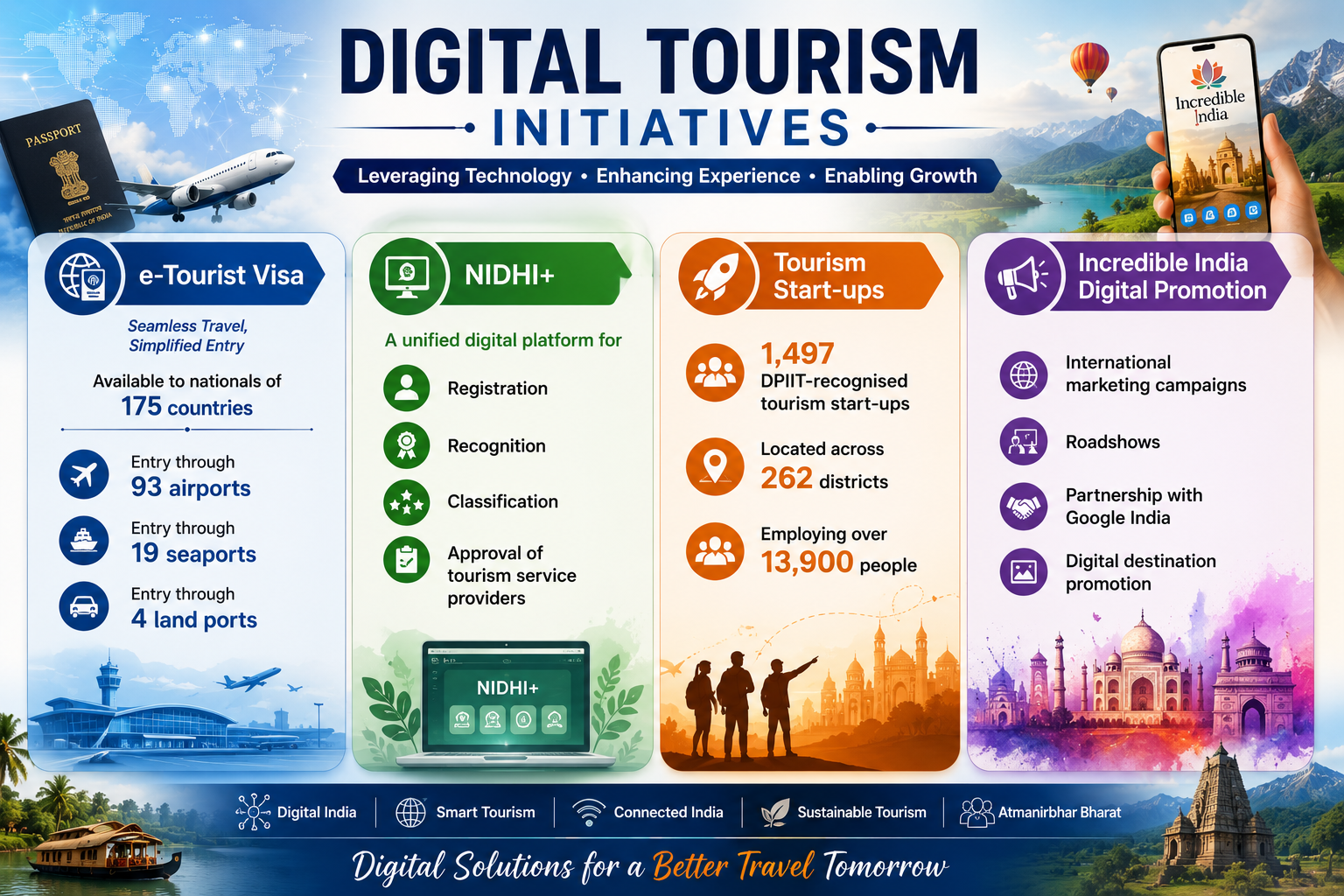
Strengthening digital tourism governance.
-
Promoting sustainable and inclusive tourism.
-
Enhancing connectivity to emerging destinations.
-
Supporting local communities and livelihoods.
-
Encouraging innovation and tourism entrepreneurship.
-
Preserving India's cultural and natural heritage while ensuring long-term economic growth.
India's tourism strategy combines heritage, sustainability, digital innovation and infrastructure to drive economic growth, generate employment, empower local communities and position the country as a globally competitive tourism destination.