The Kerala High Court ruling highlights a legal route under Section 100 of the Patents Act to improve access to unaffordable life-saving medicines. The article examines the balance between public health, affordable cancer treatment.
Syllabus areas:
GS Paper II - Polity, Governance and Social Justice
GS Paper III - Science & Technology and Intellectual Property Rights
Kerala HC gave the centre a legal route to intervene when patented life-saving medicines become unaffordable, holding that the government can invoke section 100 of the patient Act, 1970, to use a patented drug for public health puposes.
Access to Affordable Cancer Medicines: Public Health and Patent Protection
A breast cancer patient approached the Kerala High Court in June 2022, seeking government intervention to make ribociclib, a patented drug manufactured by Novartis AG costing approximately ₹75,000 per month, affordable. Although she died in September 2022, the court continued the case as a suo motu proceeding, recognising its wider public-health implications.
Ribociclib is an oral targeted therapy used to treat HR-positive, HER2-negative advanced or metastatic breast cancer. It works as a CDK4/6 inhibitor, blocking proteins that help cancer cells divide, which slows disease progression and extends survival.

The court subsequently expanded the proceedings to include Eli Lilly’s abemaciclib, another medicine used to treat breast cancer. It asked the Centre to collect data on the number of patients requiring these medicines, how many cannot afford them, and the effectiveness of existing subsidies and price-control mechanisms. However, the report notes that high prices alone do not warrant government intervention.
Abemaciclib, sold under the brand name Verzenio, is an oral targeted therapy developed by Eli Lilly. It works as a CDK4/6 inhibitor to block cancer cell division and is primarily used to treat certain types of HR+/HER2- advanced or metastatic breast cancer.
Section 100 of the Patents Act: Government Use of Patented Inventions
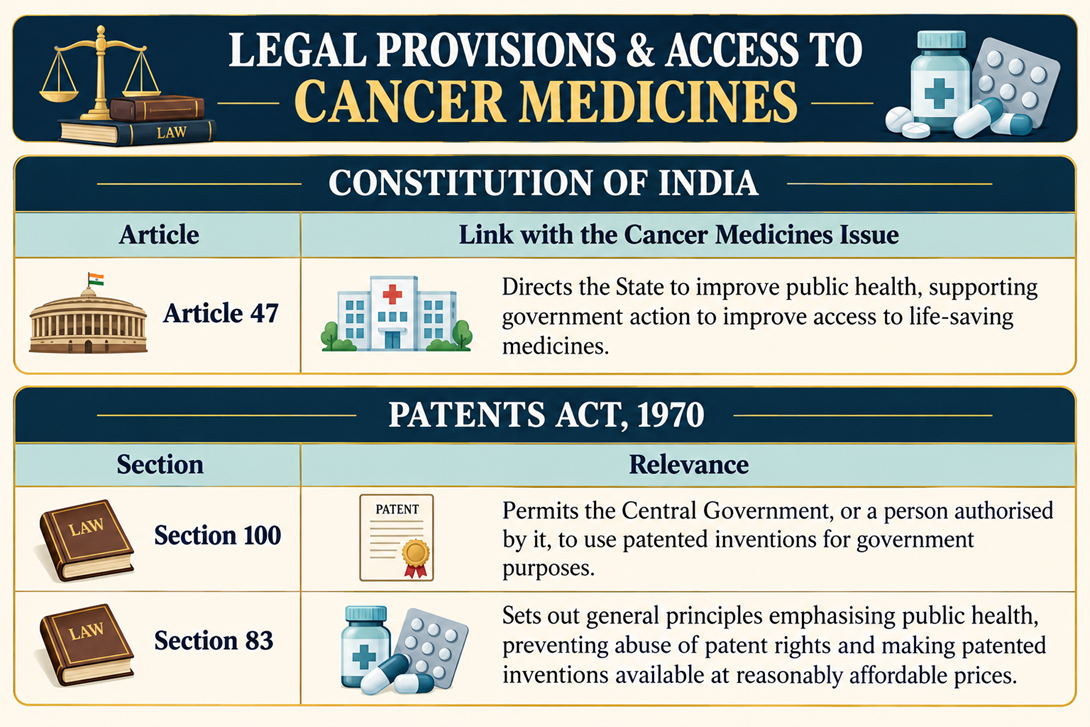
Section 100 of the Patents Act, 1970 permits the Central Government, or a person authorised by it, to use a patented invention for government purposes. In the case discussed, the Kerala High Court interpreted the provision as broad enough to permit the supply of patented medicines to patients on a non-commercial basis.
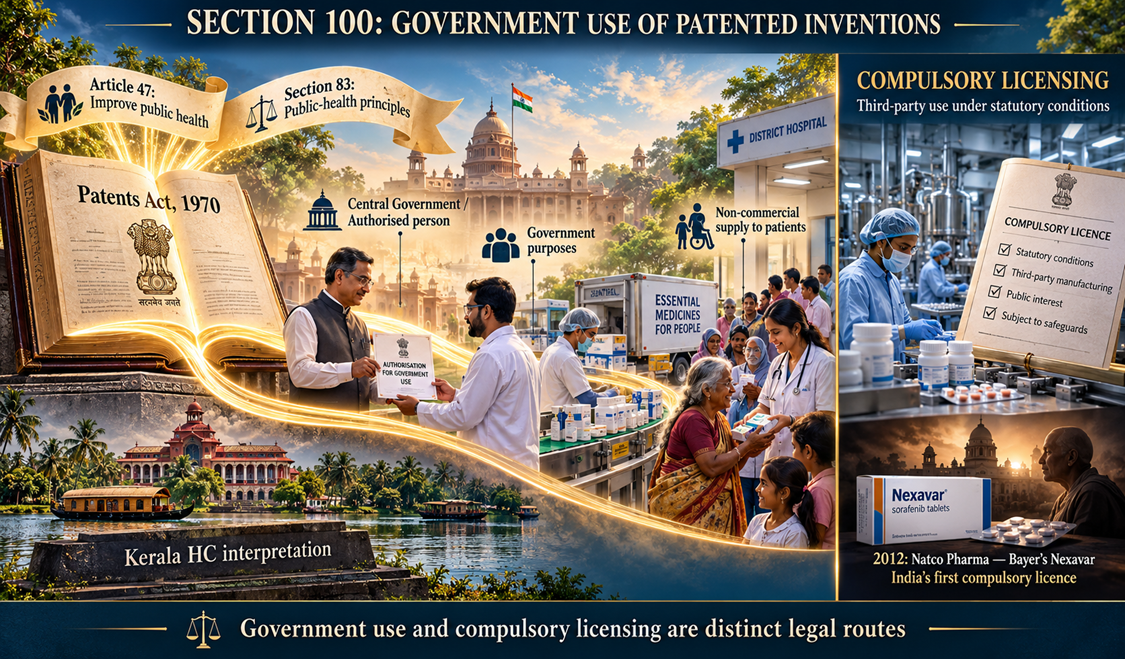
The court linked this power to Article 47, which places a duty on the State to improve public health, and Section 83 of the Patents Act, which incorporates public-health considerations into the patent framework.
Government use under Section 100 is distinct from compulsory licensing, which allows an authorised third party to manufacture, use or sell a patented invention without the patent holder’s consent, subject to statutory conditions. In 2012, Natco Pharma received India’s first compulsory licence for Bayer’s Nexavar, a cancer medicine.
Nexavar (sorafenib), developed by Bayer, is a prescription medication used to treat specific types of liver, kidney, and thyroid cancers. It works as a kinase inhibitor to slow cancer cell growth and cut off their blood supply.
Access to treatments for cancer and rare diseases remains a major healthcare challenge in India. study found that fewer than 3% of patients had access to immunotherapies, highlighting the gap in access to advanced cancer treatment.
Immunotherapies are medical treatments that enlist the body’s own immune system to fight diseases like cancer. They work by boosting immune defenses or training cells to target and destroy harmful cells, offering a precise alternative to traditional therapies.
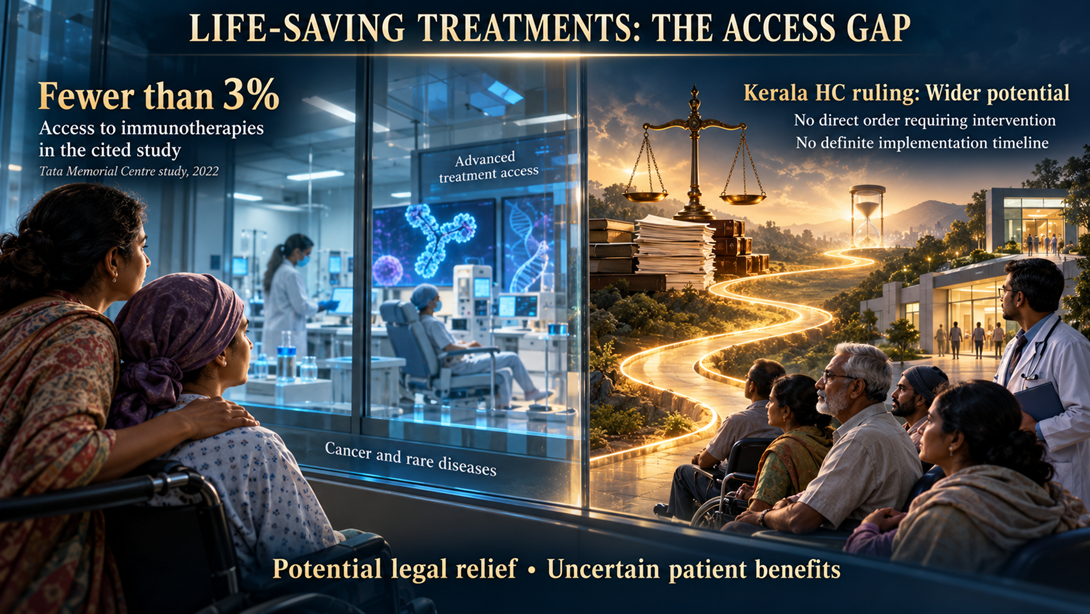
Experts believe the Kerala High Court ruling could have broader implications for access to other life-saving medicines. However, the absence of a direct order requiring intervention or a definite implementation timeline leaves uncertainty about when patients may receive tangible benefits.
The Indian market accounts for a relatively small share of global pharmaceutical companies’ revenues. However, the Kerala High Court judgment highlights a policy tension between protecting pharmaceutical innovation and ensuring access to life-saving medicines.
Pharmaceutical companies rely on predictable patent protection to encourage investment in research and development. Yet, patent exclusivity can restrict access when medicines remain unaffordable for many patients. The central policy challenge is to preserve incentives for innovation while ensuring affordable treatment and protecting public health.
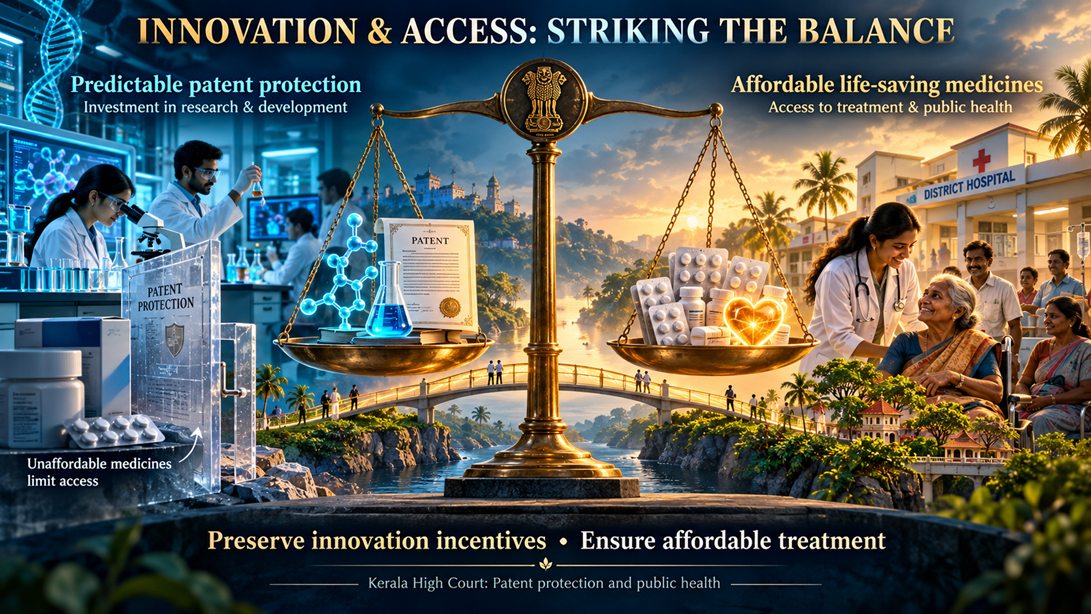
Predictable patent protection provides clear, consistent, and reliable legal frameworks for safeguarding inventions. By ensuring uniform enforcement and well-defined patentability standards, it reduces market uncertainty, minimizes litigation risks, and fosters long-term business investment in innovation.
Legal experts view the Kerala High Court judgment as an attempt to balance patent protection with public-health needs. Some consider it a calibrated approach that preserves patent rights while recognising the need for access to life-saving medicines.
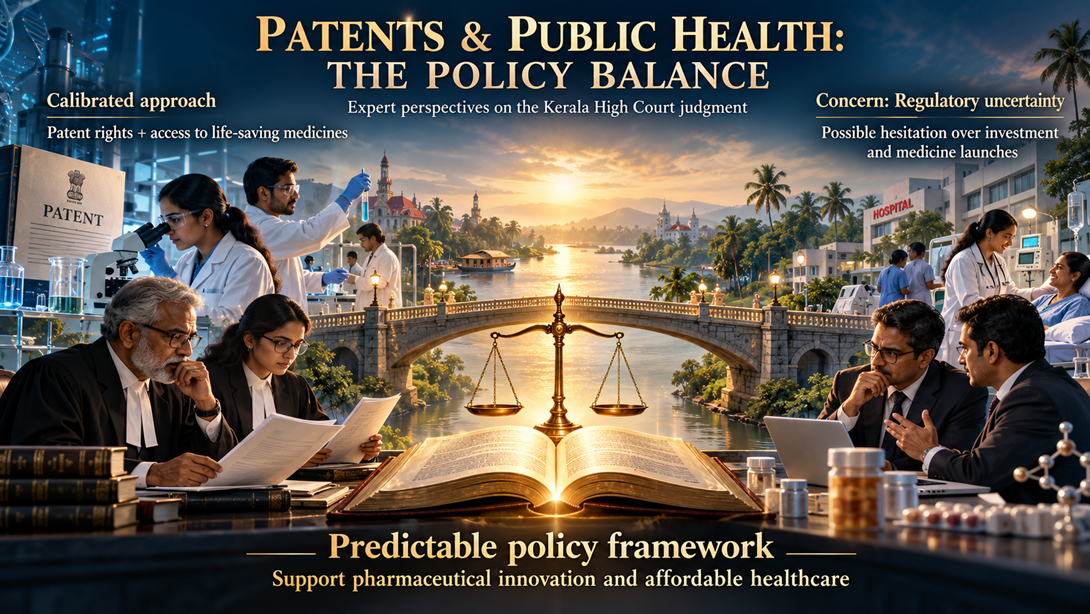
However, other experts caution that the ruling could create regulatory uncertainty, making pharmaceutical companies more hesitant to invest in India or launch expensive patented medicines. These concerns highlight the importance of a predictable policy framework that supports both pharmaceutical innovation and affordable healthcare.