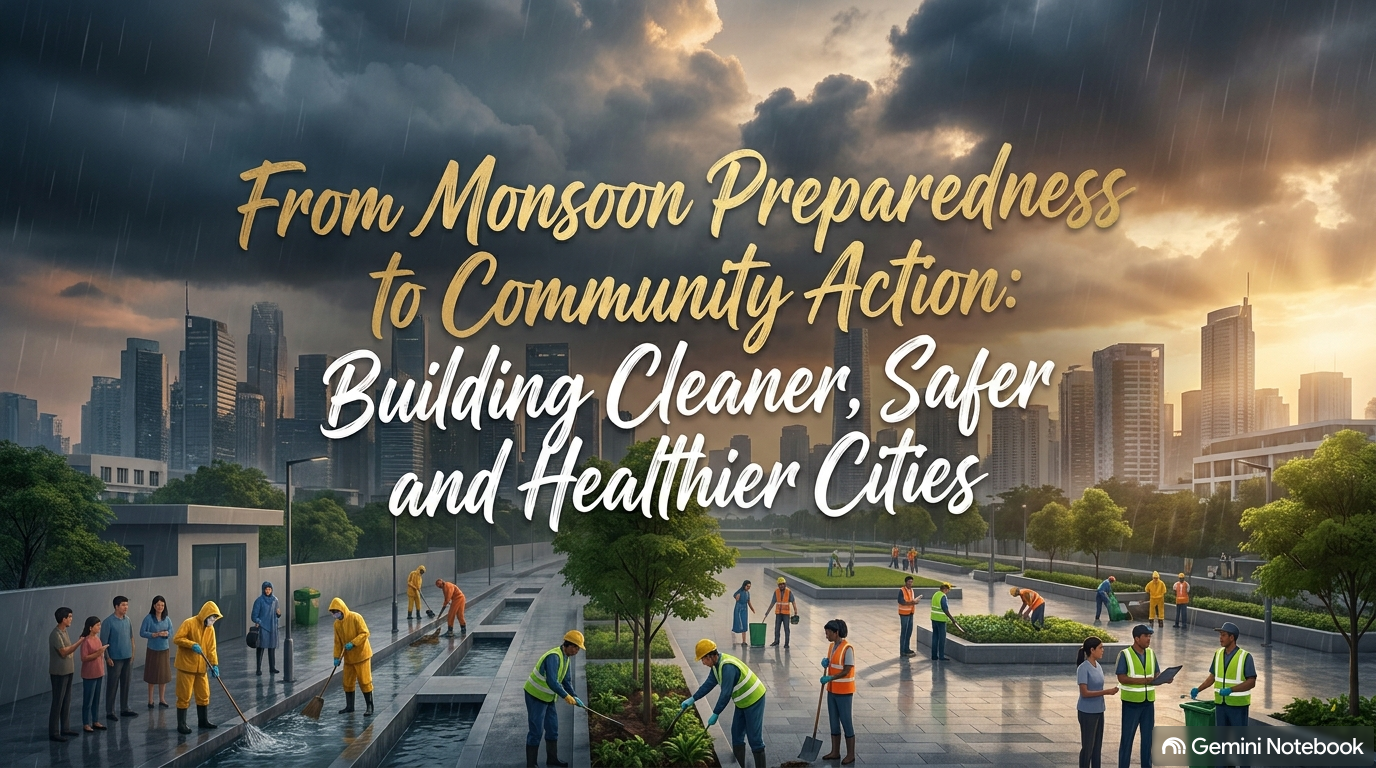
The article highlights how cities across India are strengthening monsoon preparedness through sanitation drives, drain cleaning, waste management, health campaigns and community participation.
Syllabus areas:
Essay
GS Paper I – Indian Society
GS Paper II – Governance & Social Justice
GS Paper III – Environment, Disaster Management & Infrastructure
GS Paper IV – Ethics
Before the Rains, the Cities Move:
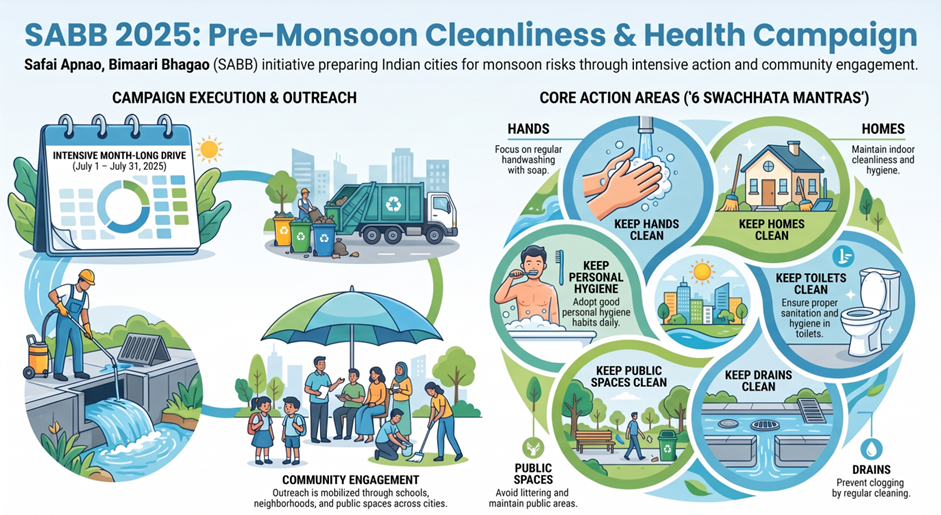
As monsoon approaches, Indian cities prepare for waterlogging, waste accumulation and sanitation risks. Under the Safai Apnao, Bimaari Bhagao 2025 campaign, urban local bodies undertook drain cleaning, waste removal and hygiene promotion from 1–31 July 2025. Its six Swachhata Mantras—clean hands, homes, toilets, drains and public spaces—promoted healthier and safer cities.
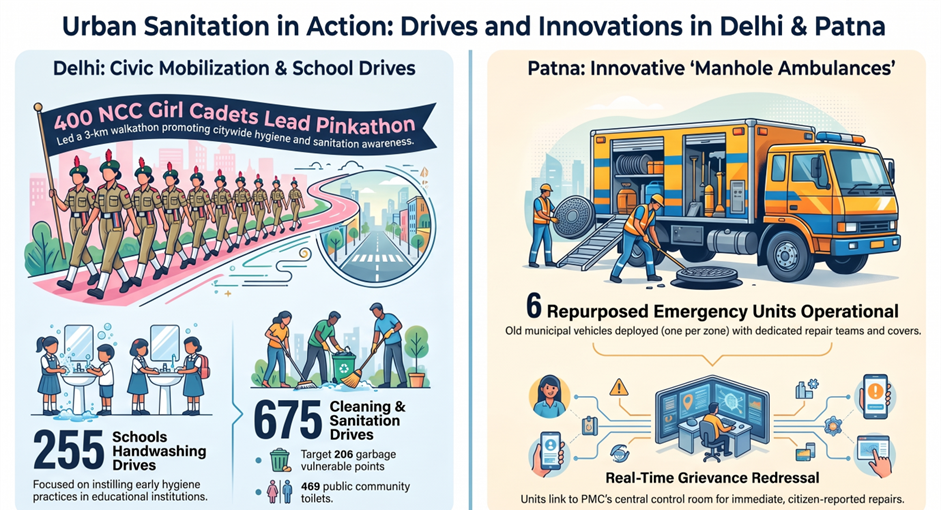
In Delhi, 400 NCC girl cadets led a 3-km Pinkathon promoting hygiene, alongside school handwashing and sanitation drives. In Patna, the Municipal Corporation introduced ‘Manhole Ambulances’, repurposing old vehicles for rapid manhole repairs. Six ambulances, connected to the central control room, enable quicker, citizen-centric responses, especially during monsoons.
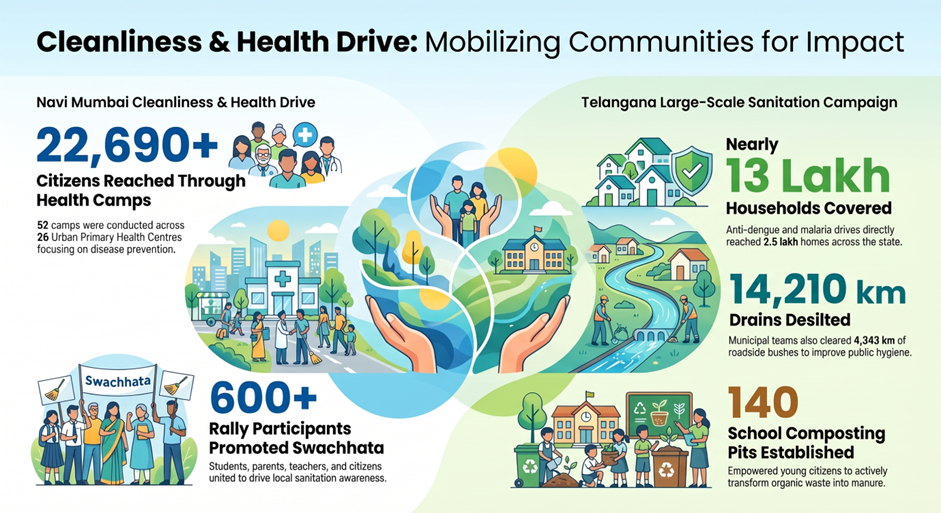
In Navi Mumbai, over 600 students, parents, teachers and citizens joined a Swachhata rally, while 52 health camps across 26 Urban Primary Health Centres reached more than 22,690 citizens with malaria and dengue awareness. In Telangana, nearly 13 lakh households were covered, with 14,210 km of drains desilted and 4,343 km of roadside bushes cleared. Around 2.5 lakh houses received vector-borne disease awareness, while 140 school composting pits promoted sustainable waste management.
In Chhattisgarh, the story begins with themselves. In Pandariya, Self-Help Group members received sanitation training and were introduced to the Swachhata App. They then took part in a cleanliness drive. In Raipur, door-to-door outreach promoted hand hygiene and waste segregation, while Garbage Vulnerable Points (GVPs) were cleaned and beautified.
Northeast Unites for a Cleaner, Safer Monsoon:
In Nagaland, six towns conducted cleanliness drives, school awareness programmes, health camps and rainwater-harvesting activities, engaging nearly 5,000 people. Sikkim focused on garbage-prone areas, source segregation, waste management and disease prevention, with around 4,000 participants. In Assam, drain cleaning, waste segregation, SafaiMitra health check-ups and rainwater harvesting involved nearly 5,500 people.
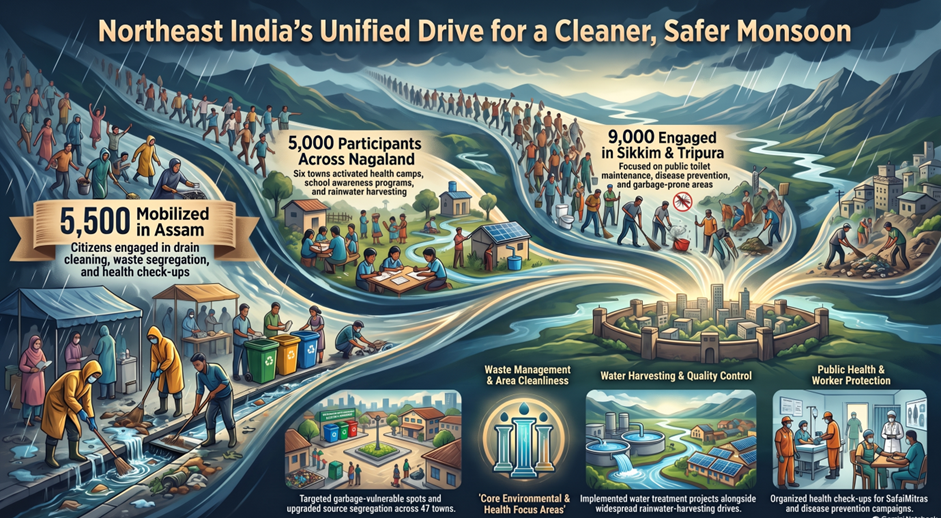
In Tripura, ULBs strengthened waste collection, segregation and public toilet maintenance, engaging around 5,000 people through cleanliness, rainwater harvesting, health and school activities. In Arunachal Pradesh, 47 urban notified towns focused on waste management, water quality and toilet maintenance, alongside water treatment and cleanliness drives targeting garbage-vulnerable areas.
From Back lanes to Clean, Vibrant Neighbourhood Spaces:
Cities across Madhya Pradesh organised backlane cleaning drives with public participation, removing waste and encroachments and cleaning drains to prevent informal dumping and facilitate smooth monsoon rainwater flow.
In Rewa, murals, educational walls, and play equipment made using the 3Rs transformed front lanes into cleaner, safer, child-friendly spaces, combining cleanliness, learning, recreation and community participation.
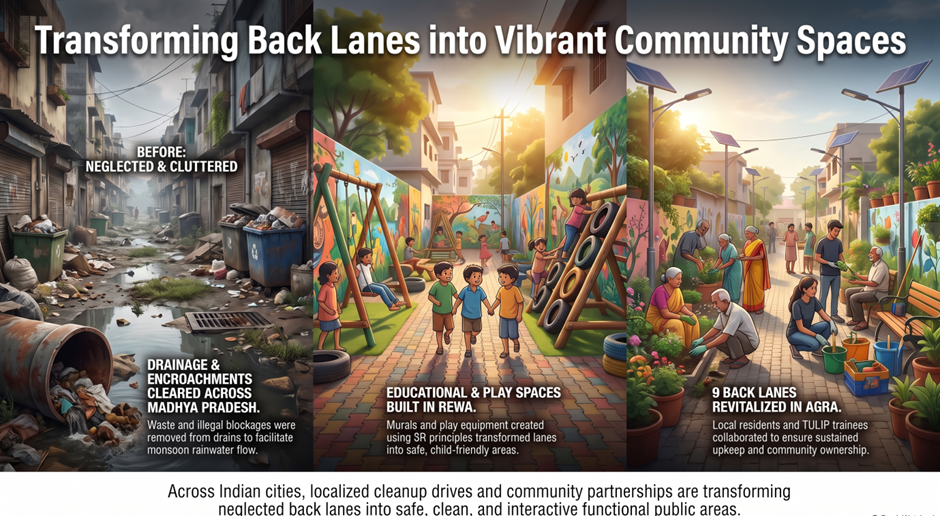
In Agra, nine back lanes were cleaned and maintained with participation from TULIP trainees and local residents, strengthening community ownership, neighbourhood beautification and sustained upkeep of shared public spaces.
From Safety to Opportunity:
The Safai Mitra Suraksha Challenge 2021 focused on health education, protective equipment, worker welfare and reducing occupational risks. Under Swachh Bharat Mission–Urban 2.0, MoHUA promotes PPE, training and safety awareness to work towards zero fatalities in sanitation work.
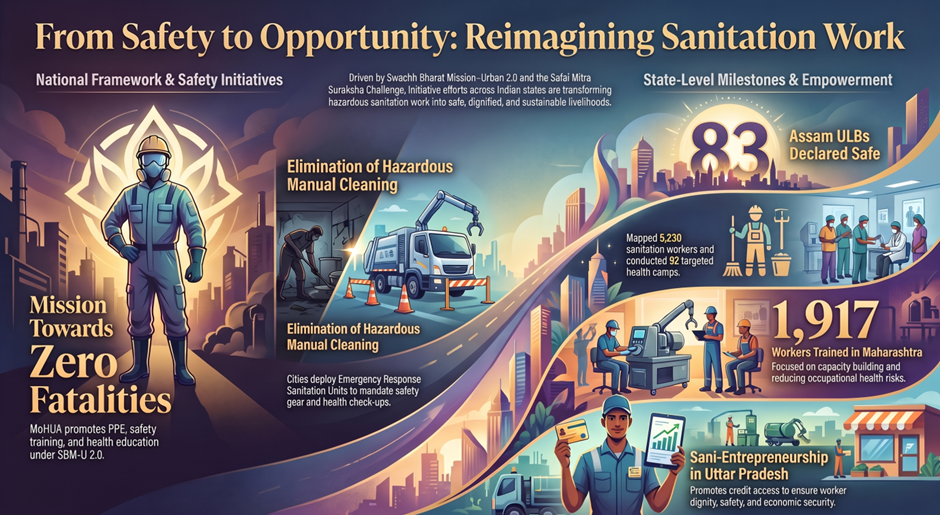
Chandigarh prohibited hazardous manual sewer cleaning in 2018 and operates an Emergency Response Sanitation Unit providing safety gear and medical check-ups. In Assam, 83 of 96 ULBs declared themselves SafaiMitra Surakshit Shehar, with 5,230 workers mapped and 92 health camps conducted. Maharashtra trained 1,917 workers. Uttar Pradesh promotes credit and livelihood opportunities, supporting safety, dignity, economic security and sani-entrepreneurship.
From Preparedness to Community Action:
As the rains arrive, the real value of pre-monsoon preparedness becomes visible on the ground. A drain allows rainwater to flow freely, a clean street prevents waste buildup, and an early health camp helps communities spot and contain disease risks they spread.
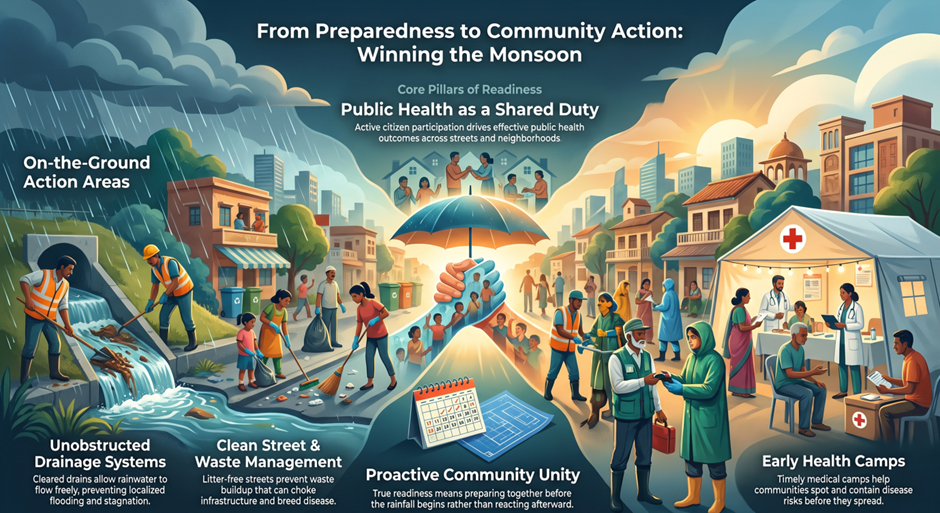
At the heart Of each measure is the active participation Of citizens, making public health a shared From the hills Of the Northeast to the streets Of Delhi, and across communities in Telangana, Chhattisgarh, Madhya Pradesh, and Uttar Pradesh, the campaign has taken diverse, forms. Yet underlying them all is a single unified truth: true monsm»n preparedness is not merely about reacting to rainfall, but about preparing together street, one neighbourhcod, and one community at a time