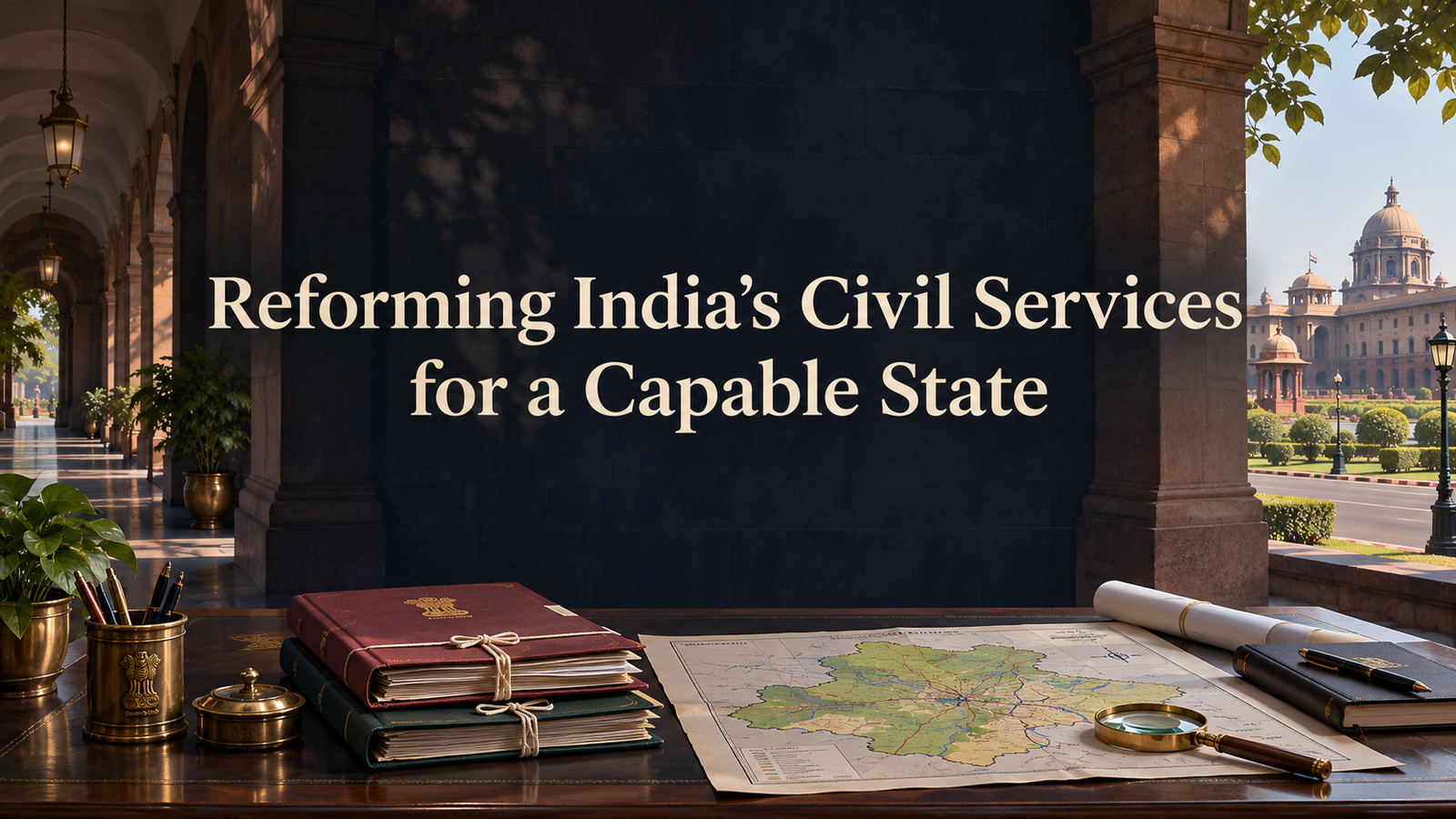
The article examines how India can build a more capable civil service by developing specialist expertise, improving performance reviews and giving officers enough time in their roles to see policies through.
UPSC relevance:
|
GS Paper II |
Polity and Governance · Role of civil services in a democracy, civil service reforms, state capacity, lateral entry, and administrative accountability |
|
GS Paper IV |
Ethics, Integrity and Aptitude · Civil service values, impartiality, merit, performance accountability, and fairness in administrative decisions |
|
Public Administration Optional – Paper II |
Indian Administration · Civil services, personnel administration, recruitment and training, and administrative reforms since Independence |
State Capacity as a Development Priority
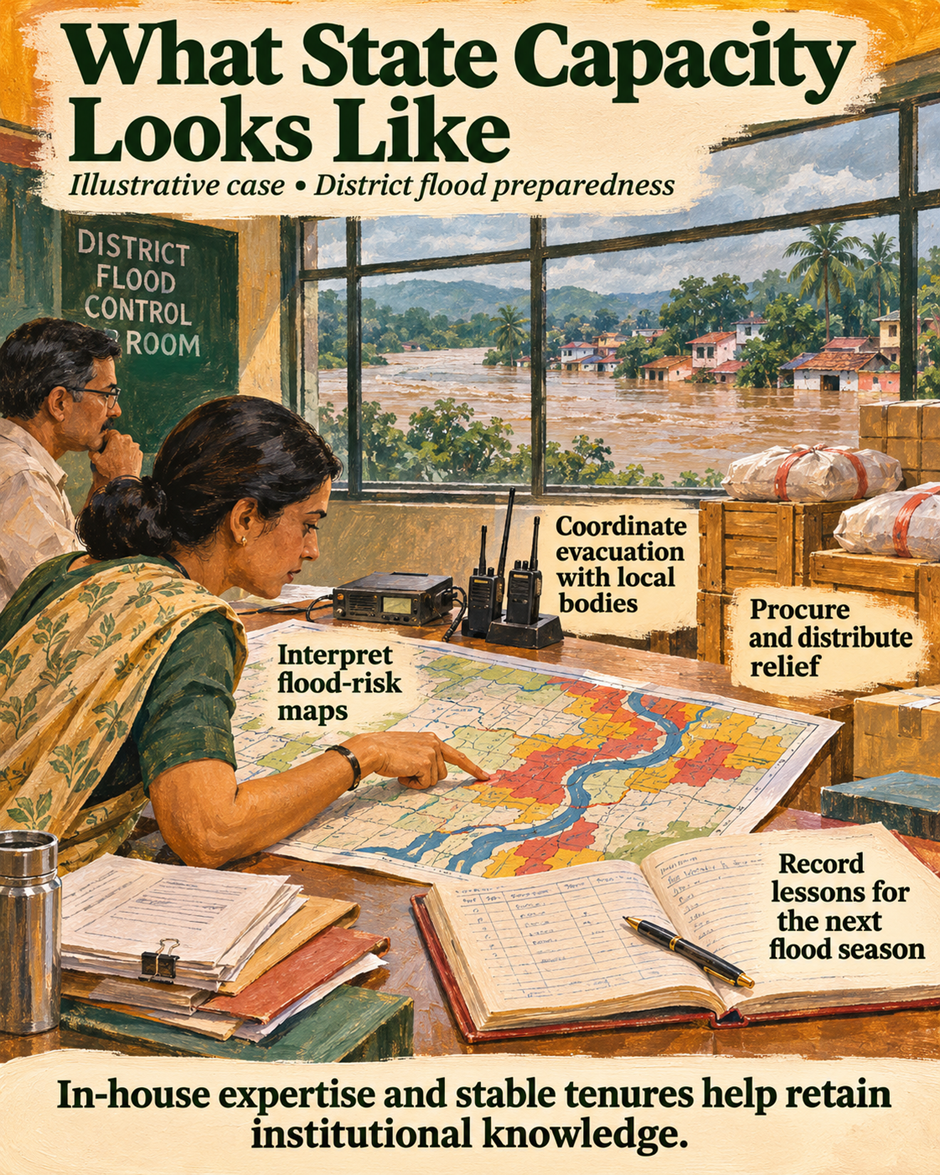
India’s civil services need stronger technical capabilities and an institutional culture suited to modern governance. The Economic Survey 2025–26 identified limited state capacity as a major constraint on development. To fill gaps in policy expertise, both the Union and state governments often hire external specialists on short-term contracts. While these specialists bring valuable skills, departments risk losing domain expertise when their contracts end. Building in-house expertise is therefore essential to retain institutional knowledge and strengthen policy design over time.
Building Expertise within Government
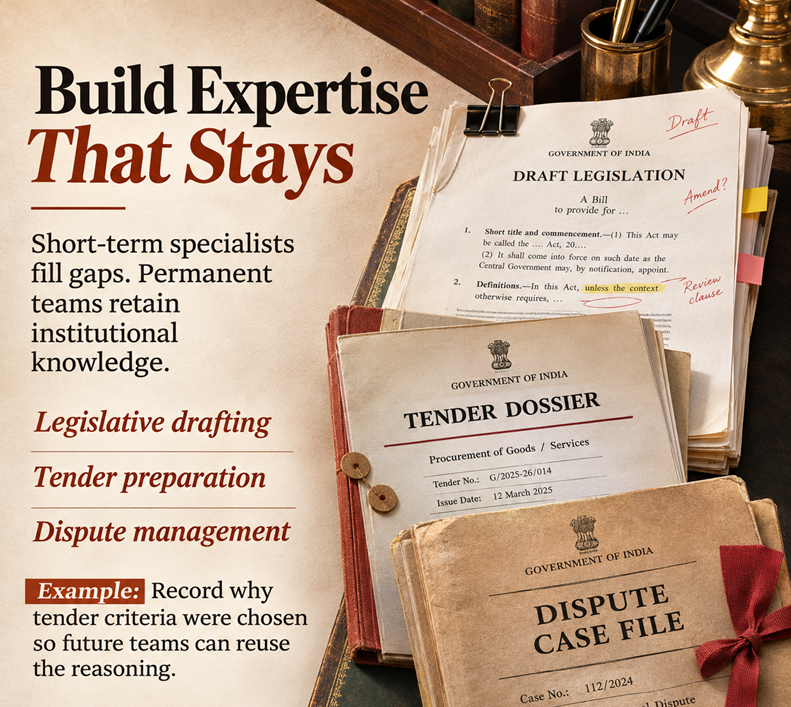
Senior officials have recognised the need to build expertise within government departments. According to news reports, the Cabinet Secretariat has asked ministries to train their officers in legislative drafting, tender preparation and dispute management to reduce reliance on outsourcing. NITI Aayog is also playing a growing role in upgrading the skills of career civil servants. For these efforts to have a lasting impact, civil service reforms must reward domain specialisation and strengthen performance accountability so that officers are assessed on how well they fulfil their responsibilities.
Lateral Entry and the Limits of Its Impact
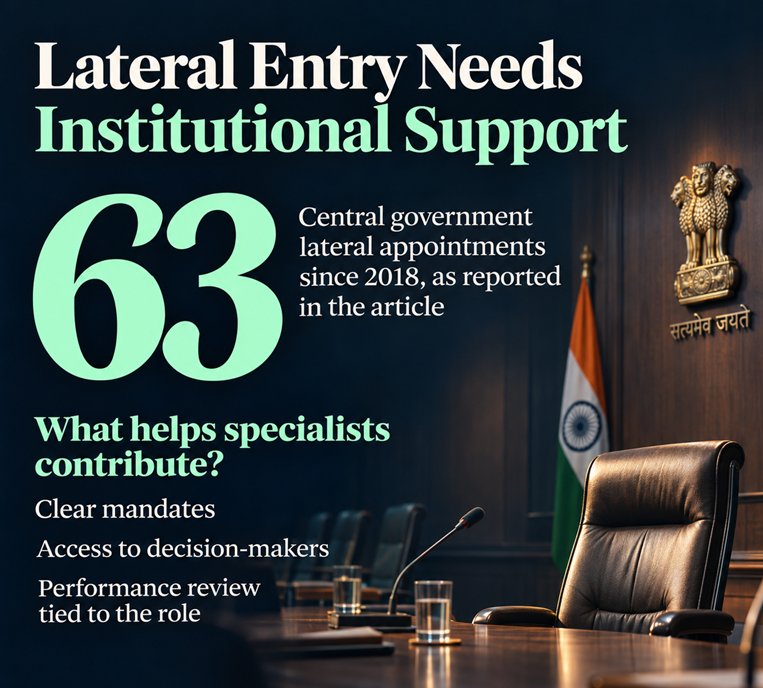
Lateral entry can bring specialised expertise into government, but its impact depends on wider civil service reforms. Only 63 lateral entrants have been appointed to Central government posts since 2018, and fresh recruitment has stalled since 2024. Once appointed, these specialists must navigate entrenched bureaucratic hierarchies. Some are sidelined when they propose new ideas, limiting the contribution they can make.
Decades of Reform Proposals
The need for civil service reform has been recognised for decades.
-
In the 1960s, the First Administrative Reforms Commission (ARC) recommended greater domain specialisation and competition for senior appointments.
-
The Hota Committee, constituted in 2003, proposed safeguards against arbitrary transfers.
-
In 2008, the Second ARC recommended domain-based careers, competition across services for senior posts, rigorous performance reviews and a Civil Services Law.
Where Implementation Has Stalled
Following Supreme Court interventions, Civil Services Boards and minimum tenures were introduced in some form. Implementation of the broader reform agenda remains limited. Independent career management and competitive selection for senior posts are still pending, and the Indian Administrative Service (IAS) continues to dominate senior appointments.
Why Reforms Are Difficult to Sustain
Civil service reform proposals have been on the agenda for decades. A major challenge is institutional resistance. Civil servants are directly affected by changes to their service conditions and can resist or even reverse reforms. The introduction of the Unified Pension Scheme (UPS), which restores a measure of assured pension benefits under the National Pension System (NPS) framework, illustrates the difficulty of sustaining such changes. Recognising the interests and incentives of those affected is a first step towards designing reforms that can endure.
Reform across the Career Cycle
Civil service reform must cover the entire career cycle, from recruitment and training to promotion, retirement and re-entry. Government departments need to build permanent technical and analytical capacity at every level. Recruitment should attract people with diverse skills and allow entry at multiple career stages.
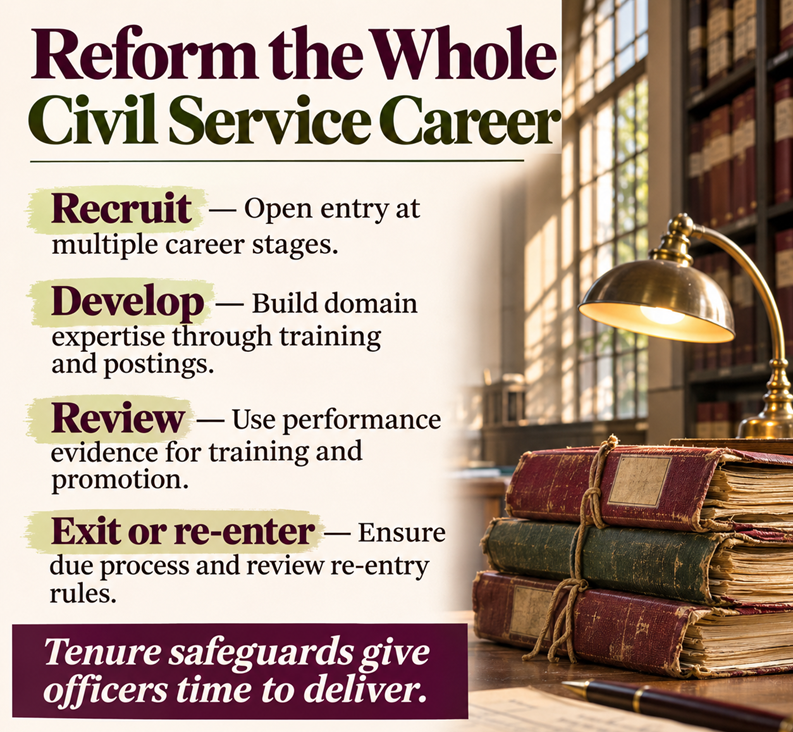
Periodic performance reviews should identify officers who need further training, those who merit promotion and greater responsibility, and cases where sustained underperformance warrants exit after due process. Recognising competence and achievement can strengthen motivation and accountability. Retirement and re-entry rules also merit review.
Conclusion
Together, these reforms can help build a civil service capable of meeting citizens’ expectations.
Also read today's current affairs on:
Visakhapatnam’s AI Hub and Its Local Costs