
Uncontrolled airstrips support regional connectivity, training and emergency operations, but require regular safety audits, infrastructure maintenance, effective pilot communication, risk-based regulation, modern surveillance, and phased development.
Syllabus Areas:
GS III - Economy
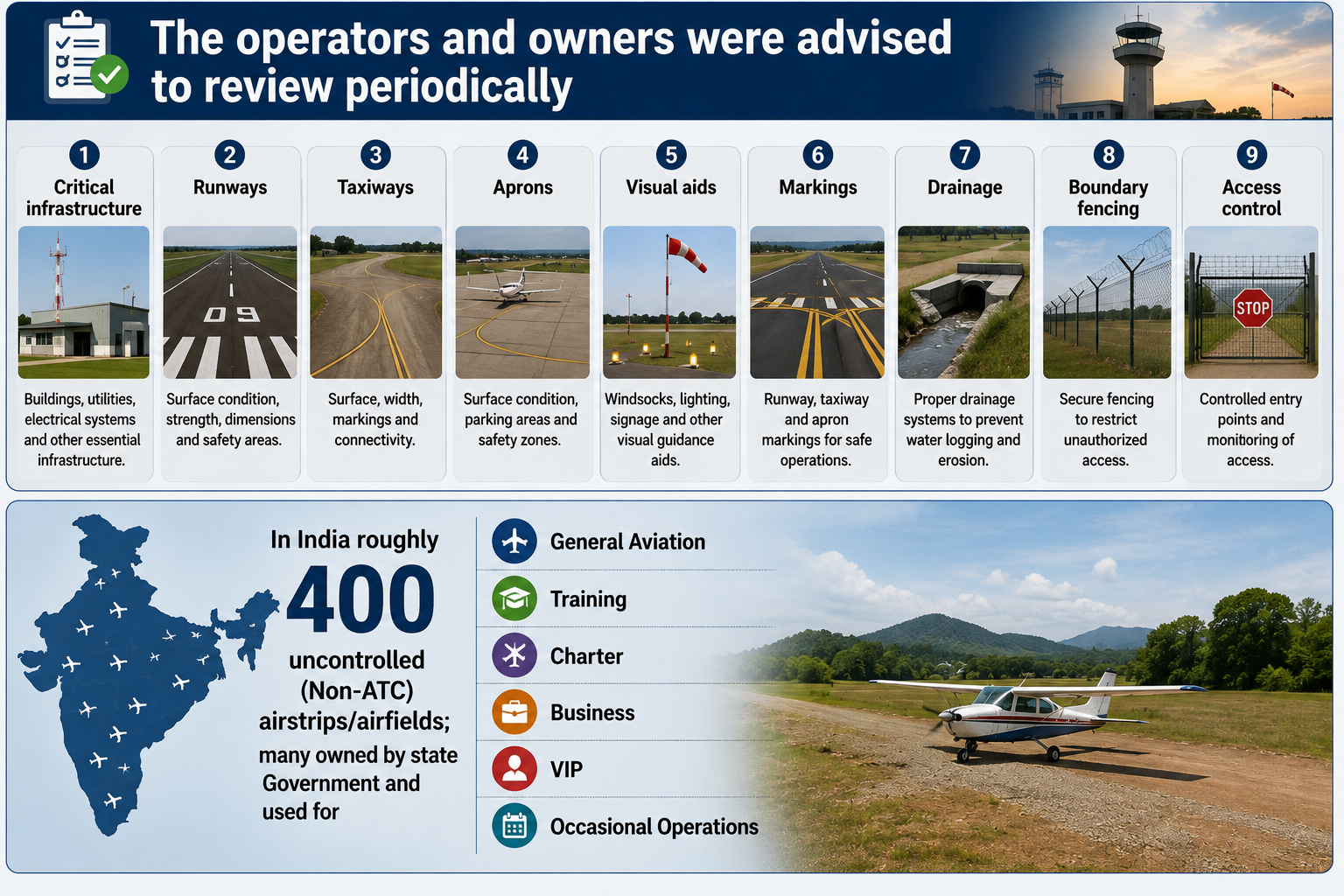
Directorate General of Civil Aviation DGCA has called for a review of operational conditions at "uncontrolled Airstrips" across India's certain accidents and incidents occurred at and in the vicinity of such airstrips highlighting the critical importance of maintaining adequate safety standards for aircraft operations. Safety advisory issued to owners and operators of uncontrolled airstrips
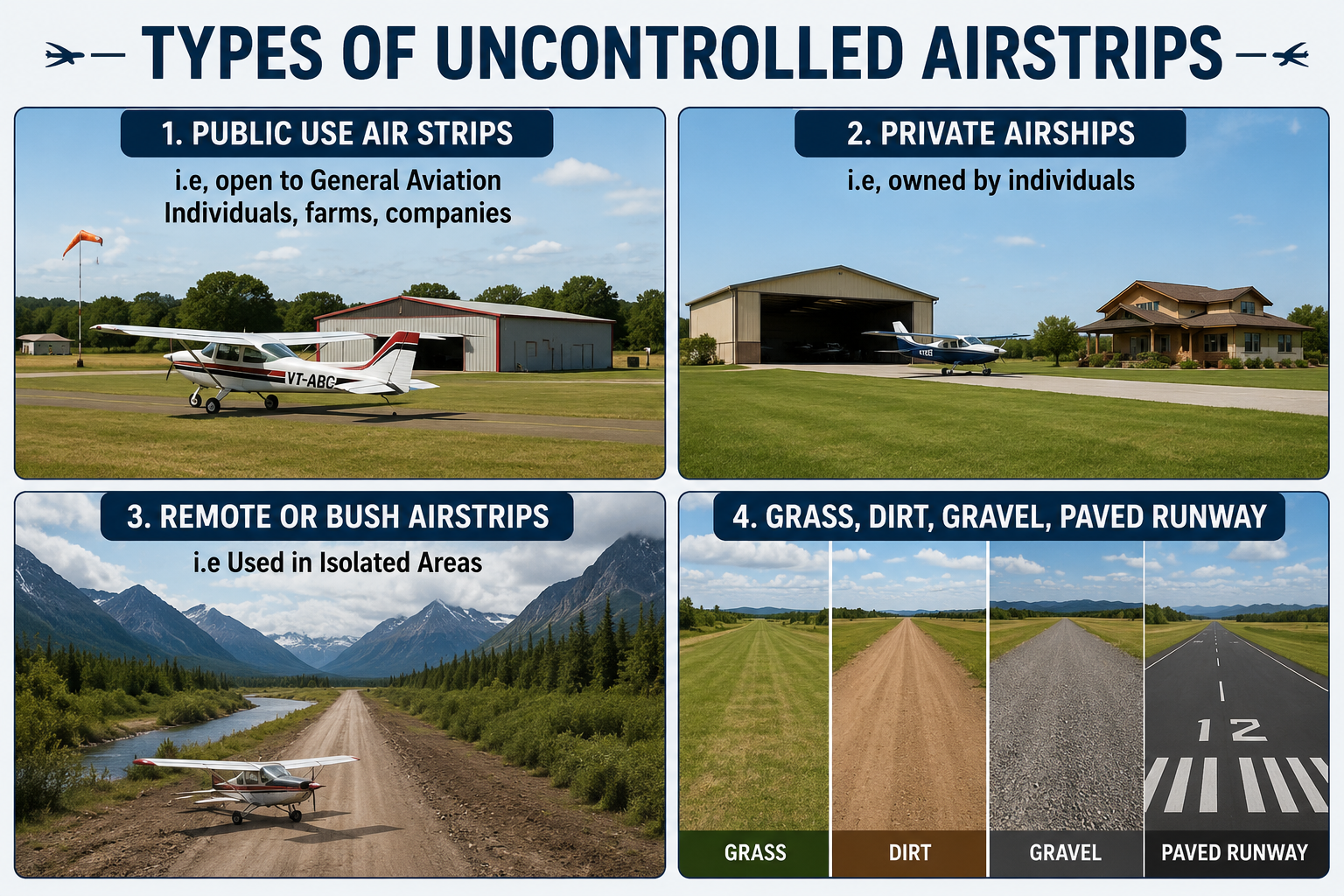
Definition of Uncontrolled Airstrips
An uncontrolled airstrip is an airfield without an active Air Traffic Control (ATC) tower, where pilots are responsible for coordinating take-offs, landings, and maintaining safe separation from other aircraft.
-
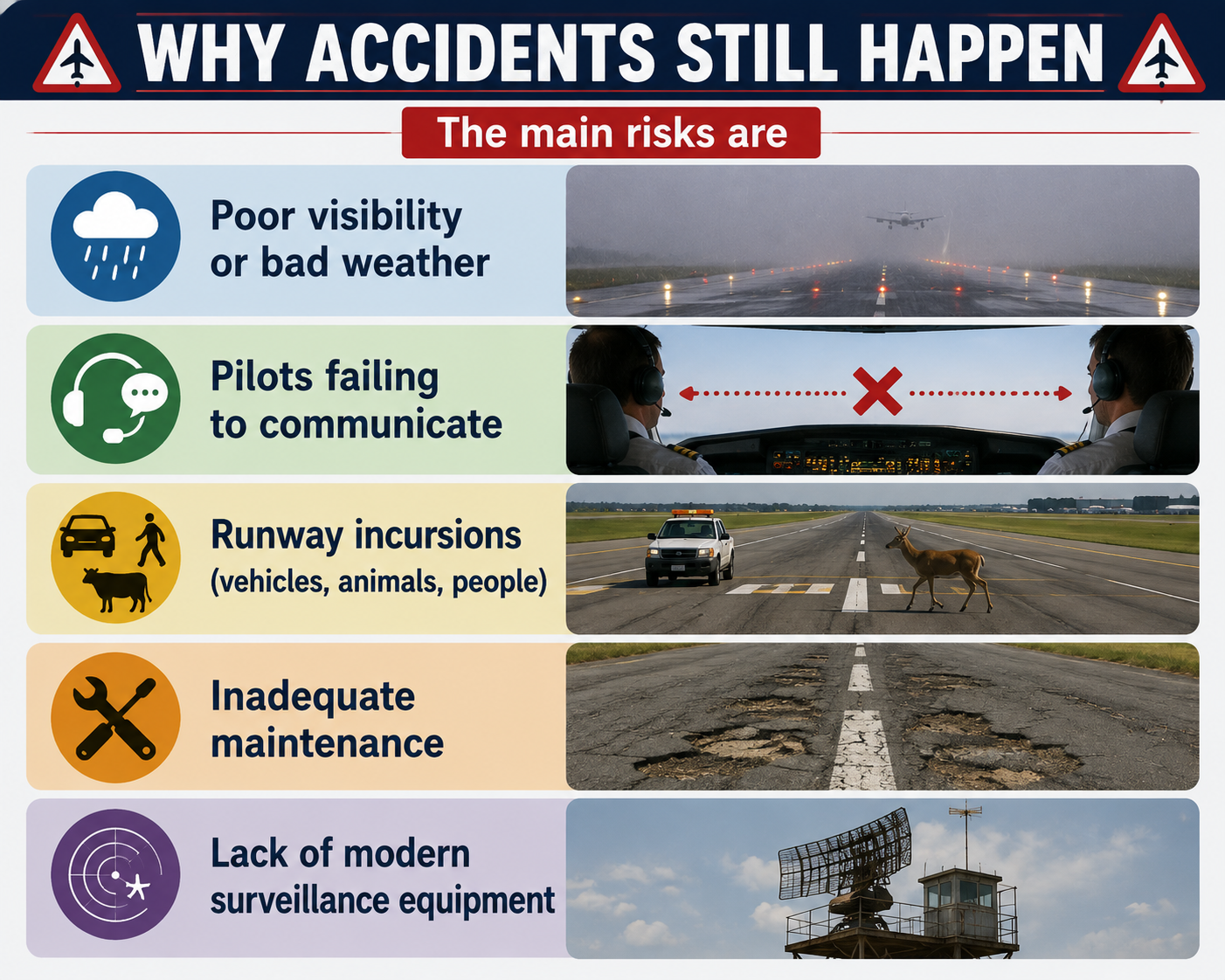
Pilots are responsible for seeing and avoiding other aircraft
-
Pilots communicate using a common radio frequency when available
-
Takeoffs and landings are coordinated directly between pilots
-
Aircraft follow standard traffic patterns and procedures
-
Common in rural, remote, small airports
-
Safe operation depends on pilot awareness and communication.
The tragic accident in which Deputy Chief minister of Maharashtra Ajit Pawar and four others were killed on Jan 28, 2026 occurred at Baramati which is an uncontrolled airfield
Why maintain it even though it is dangerous?
Uncontrolled airfields are NOT inherently dangerous. In fact, most of the world's smaller airports and airstrips are uncontrolled
Reasons
1. Cost of Air Traffic Control
-
Operating Control Tower requiring
-
Trained Air Traffic controllers
-
Communications Equipment
-
Radar and surveillance systems
-
Continuous staffing
For an airstrip with only few flights per day, the cost is high
2. Low Traffic Volume : Many Airstrips see
-
Flight Training operations
-
Agricultural aviation
-
Private Aircraft
-
Emergency or medical flight
With only occasional aircraft movements, pilots can safely coordinate among themselves
3. Regional Connectivity
Many remote towns and rural areas depend on small airstrip for
-
Medical evacuations
-
Disaster Relief
-
Government access
-
Business travel
Closing them would reduce connectivity and emergency response capability
4. Future Development
In India, many airstrips are kept operational because (they may)
-
Be upgraded later under Airports Authority of India and UDAN schemes
-
Serve as alternate landing sites
-
Support military or disaster relief operations when needed
5. Aviation Safety Procedures Already Exist
At uncontrolled fields, Pilots follow strict rules:
-
Broadcast position reports on radio
-
Entru standardised traffic patterns
-
Maintain visual separation
-
Yield according to aviation regulation
Countries such as the USA, Canada, Australia operate thousands of uncontrolled aero dromes safely every day.
Way Forward
-
Regular safety audits: Ensure periodic inspection and maintenance of all critical infrastructure.
-
Improve pilot coordination: Strengthen radio communication, standard traffic patterns and visual separation procedures.
-
Upgrade basic infrastructure: Prioritise runway maintenance, markings, visual aids, drainage and boundary fencing.
-
Risk-based regulation: Apply stricter requirements according to traffic volume, aircraft type and operational risk rather than imposing uniform ATC infrastructure everywhere.
-
Modernise surveillance: Gradually introduce appropriate communication and surveillance technologies where traffic justifies the investment.
-
Preserve regional connectivity: Keep strategically important airstrips operational for medical evacuation, disaster relief, government access and business travel.
-
Future integration: Upgrade suitable airstrips under Airports Authority of India and UDAN-related development when traffic and regional demand increase.
-
Emergency preparedness: Maintain selected airstrips as alternate landing sites and for military or disaster-relief operations.
Overall, the objective should be “safe operation, not simply controlled operation” — combining existing pilot-led safety procedures with better infrastructure, regular monitoring and phased modernisation.