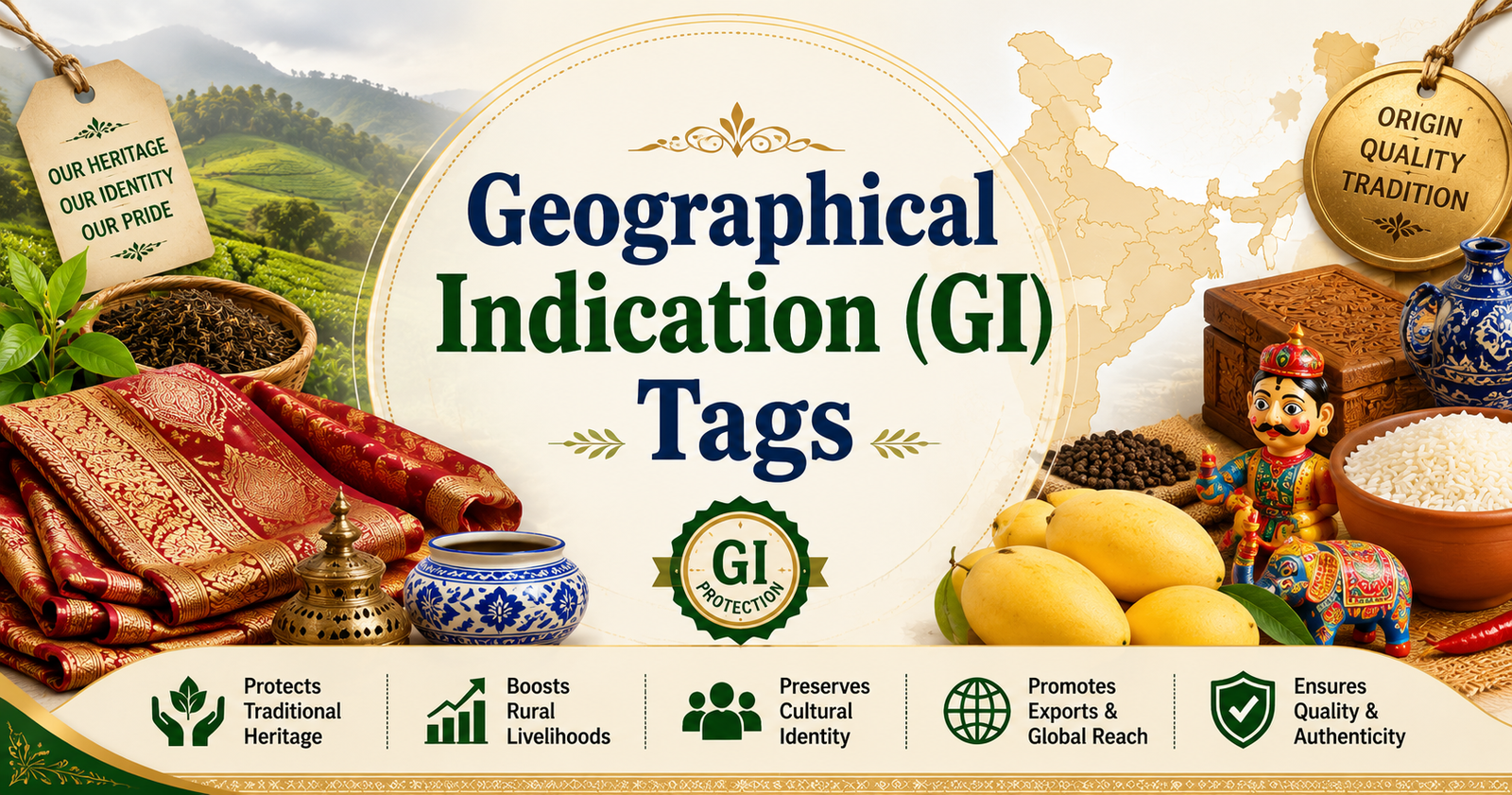
GI ecosystem in India protects traditional products, strengthens rural livelihoods, preserves cultural heritage, promotes exports, and transforms regional identities into globally recognised economic brands.
Syllabus Areas:
GS I – Indian Heritage & Culture
GS III – Agriculture & Economy
GS III – Intellectual Property Rights
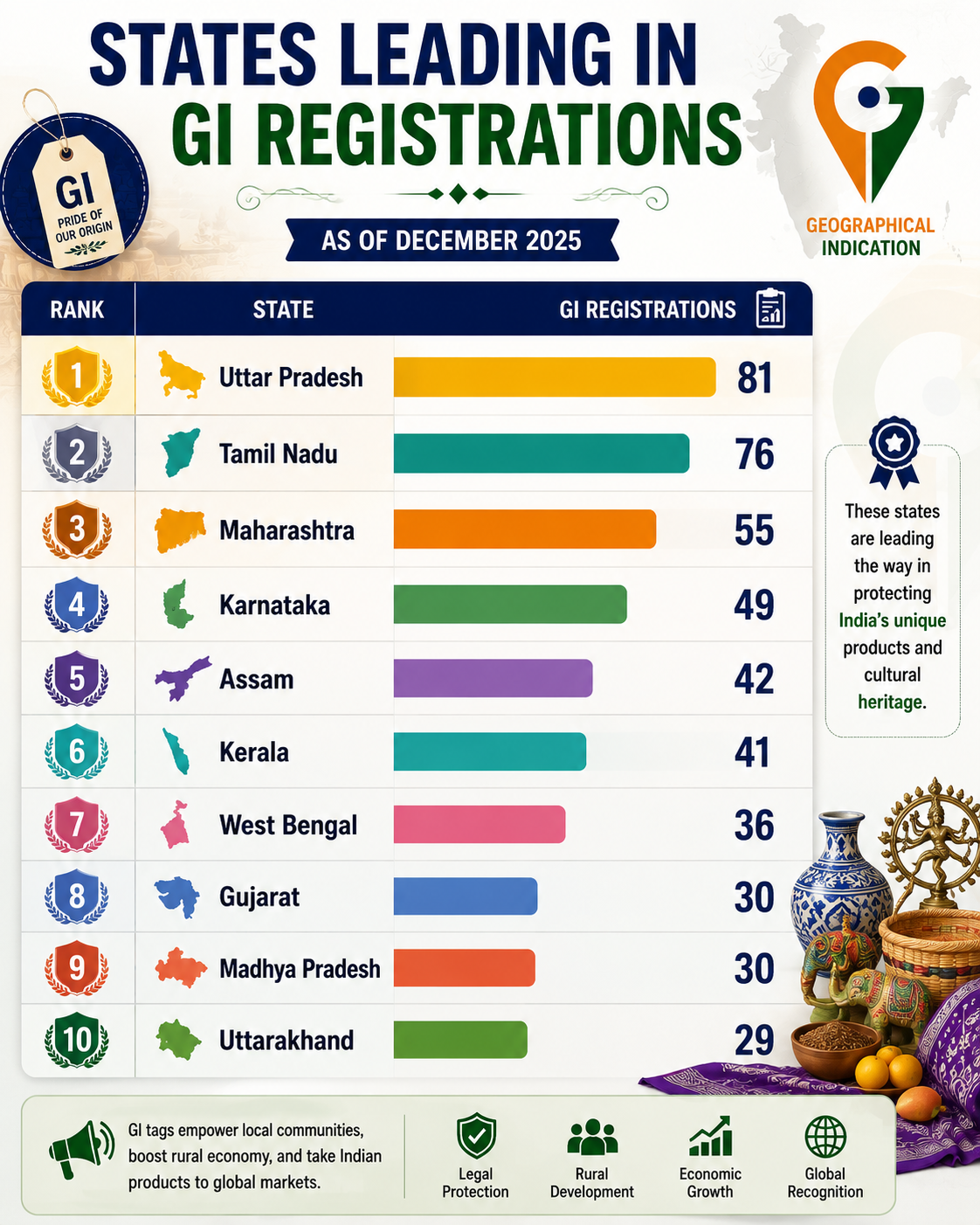
India’s GI tags protect region-specific traditional products by ensuring authenticity and quality while promoting cultural preservation, rural livelihoods, economic development, exports, and global recognition of Indian products.
What is a Geographical Indication?
A Geographical Indication (GI) is an intellectual property right associated with a product whose quality, reputation or other characteristics are essentially linked to its geographical origin.
For example:
-
Banarasi Saree → Varanasi, Uttar Pradesh
-
Darjeeling Tea → West Bengal
-
Pochampally Ikat → Telangana
-
Channapatna Toys → Karnataka
-
Muga Silk → Assam
-
Makrana Marble → Rajasthan
The GI tag therefore establishes a connection between product + place + traditional knowledge/skill.
Why is this important?
-
GI tags authenticate products, protect traditional methods, and prevent imitation.
-
They improve producer recognition, market access, bargaining power, and incomes.
-
GI recognition preserves cultural heritage, indigenous knowledge, and biodiversity.
-
GI products generate rural employment through processing, packaging, tourism, and retail.
-
Muzaffarnagar Jaggery demonstrates GI-driven export success, with 30 tonnes exported to Bangladesh in 2025, benefiting 545 producer members.
-
GI tags transform local products into valuable global brands.
India's First GI Product
Darjeeling Tea from West Bengal was the first product in India to receive a GI tag.
The protection was extended to both:
-
the product; and
-
its GI logo.
Other early registrations include:
-
Aranmula Kannadi – Kerala
-
Pochampalli Ikat – Telangana
2025 Changes in GI Registration
The PIB Backgrounder highlights an important change introduced through the 2025 amendment:
-
Fee for filing GI applications and related processes was reduced by 80%.
-
Renewal fee was reduced from ₹3,000 to ₹500.
Significance
Lower compliance costs can make the GI registration system more accessible to:
-
producer organisations;
-
artisan groups;
-
farmer groups;
-
local authorities;
-
community-based organisations.
GI Registration Process
GI registration is not automatically granted to every product associated with a region.
An applicant must satisfy specific legal and procedural requirements.
Who can apply?
An application can be submitted by:
-
an association of producers;
-
an organisation;
-
an authority established under law.
The applicant must be a legal entity representing the interests of producers of the concerned product.
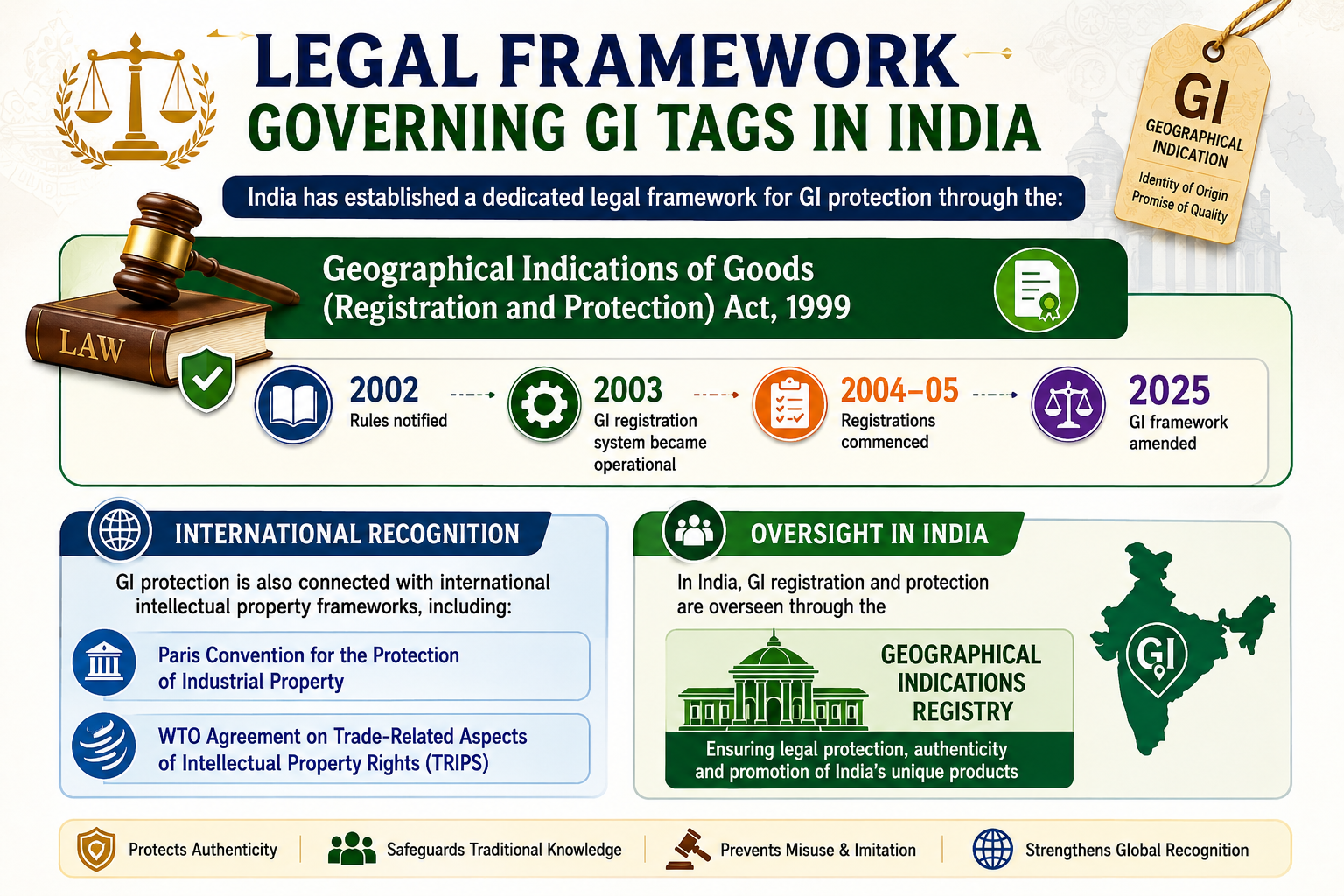
The GI Registry is located at Chennai and has All-India jurisdiction.
Government Initiatives:
Improves awareness, market access, exports, legal protection and global recognition of GI products.
-
Atmanirbhar Bharat: Strengthens local production and domestic economic ecosystems.
-
Vocal for Local: Promotes region-specific products and expands market opportunities.
-
PM Ekta Malls: Promote ODOP, GI products and traditional handicrafts; ₹5,000 crore allocated in FY 2023–24.
-
OSOP: Railway booths connect artisans, farmers and weavers directly with consumers.
-
GI Trails: Link tourism with local production and cultural heritage.
-
Financial Support: MSME Scheme offers up to ₹2 lakh; Handicrafts support up to ₹1.5 lakh.

Challenges Associated with GI Products
While the PIB Backgrounder focuses largely on opportunities, its discussion also points towards important challenges that need attention:
1. Counterfeiting and imitation: Authentic products often face competition from cheaper imitations.
2. Lack of consumer awareness: Consumers may not always know how to distinguish genuine GI products from substitutes.
3. Limited market access: Small producers may lack access to organised retail and international markets.
4. Weak bargaining power: Individual artisans and farmers may struggle to capture the full value of their products.
5. Commercialisation challenges: Registration alone does not guarantee successful branding, packaging, marketing or exports.
6. Need for international protection: Indian GI products require effective protection in foreign markets as their exports expand.
Way Forward
India's GI ecosystem needs to move beyond registration towards commercialisation and global branding.
The key priorities should include:
-
strengthening producer organisations;
-
improving quality standards;
-
creating better packaging and branding;
-
expanding e-commerce access;
-
improving domestic retail networks;
-
promoting GI-based tourism;
-
increasing export-oriented infrastructure;
-
strengthening enforcement against counterfeit products;
-
securing GI protection through trade agreements;
-
increasing consumer awareness;
-
integrating GI products with ODOP and local economic development.
India set a broader target of 10,000 GI registrations by 2030, indicating India's ambition to substantially expand its heritage economy and global presence.
GI tags bridge intellectual property, cultural heritage and economic development by transforming traditional products into global brands, enhancing incomes, livelihoods, rural economies, knowledge preservation and international market access.