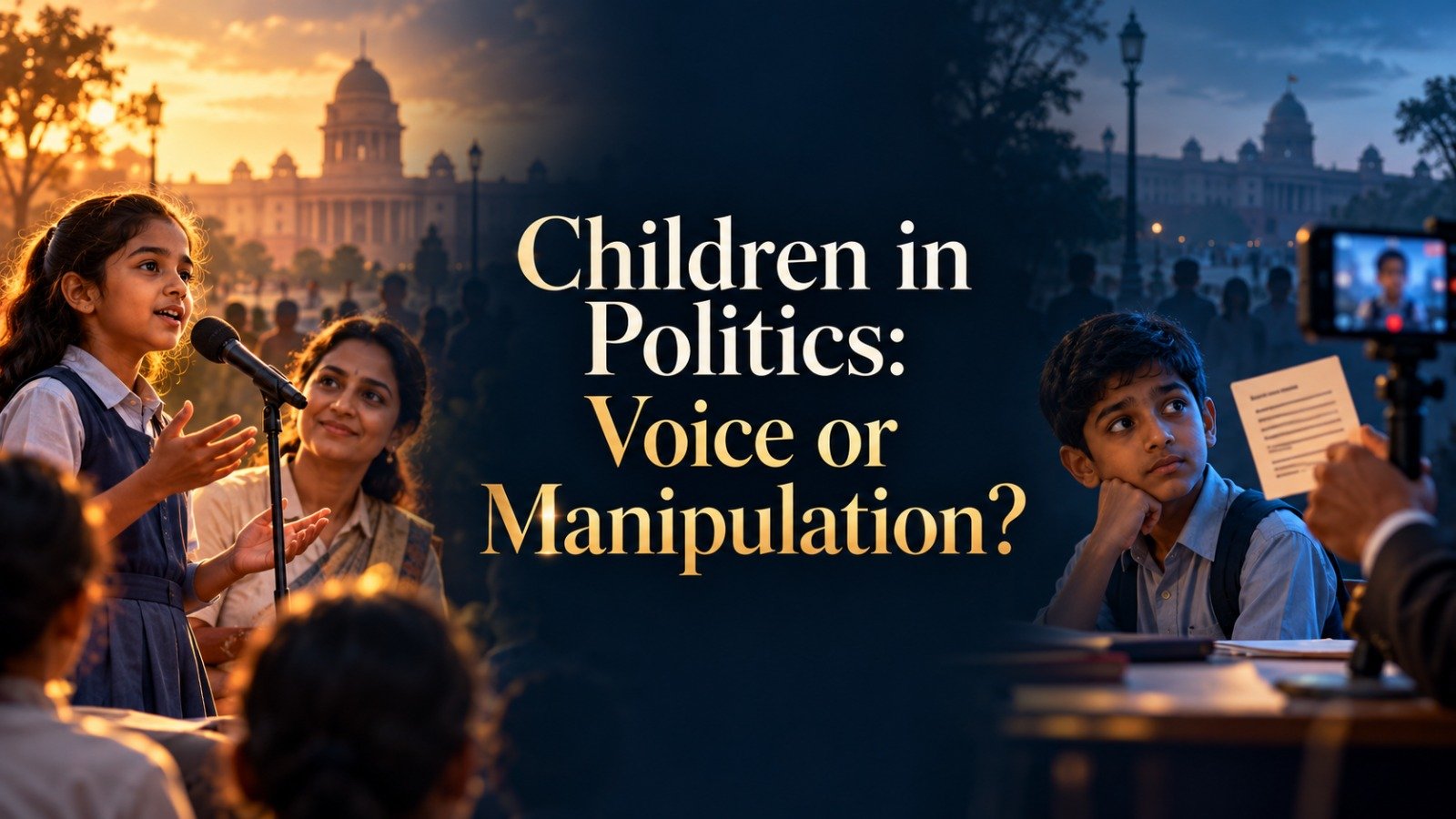
Explore the ethical debate on children in election campaigns, examining political participation, emotional manipulation, voter autonomy, and legal safeguards under Indian electoral law.
Syllabus areas:
GS Paper II - Polity and Governance
GS Paper IV — Ethics
GS Paper I — Society
Essay
Tamilaga Vettri Kazhagam’s (TVK) victory in Tamil Nadu’s May elections highlighted Vijay’s strong appeal among young people, with children reportedly urging their families to support his party.
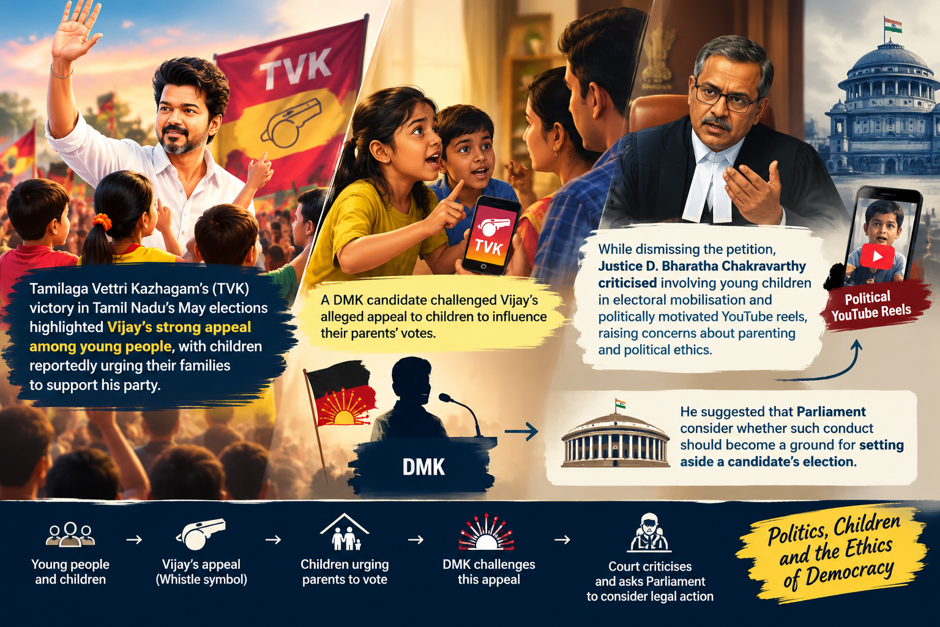
A DMK candidate challenged Vijay’s alleged appeal to children to influence their parents’ votes. While dismissing the petition, Justice D. Bharatha Chakravarthy criticised involving young children in electoral mobilisation and politically motivated YouTube reels, raising concerns about parenting and political ethics. He suggested that Parliament consider whether such conduct should become a ground for setting aside a candidate’s election.
Children’s Right to Political Participation
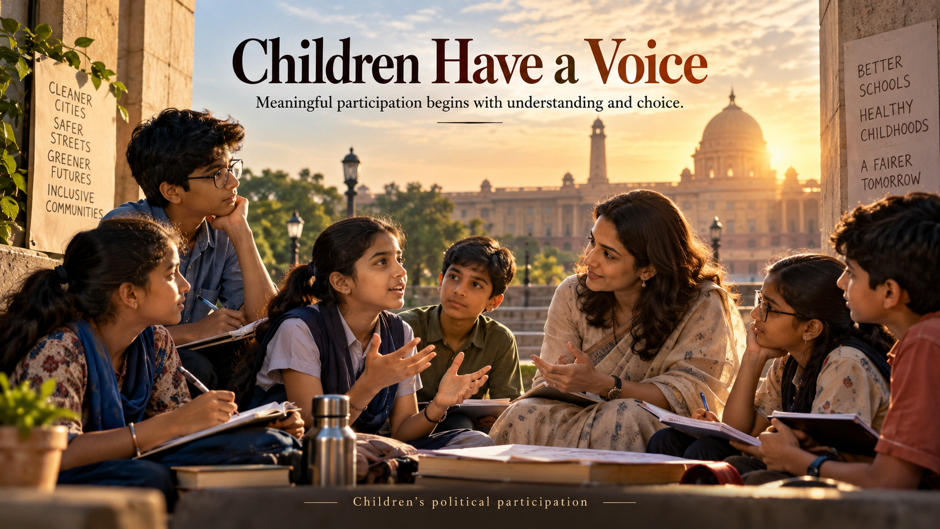
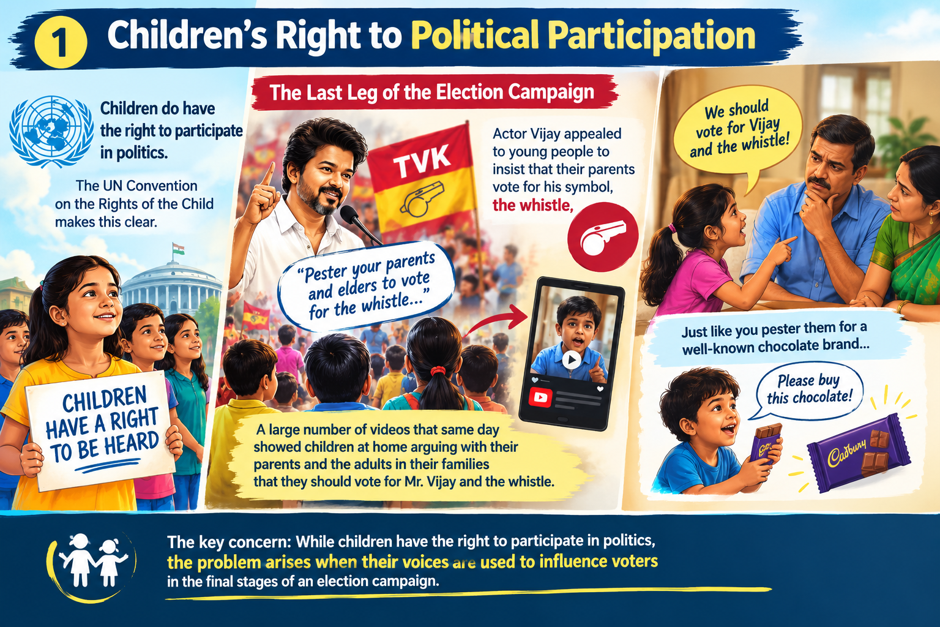
First of all, children do have the right to participate in politics. The UN Convention on the Rights of the Child makes this clear. The problem here lies in the last leg of the election campaign. After actor Vijay appealed to young people to insist that their parents vote for his symbol, the whistle, saying, in effect, pester your parents and elders to vote for the whistle, just as you pester them for a well-known chocolate brand, a large number of videos that same day of children at home arguing with their parents and the adults in their families that they should vote for Mr. Vijay and the whistle.
From Consumer Marketing to Electoral Marketing
This is a very common method in consumer marketing. You release campaigns and incentives aimed at children so that they will pester their parents and elders into making particular purchasing decisions for the household. What we are seeing now is a crossover from consumer marketing into electoral marketing, where a campaign tries to influence voters’ behaviour this way.
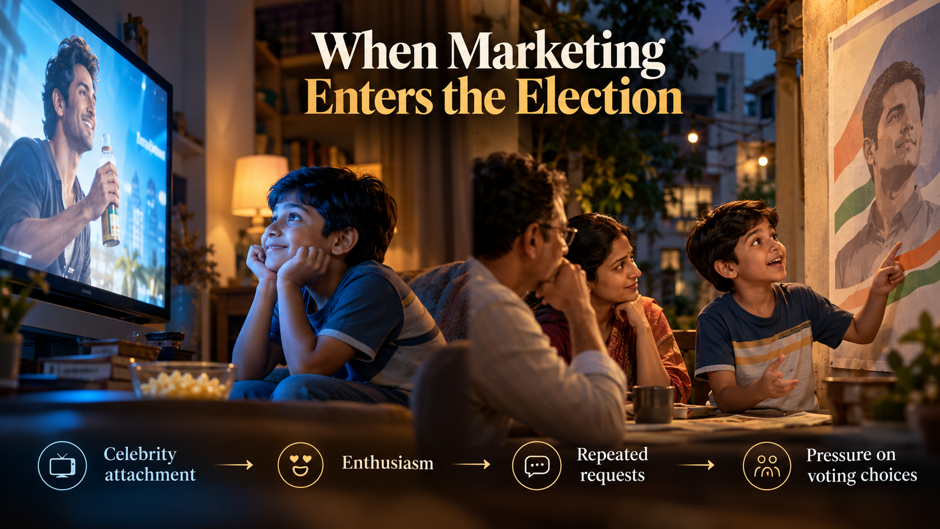
If you stop and examine the proposed influence pathway, it runs like this. The child has an attachment to a celebrity. That attachment produces enthusiasm in the child. The enthusiasm then leads to the pester effect, or “pester power” as it’s usually called: repeated requests to the parents. And that, in turn, puts pressure on their voting choices. Such a campaign is not merely persuading a voter; it is recruiting someone the voter loves to carry forward the persuasion.
Political Voice vs. Political Manipulation
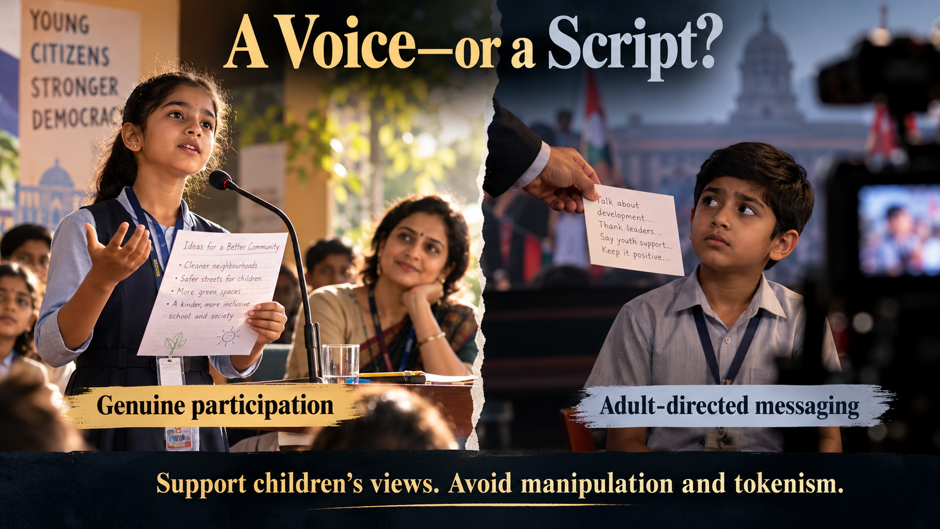
We must draw a useful distinction between helping children develop a political voice and using their voice to deliver an adult’s predetermined message. The UNICEF’s participation framework explicitly distinguishes between genuine participation and manipulation and tokenism. While children have a right to a political voice, they should not be turned into instruments of political persuasion.
Emotional Pressure and Voter Autonomy
In many households, siblings, spouses and parents vote for different candidates in the same election, because each of them has agency. A grandchild does not have the agency to convince their grandfather on the merits of a candidate. The appeal is purely emotional: “I love this person for X, Y and Z, so if you love me, you should support him.” It’s a kind of perverse law of transitivity at play.
Democracy and Informed Choices
Democracy cannot be strengthened on emotions. It depends on informed choices; choices you actually believe in.
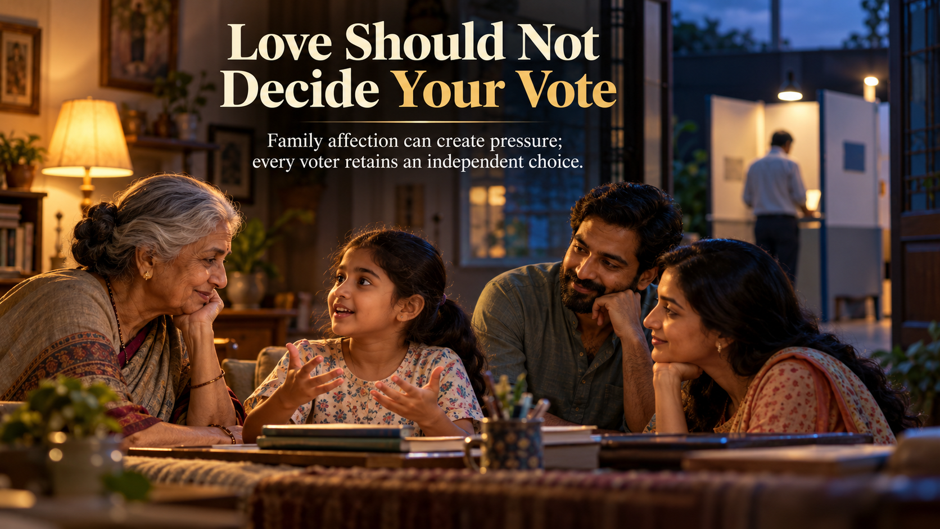
Section 123 of the Representation of the People Act: Undue Influence
“Section 123 of the Representation of the People Act deals with undue influence. The petitioner argued that telling children to persuade their parents to vote for the TVK or Mr. Vijay was an instance of undue influence. The law says it would amount to undue influence if it reached the point of tyranny over the mind, overpowering the volition [of the voter]. However, the court said that adults had a choice.”
Electoral Manipulation vs. Child Development
There are two parts to this. Part A is whether the election was manipulated in any way, which the court said it could find no evidence of. Part B is whether it is good for the child to be involved in such practices, which I think is what we are really discussing. It most certainly is not in line with best practices for child development.
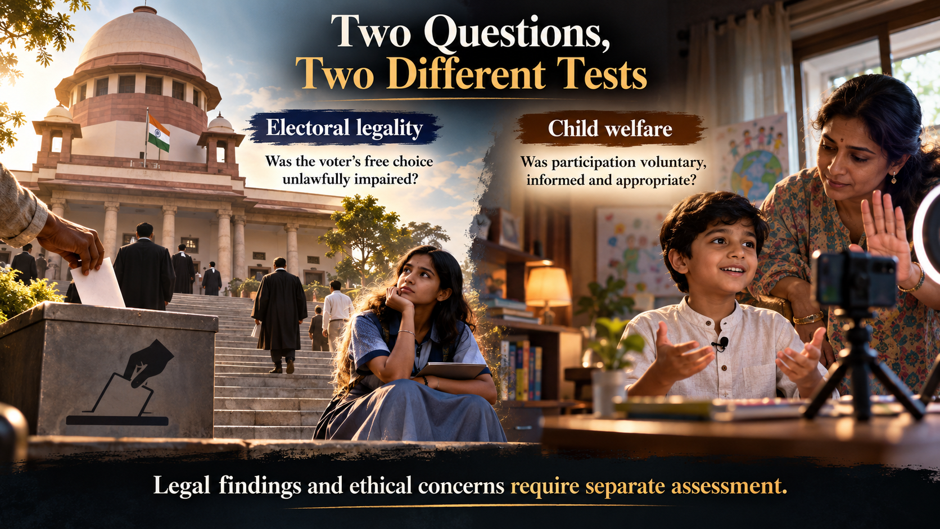
Celebrity Influence and Undue Pressure on Children
The point is that the way he put it is, in itself, undue pressure on children, because children are already connected to the actor through his films and songs. Even today you can see children who cannot recite nursery rhymes reciting songs from his films. As the judgment says, we cannot prove whether people voted the way they did because of it.