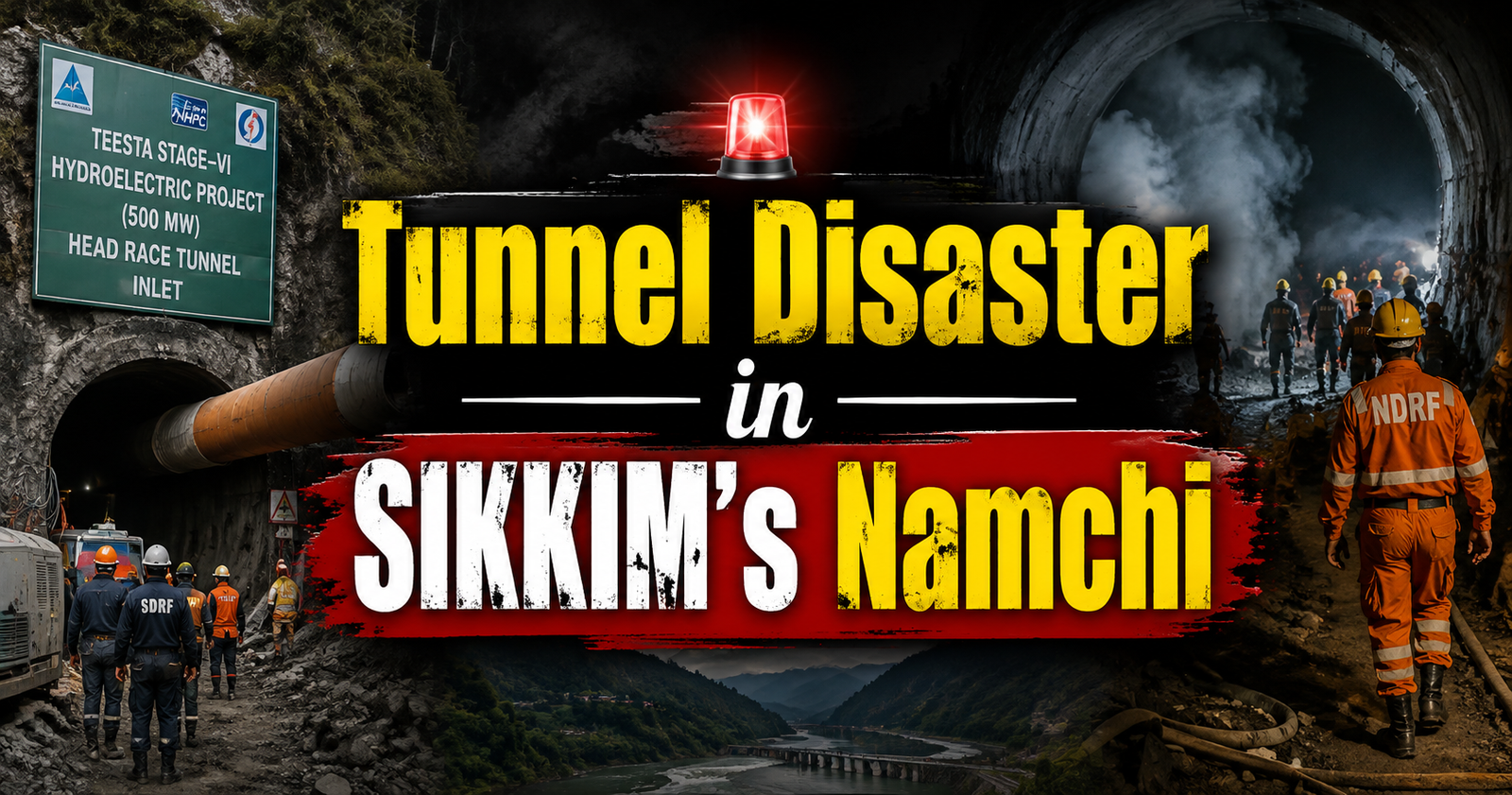
The article examines the Teesta-VI tunnel disaster, methane risks, fragile Himalayan geology, hydropower challenges, and the need for safer, climate-resilient infrastructure development.
Syllabus Areas:
GS III - Environment,
Toxic gases claimed the lives of 25 workers in an under-construction Head Race Tunnel (HRT) of NHPC (National Hydroelectric Power Corporation Limited) 500 MW Teesta Stage VI hydropower project at Samardong in Sikkim’s Namchi district
The toxic gases generated by sudden explosive release of suspected methane trapped or embedded in rocks in July, 2026.
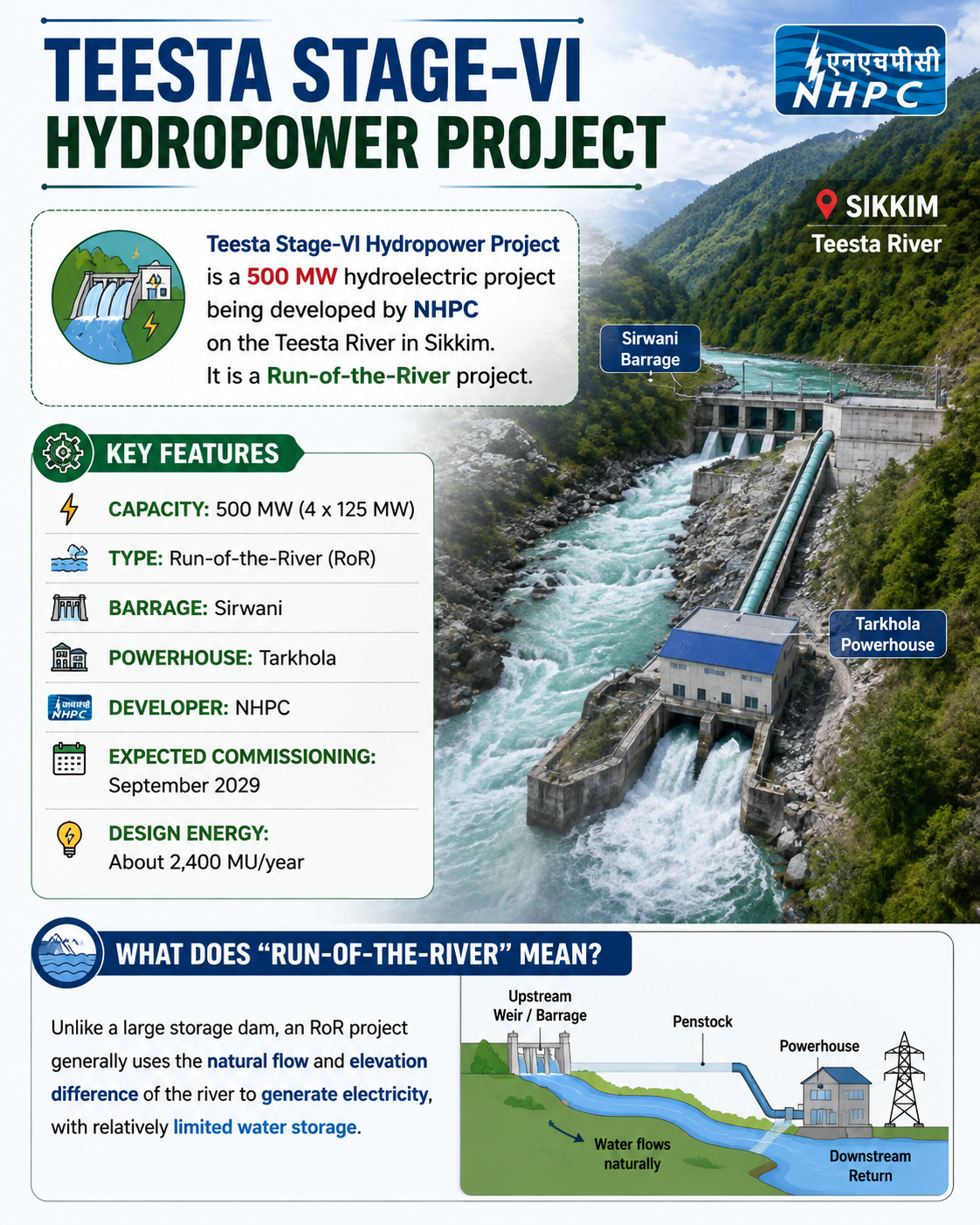
The tunnel is constructed to carry water from the Teesta River system to the underground powerhouse, where the water’s energy is used to generate electricity.
In the Teesta Stage-VI Hydropower Project, the tunnel is part of the Run-of-the-River system. It helps divert/convey the river water through the required elevation drop before returning it downstream.
How is methane trapped in hilly terrains?
Methane deposits usually occur either as natural gas trapped in porous rock or localised gas pockets in young, fragile geological formations. These are frequently encountered in the Himalayan belt, where the mountainous regions with active or historical coal-bearing strata, where ancient organic matter has decomposed over millions of years.
-
Hilly depressions or valleys frequently trap moisture, creating oxygen-deprived (anaerobic) water logged soils where microscopic organisms digest organic matter and emit methane.
-
Improperly managed or open waste dumps in hilly terrain also decompose in anaerobic layers, producing large amounts of landfill gas.
-
Hilly and mountainous regions are often located near fault lines or areas with underlying coal, gas, or geothermal reserves with natural fissures allowing the migration of underground methane upwards.
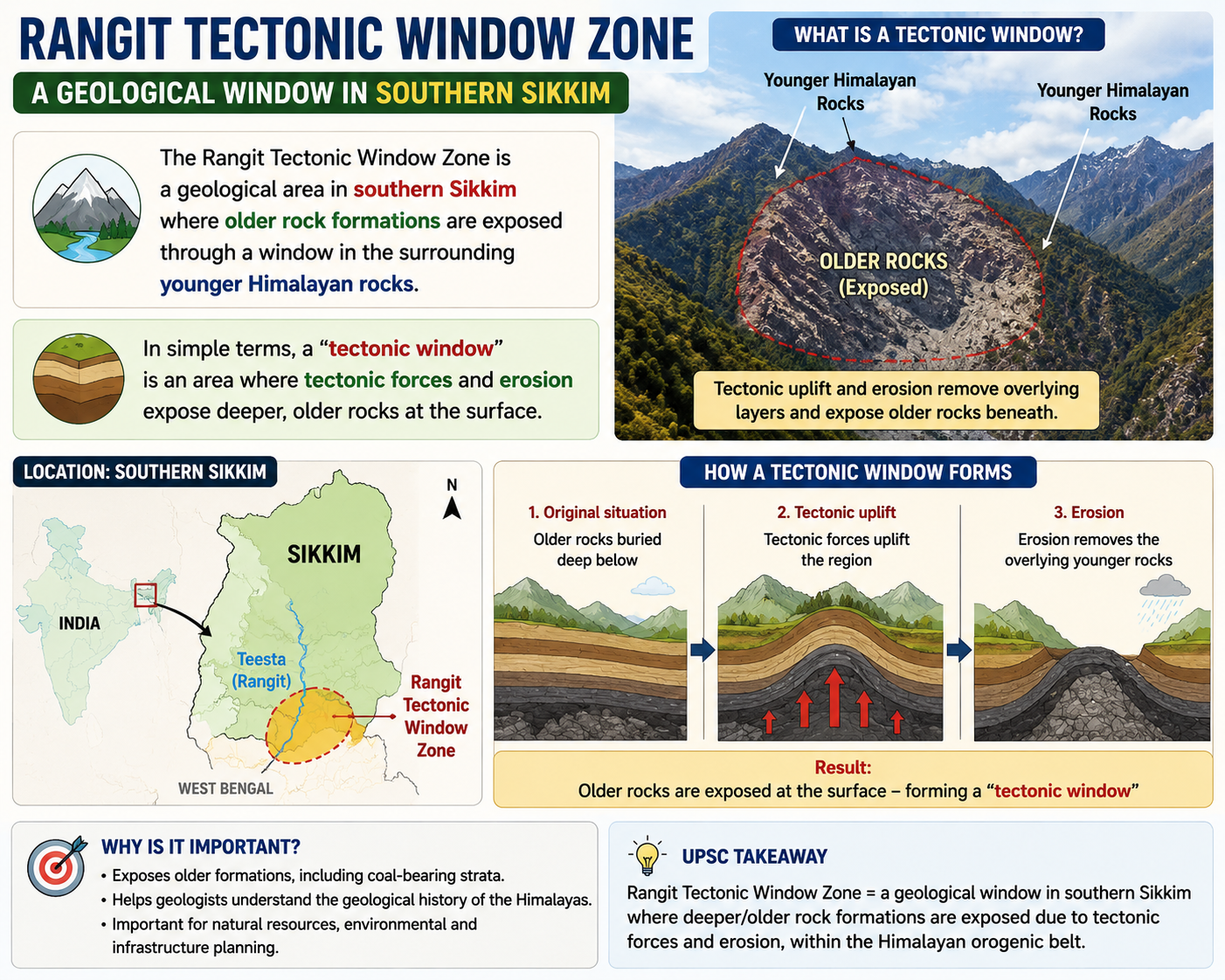
There are no coalfields in Sikkim, but the state is in the Rangit Tectonic window zone, and Geological Survey of India studies have identified coal reserves of 1.40 lakh tonnes in southern Sikkim, primarily the Namchi area where the NHPC tunnel incident occurred.
The coal in Namchi was analysed to contain
53.40% fixed carbon, 39.5% ash, 3.4% volatile matter and
3.7% moisture.
Have other projects in Sikkim been similarly affected?
A young geological age, active tectonic instability, and steep, erosion-prone terrain make the Himalayan region fragile. The mountains are constantly rising and shifting due to the collision of Indian and Eurasian plates, making the region highly prone to earthquakes. Heavy blasting and tunneling for highways, dams and railways add to the geological instability, leading to frequent landslides and mudslides.
Heavy tourism, unregulated urban expansion, poor waste management and deforestation have compounded problems.
Sikkim has also suffered from extreme weather events such as cloudbursts, rapidly melting glaciers, and expanding glacial lakes attributed to climate change.
1. A glacial lake outburst flood in October 2023
-
killed more than 90 people
-
destroyed Sikkim Urja Limited’s 1200 MW dam
-
damaged NHPC’s 570 MW Teesta-VI Hydropower Project (which was restored again)
2. In Aug 2024, landslide damaged houses and buildings
The present Teesta-VI tunnel disaster is the first recorded incident in the state of Sikkim involving an explosion due to suspected methane gas release.
Way Forward
-
Comprehensive geological surveys before undertaking tunnels and major infrastructure in fragile Himalayan regions.
-
Methane and gas monitoring systems inside tunnels, with continuous detection and alarm mechanisms.
-
Improved ventilation and emergency evacuation systems to protect workers from toxic gases.
-
Strict safety protocols and regular audits during tunnel construction, blasting and excavation.
-
Real-time geological monitoring for rock movement, fault zones, landslides and groundwater conditions.
-
Climate-resilient infrastructure planning considering cloudbursts, GLOFs, landslides and extreme weather.
-
Strengthen disaster preparedness and rescue capacity, including trained response teams and communication systems.
-
Follow a carrying-capacity-based approach to hydropower and infrastructure development in the fragile Himalayas
The Teesta-VI tunnel incident highlights the fragile Himalayan geology, methane-related risks, and need for rigorous geological assessment, monitoring, ventilation, disaster preparedness, and safer infrastructure planning.