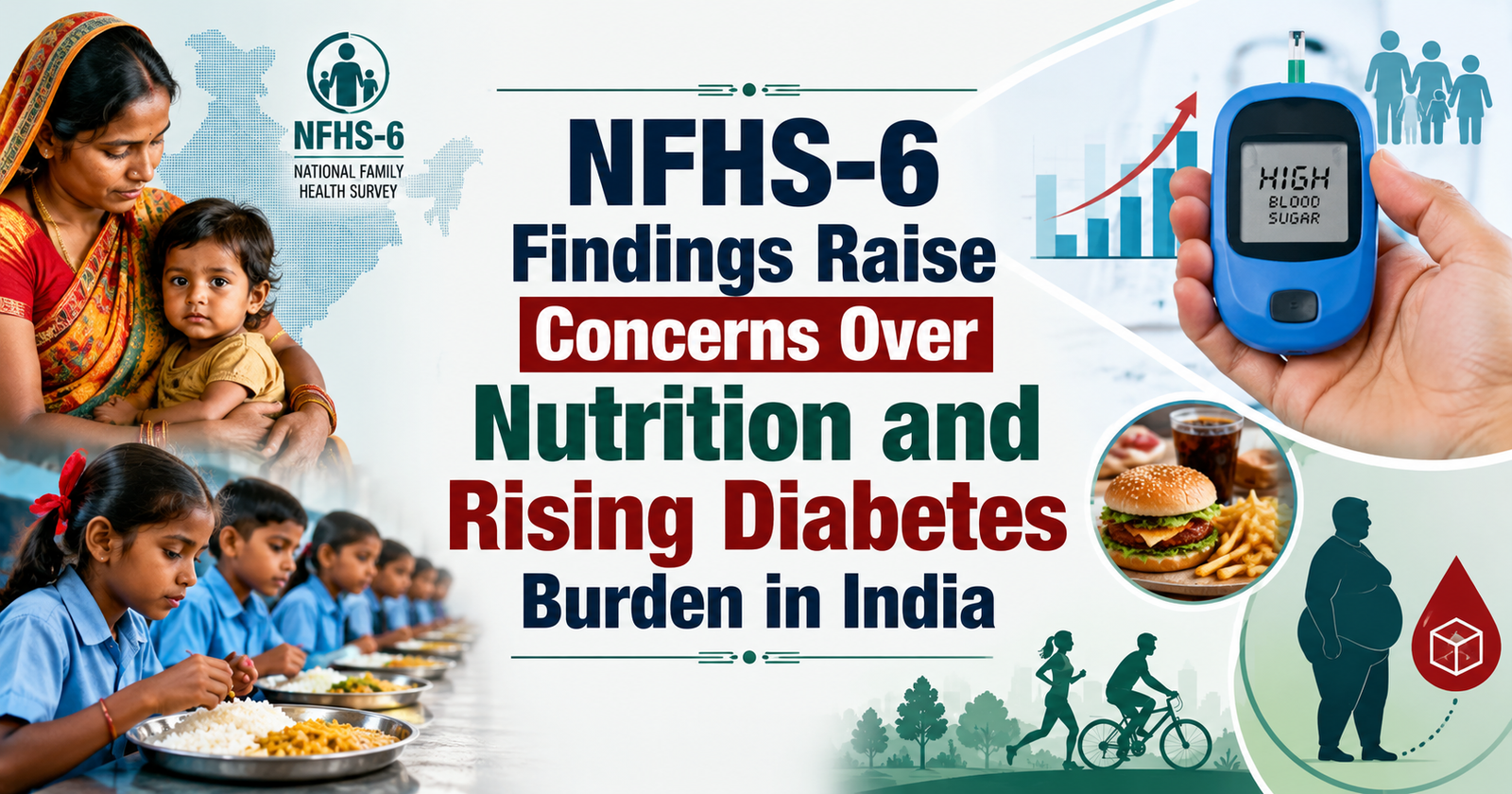
NFHS-6 findings highlight rising diabetes, malnutrition, and healthcare challenges in India. Learn key findings, causes, public health concerns, government initiatives, and UPSC-relevant analysis on nutrition and lifestyle diseases.
Syllabus Areas:GS II - Governance , Social Justice GS III - Economy (Human Development) |
Recent discussions around the findings of the National Family Health Survey (NFHS-6) and related health data have highlighted a worrying trend in India’s public health landscape. While India has made progress in reducing some traditional health problems, the country is now facing a dual challenge of undernutrition and rapidly increasing lifestyle diseases such as diabetes.
Key Points from the Findings
1. India is witnessing a “double burden” of malnutrition.
India continues to face the problem of undernutrition among children and women, while at the same time experiencing a rise in obesity and lifestyle-related diseases. This means that many sections of society still suffer from lack of adequate nutrition, whereas others are facing health risks due to unhealthy diets and sedentary lifestyles.
2. Rising diabetes cases are becoming a major public health concern.
Health surveys indicate that a significant share of the population is showing elevated blood sugar levels, suggesting a growing diabetes burden. The increase is not limited to urban areas alone, as rural populations are also witnessing a rise due to changing food habits, reduced physical activity, and increasing consumption of processed foods.
3. Lifestyle diseases are affecting younger age groups.
Conditions such as diabetes, hypertension, obesity, and heart-related diseases are increasingly being reported among younger populations. Experts attribute this trend to stress, reduced physical exercise, unhealthy diets, and increased dependence on digital lifestyles.
4. Rural India is no longer protected from non-communicable diseases.
Traditionally, lifestyle diseases were considered an urban problem. However, improved incomes, changing consumption patterns, and reduced physical labour have contributed to a rise in diabetes and obesity even in villages and smaller towns.
5. Women’s nutrition remains a major concern.
Survey findings continue to highlight problems such as anaemia among women and adolescent girls. Poor maternal nutrition affects not only women’s health but also impacts child health outcomes, leading to intergenerational cycles of malnutrition.
6. Increasing healthcare costs may put pressure on families and the economy.
A higher disease burden means greater spending on medicines, diagnostics, and long-term treatment. This can increase out-of-pocket expenditure for families and place additional pressure on India’s healthcare infrastructure.
Challenges Identified
-
Unequal access to quality healthcare facilities between urban and rural areas.
-
Lack of awareness regarding preventive healthcare and regular screening.
-
Growing dependence on processed foods and unhealthy dietary habits.
-
Insufficient focus on physical fitness and active lifestyles.
-
Limited public spending on preventive health programmes.
Government Response and Way Forward
-
Strengthening preventive healthcare: Greater emphasis should be placed on awareness campaigns, early screening, and regular health check-ups to identify diseases before complications arise.
-
Promoting nutrition-focused interventions: Programmes related to maternal health, child nutrition, and food security need stronger implementation.
-
Encouraging healthy lifestyles: Schools, workplaces, and local communities should promote physical activity and balanced diets.
-
Improving primary healthcare systems: Strengthening local health centres can help detect and manage lifestyle diseases at an early stage.
India’s health challenge is changing from dealing only with infectious diseases and undernutrition to also managing a growing burden of non-communicable diseases. Addressing this shift requires a stronger focus on preventive healthcare, nutrition security, and public awareness to ensure long-term human development.
|
Prelims Questions: 1. Consider the following statements regarding the National Family Health Survey (NFHS):
Which of the statements given above are correct? A) 1 and 2 only Answer: B) 1 and 3 only Explanation: 2. Which of the following government initiatives primarily focuses on improving nutritional outcomes among children, pregnant women, and lactating mothers?
Select the correct answer using the code below: A) 1 and 2 only Answer: B) 1, 2 and 3 only Explanation: 3. With reference to Non-Communicable Diseases (NCDs) in India, consider the following statements:
Which statements are correct? A) 1 only Answer: B) 1 and 3 only Explanation: 4. Which of the following Sustainable Development Goals (SDGs) are directly linked with improving nutrition outcomes and reducing lifestyle disease burden?
Select the correct answer: A) 1 and 2 only Answer: A) 1 and 2 only Explanation: |