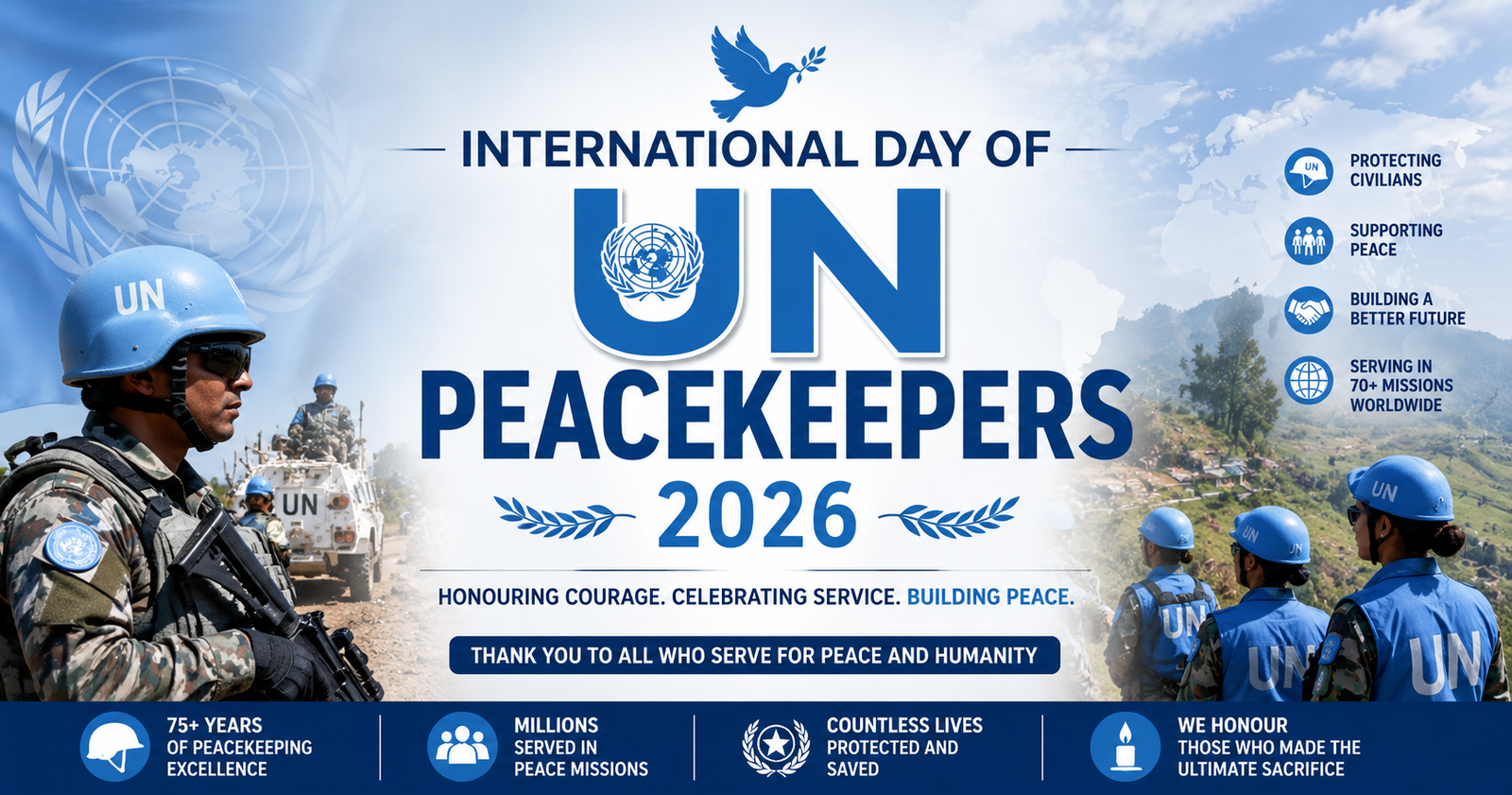
International Day of UN Peacekeepers honours the service and sacrifice of peacekeepers worldwide, recognizing their role in protecting civilians, supporting conflict resolution, and promoting global peace, security, and humanitarian assistance.
Syllabus Areas:GS II - International Relations |
International Day of United Nations Peacekeepers is observed every year on 29 May to honour the contribution, service, and sacrifice of peacekeepers serving in conflict-affected regions across the world. In 2026, discussions around strengthening peace operations, protecting civilians, and investing in peacebuilding have brought renewed focus to UN peacekeeping missions.
Background of International Day of UN Peacekeepers
The United Nations established the International Day of UN Peacekeepers in 2002 to commemorate peacekeeping personnel who lost their lives while serving in missions worldwide.
The date of 29 May was chosen because the first UN peacekeeping mission, the United Nations Truce Supervision Organization (UNTSO), began operations in Palestine on 29 May 1948.
The day serves three major purposes:
-
To honour peacekeepers who sacrificed their lives during missions.
-
To recognise contributions made by military, police, and civilian personnel.
-
To increase awareness about the importance of peacekeeping operations.
What are UN Peacekeeping Operations?
UN peacekeeping refers to international missions deployed by the United Nations to maintain peace and stability in conflict zones.
Peacekeepers generally work to:
-
Monitor ceasefires and peace agreements.
-
Protect civilians during conflicts.
-
Support democratic processes and elections.
-
Assist in humanitarian relief operations.
-
Help post-conflict countries rebuild institutions.
Peacekeeping forces usually include soldiers, police personnel, medical teams, engineers, and civilian experts from different countries.
Theme for 2026
The focus for 2026 emphasizes the need to strengthen peace operations through better support systems, investment in peacebuilding, and improved protection mechanisms for personnel working in difficult conflict situations.
The theme highlights that sustainable peace requires both military support and long-term institution building.
Evolution of UN Peacekeeping
UN peacekeeping operations have evolved significantly over time.
Early Phase: Traditional Peacekeeping
Earlier missions mainly focused on:
-
Monitoring ceasefires
-
Separating fighting groups
-
Observing peace agreements
Modern Phase: Multidimensional Peacekeeping
Modern peacekeeping now includes:
-
Countering violence against civilians
-
Supporting governance reforms
-
Promoting human rights
-
Assisting elections
-
Addressing humanitarian crises
As conflicts have become more complex, peacekeeping roles have expanded considerably.
India’s Contribution to UN Peacekeeping
India is one of the largest and most respected contributors to UN peacekeeping missions.
India has contributed:
-
More than 2,50,000 personnel across multiple missions.
-
Women peacekeepers in policing and medical roles.
-
Troops, engineers, doctors, and training support.
-
Leadership roles in several missions.
Indian peacekeepers have served in regions such as:
-
Congo
-
South Sudan
-
Lebanon
-
Sudan
-
Sierra Leone
India’s participation strengthens its image as a responsible global actor and supporter of multilateralism.
Major Challenges Faced by UN Peacekeepers
1. Increasingly Complex Conflicts
Modern conflicts involve armed groups, terrorism, civil wars, and ethnic violence, making peacekeeping more difficult.
2. Safety Risks
Peacekeepers frequently face attacks, kidnappings, and dangerous operational environments.
3. Limited Resources
Many missions struggle due to inadequate funding, equipment shortages, and logistical constraints.
4. Political Challenges
Peacekeeping missions often depend on cooperation from host governments and local actors, which may not always be available.
Why Peacekeeping Remains Important
Peacekeeping missions remain important because they help:
-
Reduce conflict escalation.
-
Protect vulnerable populations.
-
Support humanitarian assistance.
-
Strengthen fragile institutions.
-
Create conditions for long-term peace.
Without peacekeeping support, many conflict-affected regions may face greater instability.
Way Forward
Experts argue that future peacekeeping requires:
-
Better technology and intelligence systems.
-
Greater participation of women in missions.
-
Increased funding and training support.
-
Stronger cooperation between regional organizations and the UN.
-
Greater focus on preventive diplomacy and peacebuilding.
International Day of UN Peacekeepers highlights the importance of collective global efforts in maintaining peace, protecting civilians, and supporting conflict-affected societies. As global conflicts become more complex, strengthening peacekeeping operations and supporting peacekeepers remain essential for achieving long-term international peace and stability.