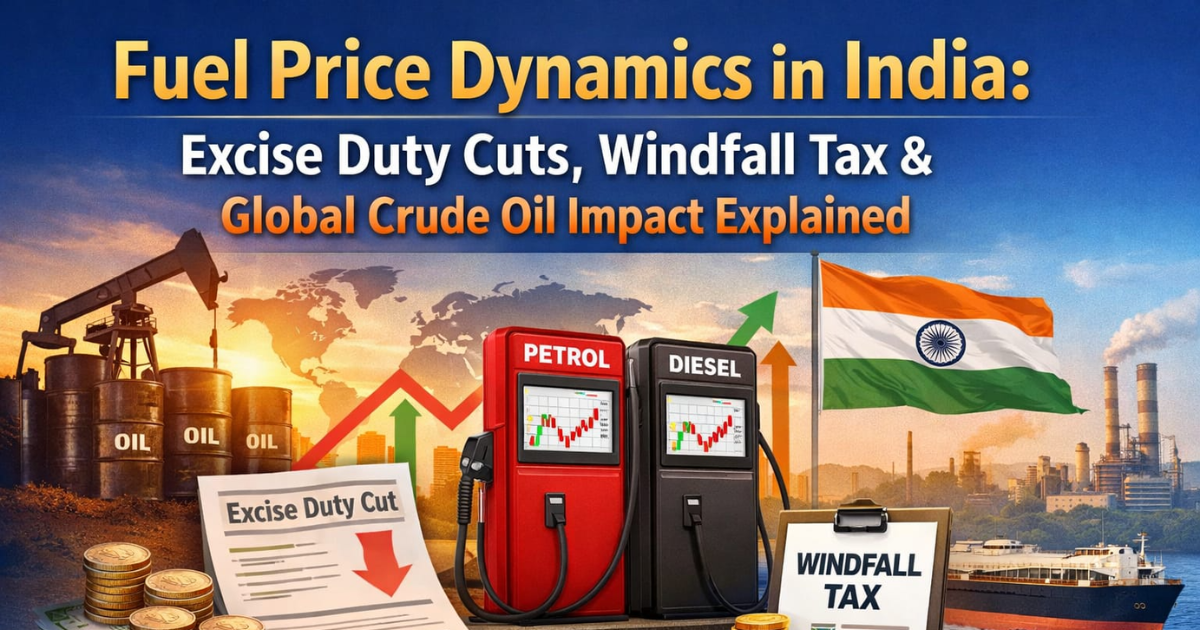
India’s fuel pricing reflects global crude trends, taxation structure, and policy choices like excise duty cuts and windfall taxes. Understand inflation linkages, energy security challenges, and the government’s balancing act between growth and fiscal sta
Syllabus Areas:GS III - Economy |
India reduced excise duty on petrol and diesel amid rising global crude oil prices to curb inflation and provide relief, while adjusting windfall taxes to balance fiscal pressures.
Global Crude Oil Dynamics
Global crude oil prices fluctuate due to multiple interconnected factors:
1. Geopolitical Tensions
-
Conflicts in oil-producing regions, especially West Asia, disrupt supply chains.
-
Strategic chokepoints like the Strait of Hormuz are critical for global oil transit.
-
Any instability leads to fear-driven price spikes.
2. OPEC+ Production Decisions
-
The Organization of Petroleum Exporting Countries (OPEC+) controls a major share of global supply.
-
Production cuts increase prices, while expansion lowers them.
-
These decisions are often politically influenced.
3. Demand-Supply Imbalance
-
Rapid economic recovery increases global demand for energy.
-
If supply does not match demand, prices surge.
4. Currency Fluctuations
-
Oil is traded in US dollars.
-
Depreciation of currencies like the Indian Rupee increases import costs.
5. Speculative Market Behaviour
-
Traders and financial institutions influence prices through futures trading and speculation.
Structure of Fuel Pricing in India
Fuel prices in India are determined through a layered structure:
Retail Price = Base Price + Freight + Dealer Commission + Taxes
Components of Retail Fuel Price:
-
Base Price – Cost of crude oil refined into petrol/diesel
-
Freight Charges – Transportation cost
-
Dealer Commission – Margin for fuel station operators
-
Central Taxes (Excise Duty)
-
State Taxes (VAT)
The final retail price paid by consumers includes both market-driven and policy-driven components.
Types of Taxes on Fuel
1. Excise Duty (Central Government)
-
Levied by the Union Government on production of goods
-
Fixed amount per litre (specific tax)
-
Includes:
-
Basic Excise Duty
-
Special Additional Excise Duty
-
Road and Infrastructure Cess
Key Features:
-
Major source of central revenue
-
Not shared fully with states (especially cess component)
-
Flexible tool for government to manage prices
2. Value Added Tax (VAT) – State Government
-
Imposed by state governments
-
Ad valorem (percentage of price)
-
Varies across states
Key Features:
-
Significant revenue source for states
-
Leads to variation in fuel prices across India
Recent Policy Decisions
1. Reduction in Excise Duty
-
Government reduced excise duty to lower retail fuel prices
-
Aimed at reducing inflation and easing public burden
2. Adjustment of Windfall Tax
-
Increased or modified taxes on petroleum exporters
-
Ensures that excess profits are taxed
3. Balancing Act
-
While reducing consumer burden, government ensures revenue neutrality through alternate taxation
What is the Windfall Tax?
A windfall tax is a tax imposed on companies that earn abnormally high profits due to external factors, not because of their own efficiency.
Indian Context:
-
When global crude prices rise sharply, Indian oil companies exporting petroleum products earn extra profits
-
Government imposes windfall tax to:
-
Capture excess profits
-
Redistribute gains
-
Support fiscal stability
Example:
If global crude prices suddenly rise due to geopolitical conflict, oil companies benefit from higher margins. The government taxes this unexpected gain.
Economic Transmission Mechanism
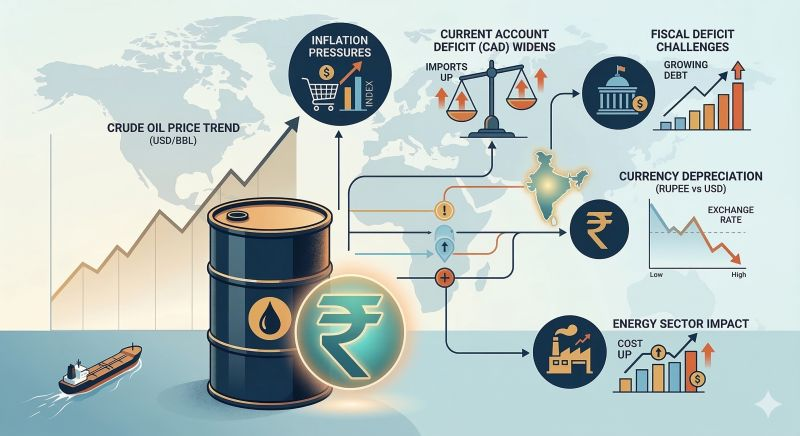
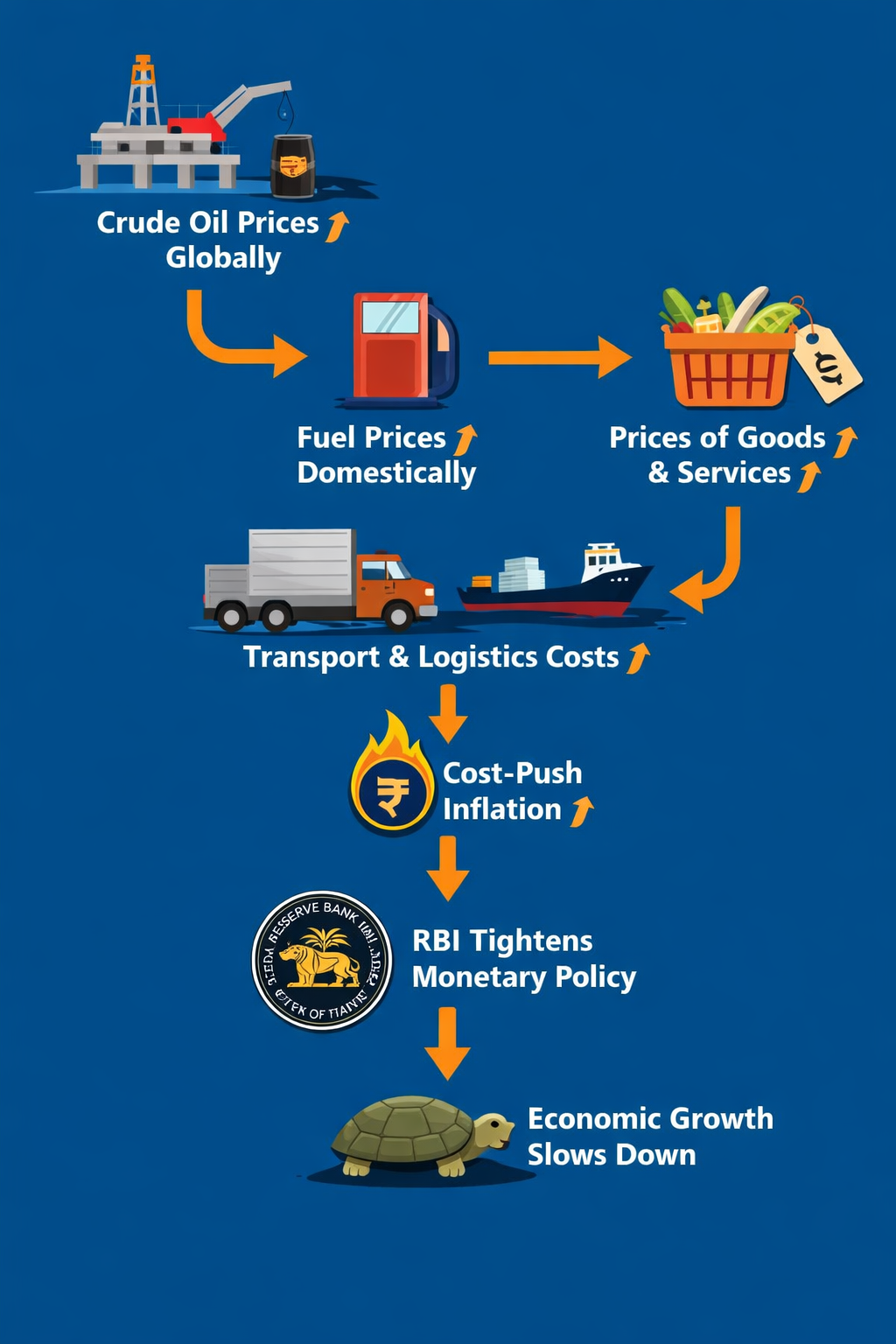
Why Does the Government Cut Excise Duty?
1. Inflation Control
-
Fuel affects all sectors
-
Lower fuel prices reduce cost-push inflation
What is Cost-Push Inflation?Cost-push inflation is a type of inflation that occurs when the cost of production increases, leading businesses to raise prices of goods and services to maintain profit margins. |
2. Consumer Relief
-
Reduces burden on households
-
Increases disposable income
3. Economic Growth
-
Lower input costs boost industries
-
Improves logistics efficiency
4. Political Sensitivity: Fuel prices directly affect public sentiment
5. Complement Monetary Policy: Reduces need for aggressive interest rate hikes
Role of Monetary Policy
-
Managed by the Reserve Bank of India (RBI)
Key Functions:
-
Control inflation
-
Maintain price stability
-
Support economic growth
Context of Fuel Prices:
-
High fuel prices → inflation rises
-
RBI may:
-
Increase Repo Rate
-
Reduce liquidity
When government cuts excise duty:
-
Inflation pressure reduces
-
RBI gets policy space
Energy Security Concerns
Challenges:
1. High Import Dependence: India imports ~85% of crude oil
2. Geopolitical Vulnerability: Dependence on unstable regions
3. Price Volatility: Global price shocks directly impact economy
4. Current Account Deficit: Higher imports increase external imbalance
Measures Taken by Government:
1. Diversification of Oil Sources: Imports from multiple countries (Russia, USA, Middle East)
2. Strategic Petroleum Reserves (SPR): Emergency storage for supply disruptions
3. Ethanol Blending Programme: Target of E20 (20% ethanol blending)
4. Renewable Energy Expansion: Solar, wind, green hydrogen initiatives
5. Promotion of Electric Vehicles: Reduces dependence on fossil fuels
The excise duty cut highlights India’s vulnerability to global oil shocks and the balancing act between inflation control and fiscal stability. Long-term resilience requires reducing import dependence, strengthening energy security, and transitioning towards sustainable energy sources.