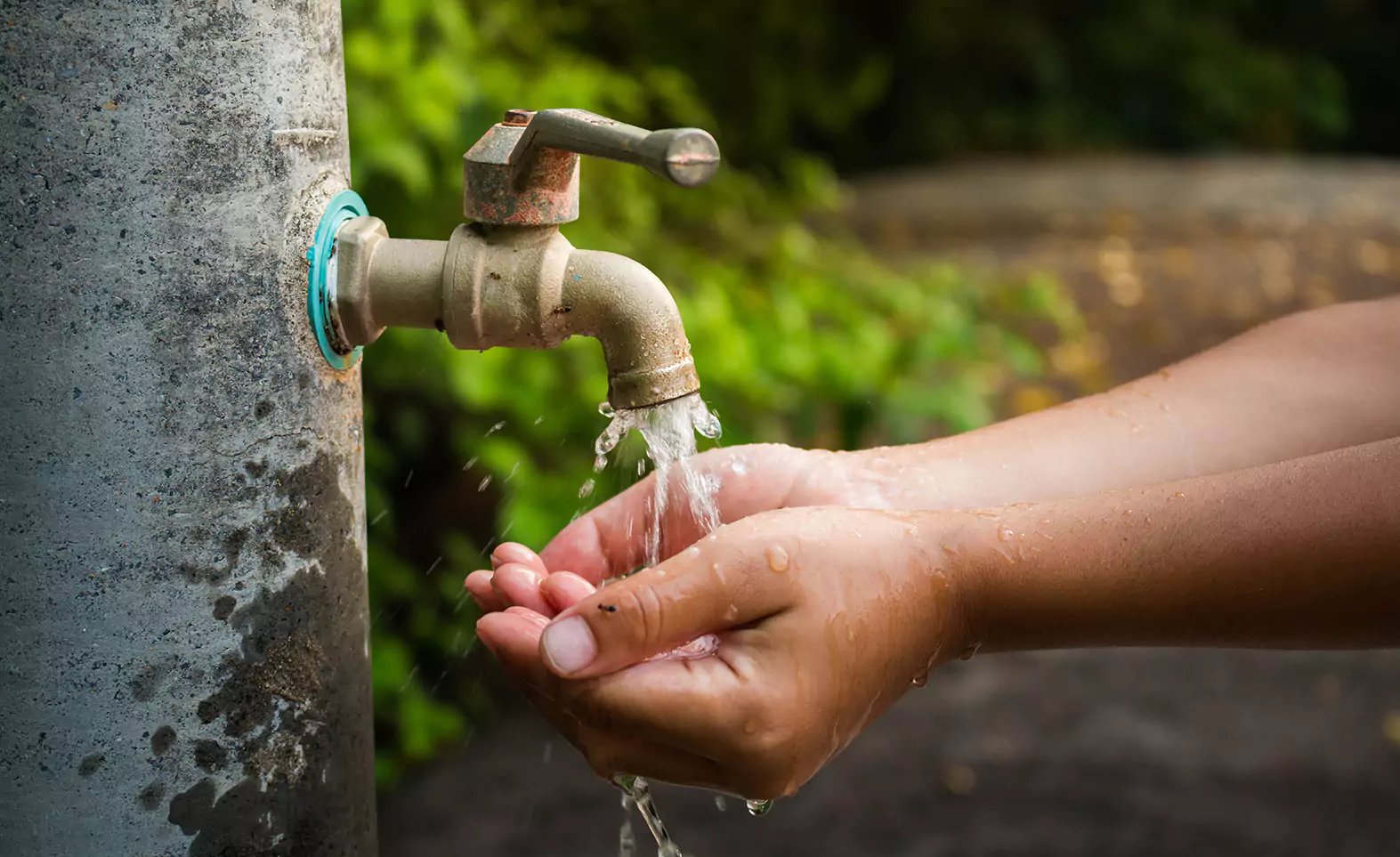
India’s Water Crisis & Jal Jeevan Mission Progress
Water Security Concerns, Rural Piped Water Targets, and Sustainable
Management
Water scarcity is one of the most pressing issues in India,
impacting agriculture,
industries, and public health. The Jal Jeevan Mission (JJM), launched
in 2019, aims to provide universal tap water coverage to all rural
households by 2024, bridging gaps in water accessibility and improving
rural living standards.
- India’s Water Crisis: Current Status & Major Challenges
- Jal Jeevan Mission: Goals, Progress & Implementation
- Financial & Infrastructure Developments Under JJM
- Impact of JJM on Health, Employment & Rural Economy
- Challenges in Implementation & Water Security Concerns
- Future Roadmap: Policy Reforms & Sustainable Water Management
India’s Water Crisis: Current Status & Major Challenges
India’s Water Demand vs. Availability
| Parameter |
Statistics |
Source |
| Annual Water Demand
|
1,123 billion cubic meters (bcm) |
NITI Aayog |
| Projected Water Availability
(2030) |
700 bcm (Deficit of 40%) |
Central Water Commission |
| Households Facing Water
Scarcity |
60% of Indian districts |
Jal Shakti Ministry |
| Annual Per Capita Water
Availability |
1,486 cubic meters (2024) |
CGWB |
- Over 600 million Indians face extreme water stress due to declining
groundwater and over-extraction.
- India’s per capita water availability has declined from 5,177 cubic
meters in 1951 to 1,486 cubic meters in 2024, signaling an approaching
water crisis.
Groundwater Depletion & Overuse
| Region |
Overexploited Districts |
Water Table Decline |
| Northwest India (Punjab, Haryana,
Rajasthan) |
85 |
1.2–1.6 meters/year |
| Western India (Gujarat,
Maharashtra) |
67 |
0.8–1.2 meters/year |
| Southern India (Tamil Nadu,
Karnataka, Andhra Pradesh) |
59 |
0.5–1.0 meters/year |
- 256 districts have been classified as “over-exploited” in terms
of groundwater availability.
- 70% of urban water demand is met by groundwater extraction,
increasing depletion risks.
India’s Water Crisis: Future Water Needs & Availability
Projected Water Demand & Deficit (2025-2050)
| Year |
Total Demand (Billion Cubic Meters - bcm) |
Available Water (bcm) |
Deficit (%) |
| 2025 |
1,200
bcm |
1,000 bcm |
17% Deficit |
| 2030 |
1,500
bcm |
1,100 bcm |
27% Deficit |
| 2040 |
1,800
bcm |
950 bcm |
47% Deficit |
| 2050 |
2,000
bcm |
900 bcm |
55% Deficit |
- India is expected to face a 40% water supply gap by 2030, creating
severe stress in urban and rural areas.
- By 2050, per capita water availability may drop below 1,000 cubic
meters, pushing India into the ‘water scarcity’
category.
Regional Water Availability & Stress Zones
| Region |
Water Availability (per capita, cubic meters) |
Stress Level |
| Punjab, Haryana, Rajasthan
|
Below 600
|
Extreme Water Stress
|
| Madhya Pradesh, Maharashtra,
Gujarat |
600-900
|
High Water Stress
|
| South India (Tamil Nadu, Karnataka,
Andhra Pradesh) |
900-1200
|
Moderate Water
Stress |
| Himalayan & Northeast
States |
Above 2000
|
Water Surplus |
- Over 60% of India’s landmass faces high to extreme water
stress, particularly in agricultural regions.
- Urban centers like Delhi, Chennai, and Bengaluru are among the world's most
water-stressed cities.
Water Contamination & Health Risks
| Contaminant |
Affected Districts |
| Fluoride |
230+ (Rajasthan, Karnataka,
Telangana) |
| Arsenic |
120 (Bihar, West Bengal, Assam,
UP) |
| Nitrate & Heavy
Metals |
250+ (Delhi, Punjab, Haryana)
|
- Over 2 lakh people suffer from fluorosis due to fluoride poisoning in
drinking water.
- Arsenic contamination in the Ganga-Brahmaputra basin affects 20+ million
people, increasing risks of cancer and organ damage.
Groundwater Dependency in Rural India
| Contaminant |
% of Rural Drinking Water from Groundwater |
| Punjab, Haryana |
85-90%
|
| Rajasthan, Gujarat |
75-80%
|
| UP, Bihar, Jharkhand |
65-70%
|
| Karnataka, Tamil Nadu |
50-60%
|
- Groundwater over-extraction is depleting reserves faster than
recharge.
- Sustainable alternatives like Managed Aquifer Recharge (MAR) are needed to
balance withdrawal & replenishment.
Water Security Measures
- Mandatory Groundwater Recharge for Industries & Agriculture.
- Desalination Plants in Coastal Areas (Chennai, Gujarat, Mumbai).
- Recycling & Reuse of Treated Water for Non-Drinking Use
(irrigation, industrial cooling).
Climate Change & Its Impact on India’s Water
Resources
Rising Temperature & Rainfall Variability
| Impact |
Expected Change by 2050 |
| Average Temperature
Rise |
+1.5°C to
+2.5°C |
| Monsoon Rainfall
Variability |
Increased
unpredictability |
| Extreme Droughts &
Floods |
Frequent
occurrences |
- Monsoon rainfall patterns are shifting, causing extreme
droughts in
some regions and floods in others.
- Water availability will fluctuate more due to glacial melt in the
Himalayas
and changing river flows.
Mitigation Strategies
- Develop drought-resistant crop varieties to reduce
water-intensive
farming.
- Increase investment in Climate-Resilient Water Infrastructure.
- Implement Smart Water Grids for efficient distribution &
storage
Jal Jeevan Mission: Goals, Progress &
Implementation
Mission Overview & Objectives
| Parameter |
Details |
| Launch Date |
August 15, 2019 |
| Target |
100% piped water coverage in rural
India |
| Total Beneficiaries
|
19.27 crore rural households |
| Water Supply Target
|
55 liters per capita per day (LPCD)
|
- JJM focuses on decentralized water supply management, ensuring
local-level participation.
- Technology integration, IoT-based monitoring, and water quality tracking
have been implemented in 2.5 lakh+ villages.
Current Progress (As of February 1, 2025)
| Metric |
2019 (Pre-JJM) |
2025 (Current Status) |
| Rural Households with Tap
Water |
3.23 crore (17%) |
15.44 crore (79.74%)
|
| Targeted Households
|
19.27 crore |
100% by 2025 |
| Certified ‘Har Ghar Jal’
Villages |
0 |
1,53,193 villages |
- Over 9.32 lakh schools & 9.69 lakh Anganwadis now have piped
water.
Financial & Infrastructure Developments Under
JJM
Budget Allocation & Utilization
| Financial Year |
Budget Allocation (₹ Crore) |
Funds Utilized (₹ Crore) |
| 2023-24 |
₹70,000 crore |
₹54,635 crore |
| 2024-25 |
₹75,000 crore |
Ongoing |
JJM is India’s largest water infrastructure
project, with
₹3.6 lakh crore total estimated expenditure.
Key Infrastructure Developments
- Piped Water Infrastructure in 2.51 lakh villages.
- Bulk Water Transfer Projects for drought-prone areas (Madhya
Pradesh, Rajasthan).
- 500+ Desalination & Water Treatment Plants in arsenic-affected
regions.
Impact of JJM on Health, Employment & Rural
Economy
Health & Sanitation Benefits
- Reduction of waterborne diseases by 30-40% in rural areas
- 5.5 crore hours saved daily by women, previously spent fetching
water
(WHO)
- Reduction in child mortality by 30% in arsenic-affected
regions.
Employment & Economic Impact
| Sector |
Employment Generated |
| Direct Jobs (Construction,
Plumbing, Infrastructure) |
59.9 lakh person-years
|
| Indirect Jobs (Water Treatment,
Logistics, Pipe Manufacturing) |
2.2 crore person-years
|
- IIM Bangalore & ILO report estimates ₹3.5 lakh crore GDP impact by
2035
due to JJM.
Key Challenges in JJM Implementation
| Challenge |
Impact |
Potential Solution |
| Limited Groundwater
Availability |
Affects piped water supply
sustainability in drought-prone states |
Artificial
recharge, groundwater banking |
| Slow Progress in Some
States |
UP, West Bengal, Jharkhand lagging
behind in JJM coverage |
Better governance,
increased fund allocation |
| Infrastructure Leakages
& Wastage |
30-40% of piped water lost due to
leakage |
Smart monitoring,
AI-based leak detection |
| Seasonal Water
Shortages |
Inconsistent supply in dry
months |
Community-led
storage solutions, rainwater harvesting |
- States like UP, Jharkhand, and Bihar need to accelerate JJM
implementation
to meet the 100% target.
- Water wastage from pipelines and infrastructure failures needs urgent
technological interventions.